

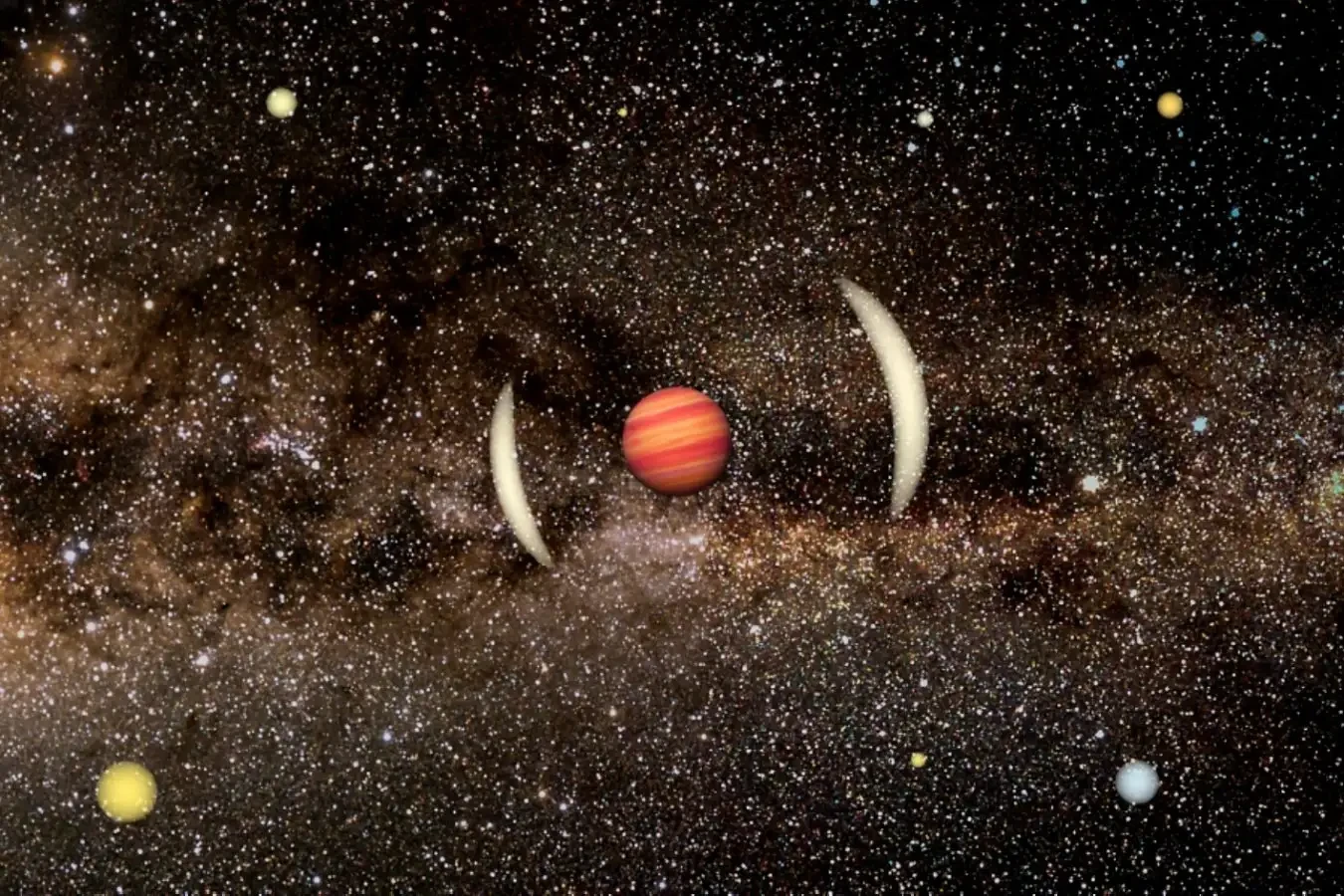
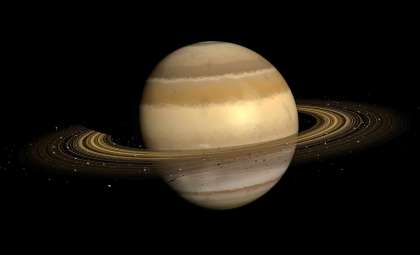
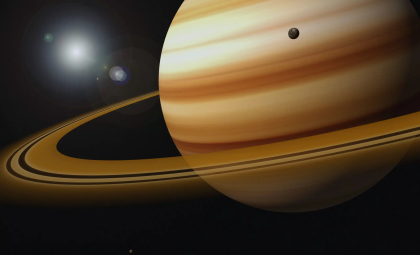
In a groundbreaking achievement, researchers have directly determined the mass of a planetary object drifting independently through the cosmos without being tethered to a star. This celestial wanderer, roughly matching Saturn in size, was analyzed during a rare astronomical event that enabled a precise measurement of its mass.
This milestone, featured in Science, represents a major advance in understanding isolated planets that are difficult to detect due to the absence of starlight or orbital paths to track.
Using Gravitational Lensing to Measure Weight
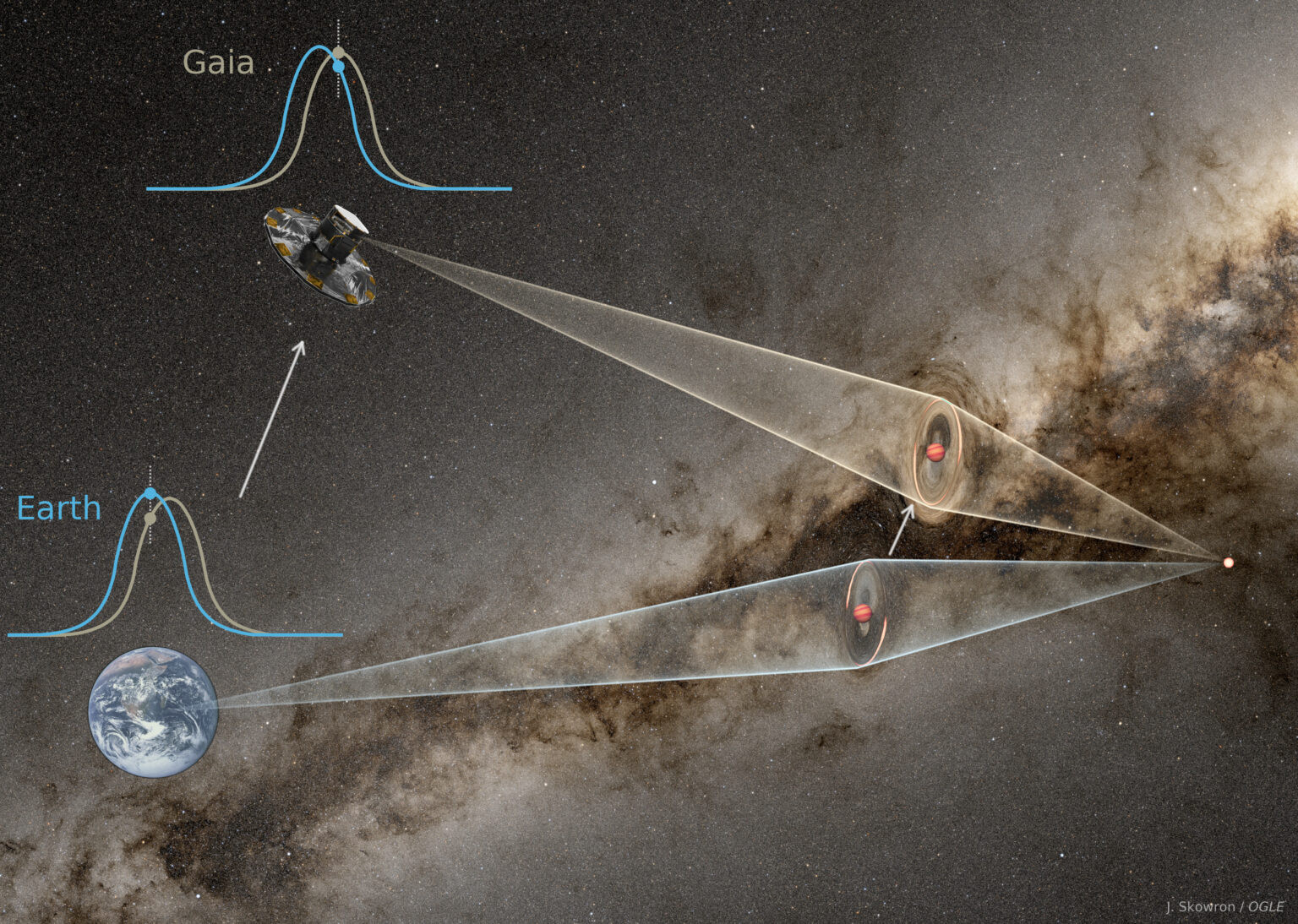
The research was spearheaded by Subo Dong of Peking University, who applied gravitational microlensing techniques. By harnessing an extraordinary alignment involving the drifting planet, a distant star behind it, and two vantage points—Earth and the Gaia space observatory—the team gathered vital data.

This approach, known as gravitational microlensing, hinges on gravity's ability to distort spacetime. As the rogue planet passed directly in front of a distant star from our viewpoint, its gravitational pull temporarily intensified the star’s brightness. Recent findings confirmed the event was observed both from Earth and the former Gaia telescope, enabling determination of the planet’s gravitational influence from two distinct perspectives.
This innovative method circumvents the usual requirement of a host star’s orbit for measuring planetary mass. Instead, by analyzing the time delay and intensity of light bending from the two observation points, the researchers triangulated the rogue planet’s mass and position.
Solitary Giants Roaming the Galaxy
Rogue or free-floating planets are objects that do not orbit stars, likely forming in star systems before being ejected through gravitational disturbances. Due to their lack of intrinsic light and absence of a nearby star to reflect light, detecting these objects is extremely challenging—making them some of the most elusive bodies in our galaxy.
The successful measurement of this Saturn-sized wanderer offers a fresh window into a largely hidden population of planets. With no host star’s orbit or reflected light to analyze, this advancement confirms that microlensing is a powerful tool for probing these solitary worlds.
Unveiling the Weight of the Invisible
Quantifying the mass of a starless world is an extraordinary challenge. The team relied exclusively on microlensing data gathered during the brief alignment. Observations from Earth and Gaia captured how much the rogue planet’s gravity bent the light from the background star, allowing its mass to be inferred using gravity itself as a measuring device.
Gavin Coleman, a postdoctoral fellow at Queen Mary University of London and author of a related study in Science, highlighted the importance of this progress:
“What’s really great about this work, and really noteworthy, is that it’s the first time we’ve got a mass for these objects.” He noted that this achievement was possible “purely because the authors had both ground-based observations and Gaia, looking at observations from two different places.”
This precise measurement represents a breakthrough in exoplanetary research and suggests that future discoveries of rogue planets could become more common, especially with upcoming missions building on Gaia’s legacy.
- Categories:
- Space



0 comments
Sign in to Comment