
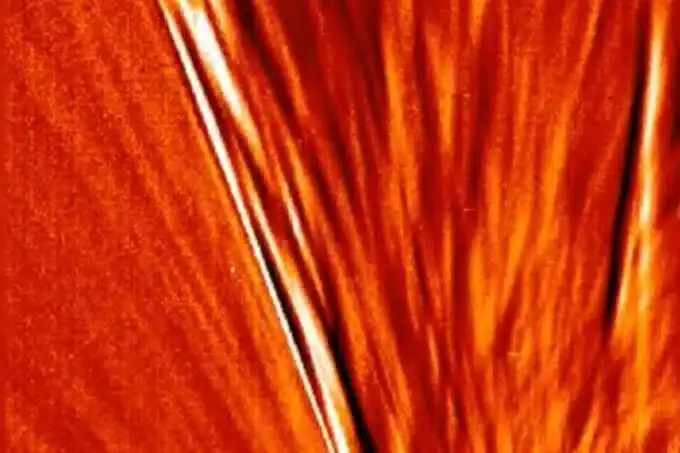
The ESA/NASA Solar Orbiter has recorded an extraordinary spiral-shaped jet of solar wind extending more than 1.2 million miles from the Sun's surface, providing an unprecedented close-up view of the mechanisms shaping space weather across the solar system. This remarkable phenomenon was documented during the spacecraft's perihelion pass by the Metis coronagraph and is detailed in a recent peer-reviewed article in The Astrophysical Journal.
The study team describes the event: “In this paper, we present observations by Metis during its perihelion passage of a striking helical radial structure that extended from 1.5 to 3 [solar radii] and lasted for more than 3 hr,” the research team wrote. “To the best of our knowledge, these observations are unique, in that they appear to show directly the long-duration outflow of Alfvénic solar wind into the heliosphere.”
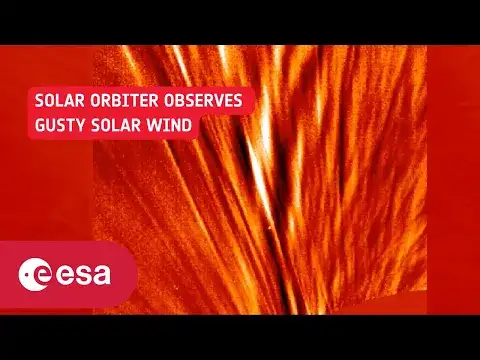
This video and accompanying data deliver the clearest evidence yet of Alfvénic waves propelling plasma from the Sun’s corona into interplanetary space—captured in vivid, dynamic detail for the first time.

A Twisting Plasma Stream Emerging from the Sun
The Solar Orbiter observed this stunning helix during its closest orbit to the Sun on October 12, 2022. Scientists refer to the outflow as a “helical radial structure” spanning from 1.5 to 3 solar radii, equating to nearly 1.3 million miles. The researchers emphasize the uniqueness of these observations in directly capturing an extended release of plasma from deep within the corona.
This new footage offers fresh insights into how Alfvén waves transfer energy from the solar surface outward, a key process that has mystified solar physicists for decades.
Why This Observation Matters
The significance of this footage lies not just in its sheer size, but in capturing the solar wind at its point of origin rather than its effects near Earth. Solar wind regularly influences phenomena such as auroras, satellite operations, and radio communication. Witnessing its real-time emergence enables researchers to trace these consequences back to their solar source.
Previously, most solar wind data came indirectly from Earth-bound measurements or theoretical modeling. The Metis instrument on board Solar Orbiter stands alone as the only facility currently able to produce detailed, close-range observations of this intricate solar process.
Future Prospects for the Solar Orbiter Mission
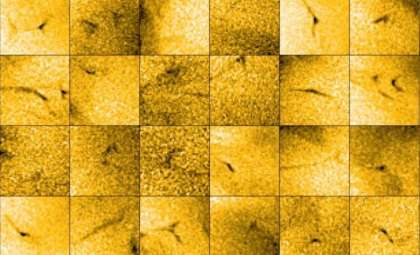
Since launch, Solar Orbiter has delivered numerous groundbreaking revelations, including imaging of mini-jets near the Sun’s poles and capturing coronal mass ejections from close-up vantage points. This latest discovery aligns with its broader goal: to scrutinize the Sun’s polar regions, monitor magnetic fluctuations, and decode solar wind formation with unprecedented precision.
Operational through 2026 with a planned extension to 2030, the mission’s ongoing success promises to vastly deepen our understanding of the space weather drivers powering our solar neighborhood.
- Categories:
- News




0 comments
Sign in to Comment