
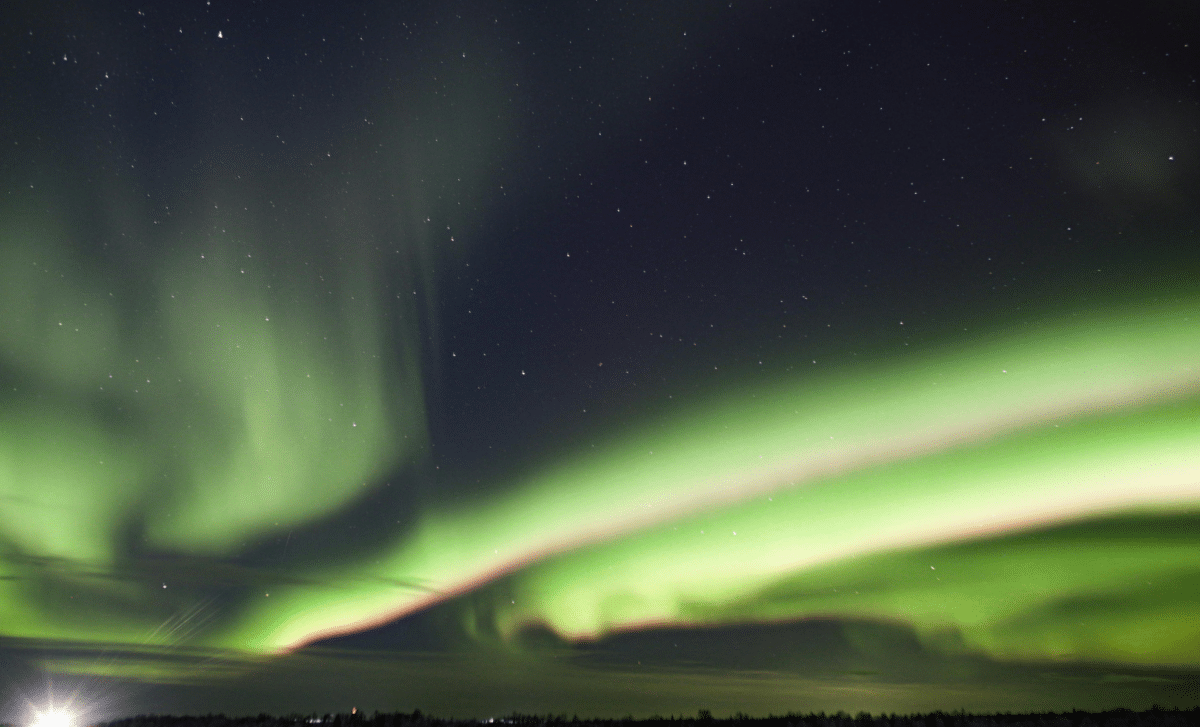
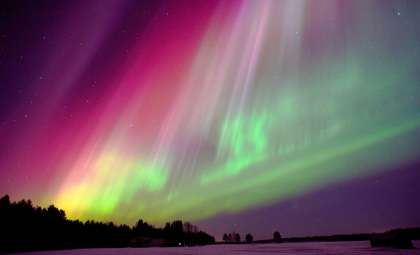
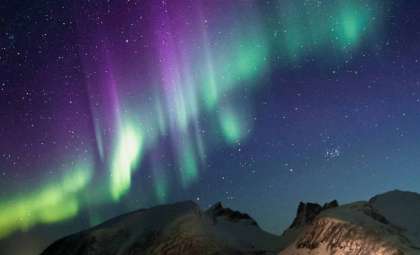
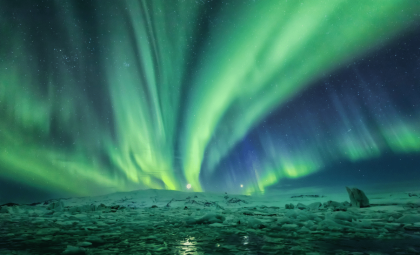
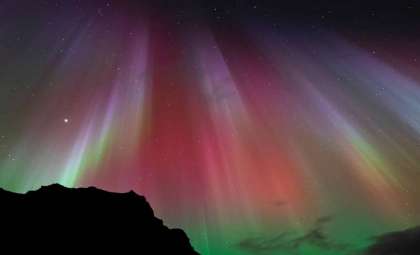
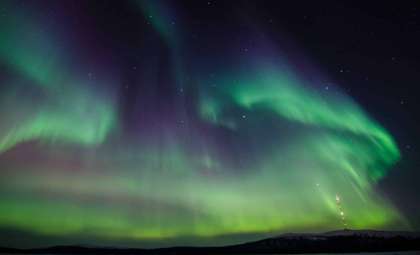
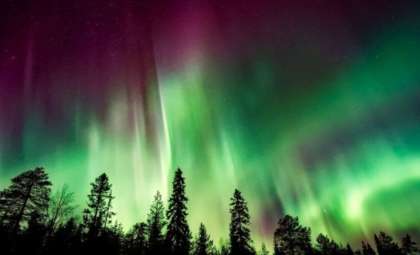
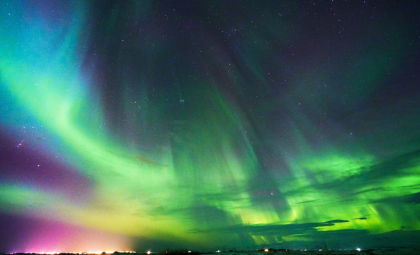
An incoming stream of charged solar particles is predicted to reach Earth overnight, potentially sparking vibrant aurora displays over parts of the northern United States. NOAA forecasts that this solar event could trigger a G1 to G2 geomagnetic storm, offering sky observers across up to 19 states a chance to witness the spectacular Northern Lights, weather and cosmic conditions permitting. Although a widespread aurora outbreak is unlikely, this event occurs amid a surge of solar activity that has already produced impressive light shows worldwide.
Solar Eruption Headed Towards Earth May Illuminate Nighttime Skies
Several days ago, the Sun unleashed a coronal mass ejection (CME), a gigantic bubble of magnetized plasma hurtling through space. Unlike solar flares, which emit intense but brief radiation flashes, CMEs carry billions of tons of charged particles that take days to arrive at Earth. When this plasma cloud collides with Earth’s magnetosphere, it can disturb our magnetic field and spark geomagnetic storms.
This particular CME has been forecasted to cause G1 (Minor) or G2 (Moderate) storm conditions. Though these are not strong enough to generate auroras across the entire continental U.S., they often produce visible lights across northern states. Key factors affecting visibility include cloud cover, light pollution levels, and the orientation of the interplanetary magnetic field as the CME arrives. Even modest storms can create remarkably vivid auroras if conditions align perfectly.

For aurora enthusiasts, peak activity should occur overnight during the CME’s interaction with Earth’s magnetic field. Ideal viewing spots are away from urban lights with an unobstructed view toward the northern horizon.
Where the Northern Lights Are Most Likely to Appear
The best chances for witnessing the lights will be near the U.S.-Canada border, where geomagnetic disturbances tend to be stronger. Top viewing states include northern areas of Washington, Idaho, Montana, North Dakota, South Dakota, Minnesota, Wisconsin, Michigan, and Maine.
If the storm intensifies briefly, residents in portions of Oregon, Wyoming, Nebraska, Iowa, Illinois, Indiana, Ohio, New York, Vermont, and New Hampshire might catch a faint auroral glow near the northern skyline.
Even when auroras look faint to the naked eye, smartphone cameras often reveal vibrant colors and structures invisible in low light. Long-exposure photography is a particularly useful tool to capture auroras during moderate geomagnetic storms. However, clear skies remain essential to ensure a memorable viewing experience.
Several natural factors may hinder visibility in places. Night skies remain brighter for longer following the recent summer solstice, and the luminous Full Strawberry Moon can obscure weaker auroral patterns.
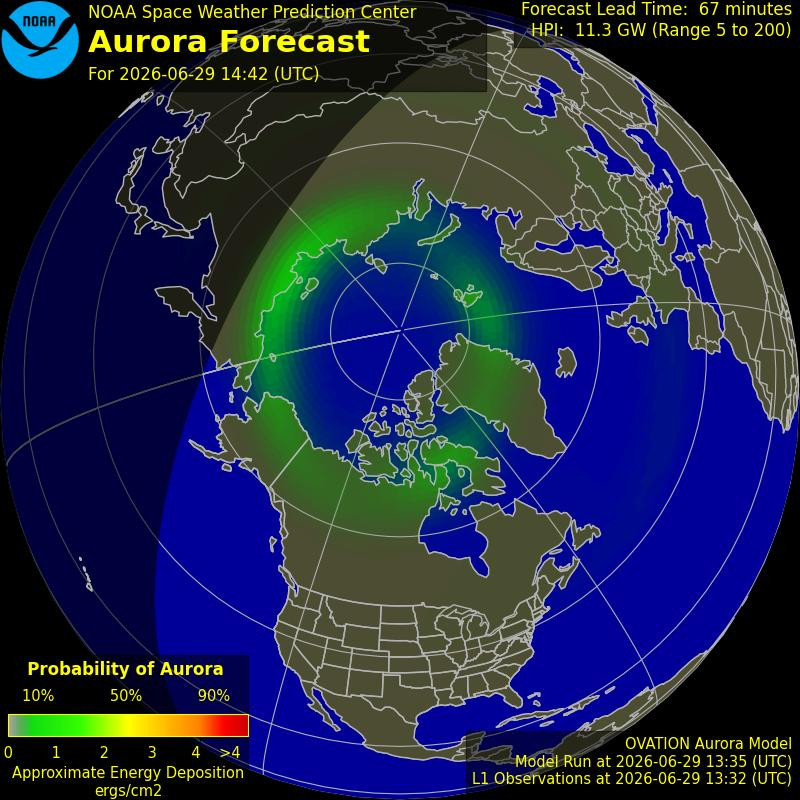
NOAA Indicates Solar Conditions Could Strengthen Through the Night
NOAA’s Space Weather Prediction Center reports that geomagnetic activity is expected to rise as the CME arrives at Earth. Their projections show a possible escalation of storm intensity during the early morning hours as solar particles engage more deeply with Earth’s magnetic field.
Forecasting space weather remains complex, as the true power of a geomagnetic storm isn’t confirmed until the solar material actually interacts with Earth. One critical factor is the Bz component of the interplanetary magnetic field; a southward orientation allows the magnetic fields to link more effectively, enabling more solar energy to enter the magnetosphere and amplify auroral activity.
Because of this variability, forecasts are frequently revised throughout the event. A storm predicted to stay minor can rapidly intensify if magnetic conditions shift favorably, while anticipated strong storms may weaken if the solar cloud arrives with an unexpected magnetic orientation. Scientists continuously track incoming solar wind data to adjust their forecasts almost in real time.
- Categories:
- News




0 comments
Sign in to Comment