

Near Western Australia, the Southern Indian Ocean is experiencing an extraordinary drop in salinity at a pace unlike any previously recorded. Researchers warn that this swift dilution could have profound consequences for global oceanic circulation and marine ecosystems. Though seemingly far away, the transformations occurring here may eventually influence environmental conditions worldwide.
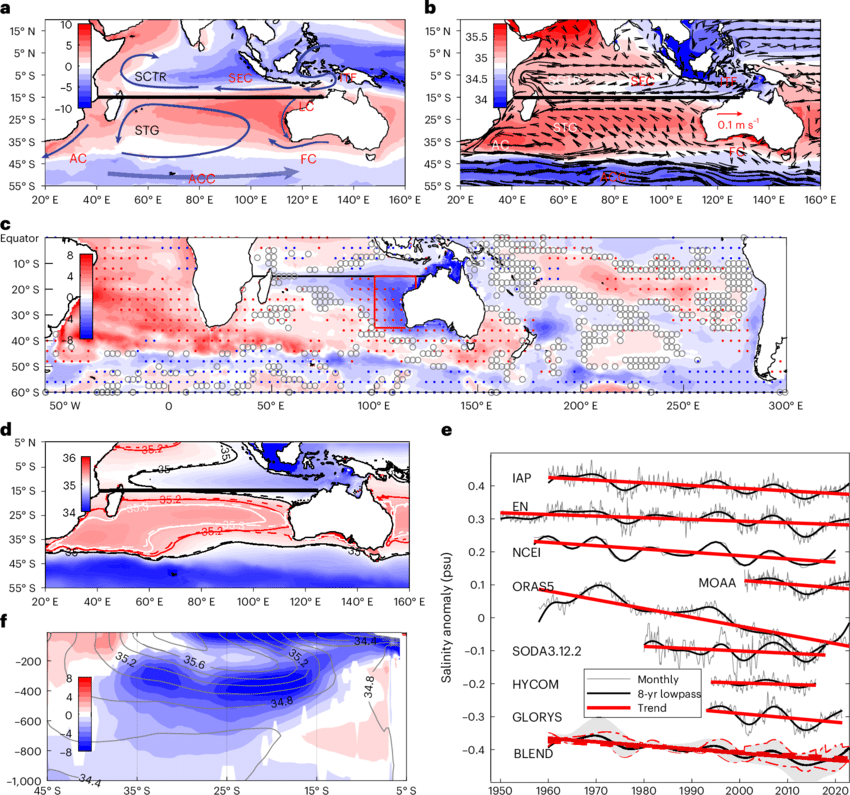
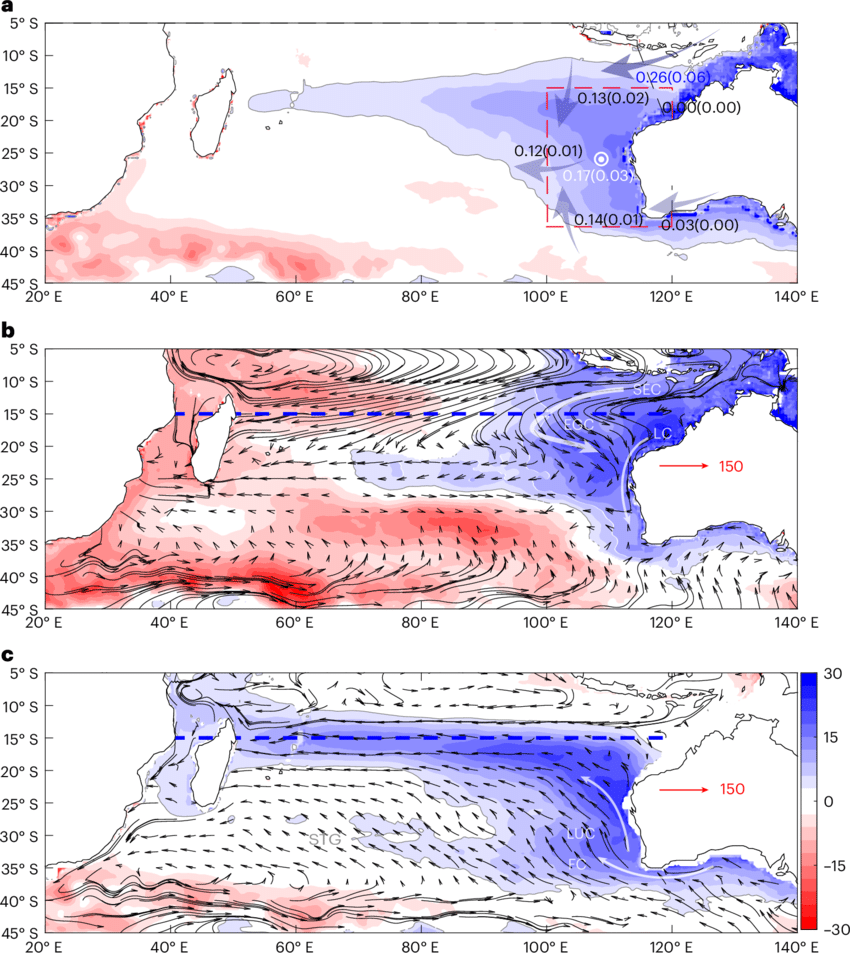
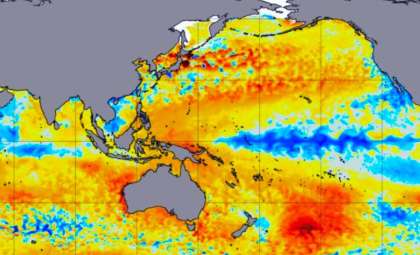
In a study recently released by Nature Climate Change, scientists detail the salinity changes that have developed over the past sixty years. Rising global temperatures have shifted critical wind systems across the Indian and Pacific Oceans, funneling greater volumes of freshwater into the Southern Indian Ocean.
Historically noted for its saline waters due to intense evaporation, this region is now seeing its salt content diluted by freshwater influxes, a change that raises concerns about potential impacts on key ocean currents and marine species well beyond this ocean area.

Unprecedented Decline in Salinity
The research reveals that over the last six decades, salinity in the Southern Indian Ocean has declined by approximately 30%. To illustrate, the freshwater addition equates to roughly 60% of the volume of Lake Tahoe pouring into the ocean each year.
“To put that into perspective, the amount of freshwater flowing into this ocean area is enough to supply the entire U.S. population with drinking water for more than 380 years,” clarified the lead author Gengxin Chen, a visiting scholar in the Department of Atmospheric and Oceanic Sciences.
This freshening isn’t attributed to increased rainfall locally but results from shifts in wind dynamics. Planetary warming has altered wind patterns that direct more freshwater from the Indo-Pacific freshwater reservoir into the Southern Indian Ocean, where this usually rain-fed freshwater mixes and dilutes seawater salinity.
Salinity's Vital Role in Ocean Health
Although salt content might seem trivial, it critically influences ocean current dynamics. Oceanic circulation is essential for balancing Earth's climate by transporting heat and nutrients worldwide. Currents depend on seawater density, which salt concentration largely governs.
As additional freshwater dilutes salinity, water becomes less dense, which disrupts its sinking movement and circulation patterns. This hampers vertical ocean mixing, a process vital for delivering nutrients from the depths to surface ecosystems that support diverse marine life.
“Salinity changes could affect plankton and seagrass. These are the foundation of the marine food web. Changes in them could have far-reaching impacts on the biodiversity in our oceans,” said the study’s lead author.
Global Climate Impact from Local Ocean Changes
The Southern Indian Ocean is a key player in the worldwide thermohaline circulation responsible for distributing heat and nutrients across ocean basins, crucial for climate regulation. Persistent salinity decline in this area threatens to disrupt these currents, potentially altering climate systems on a global scale.
This trend might also weaken Atlantic Ocean currents that influence weather and climate in Europe and North America. Due to the oceans’ interconnected nature, transformations in the Southern Indian Ocean could propagate, affecting ecosystems and climate patterns far beyond its boundaries.
- Categories:
- Science









0 comments
Sign in to Comment