
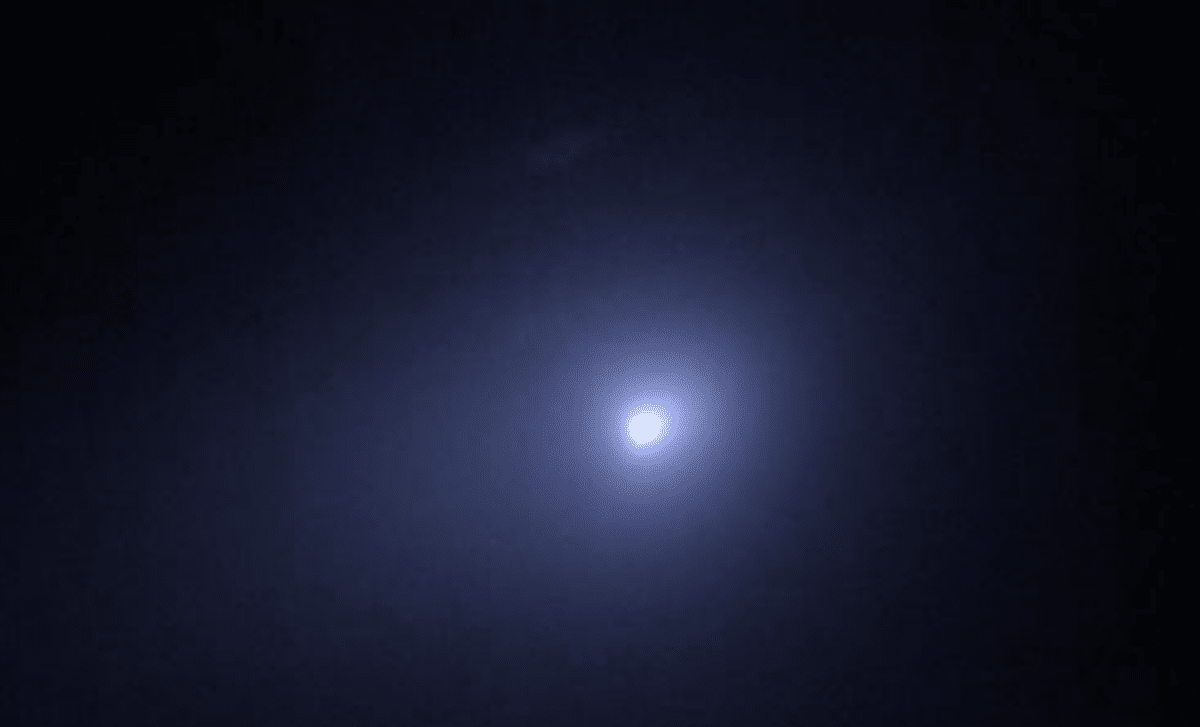
New observations of Interstellar Comet 3I/ATLAS (C/2025 N1) have provided valuable clues about how planets and smaller planetary bodies come into existence. Photographed by the Subaru Telescope in December 2025, this rare visitor from another star system offers astronomers an extraordinary opportunity to explore the early stages of planetary formation far beyond our solar neighborhood. The findings, recently published in The Astronomical Journal, present significant advancements that could transform our understanding of planetary genesis both locally and across the galaxy.
Meet Comet 3I/ATLAS: An Interstellar Messenger
Comet 3I/ATLAS is remarkable not only due to its origin but also because it brings pivotal data about objects traveling between star systems. Unlike comets formed within our own Sun’s sphere of influence, 3I/ATLAS is interstellar, coming from beyond the heliosphere. Its approach in 2025 offered a valuable chance to study an object journeying through interstellar space, revealing characteristics unique to such cosmic wanderers.
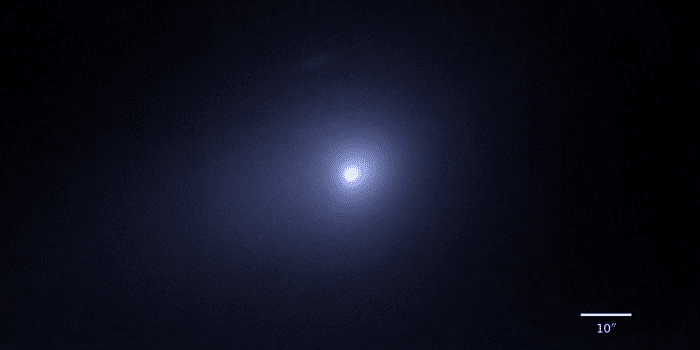
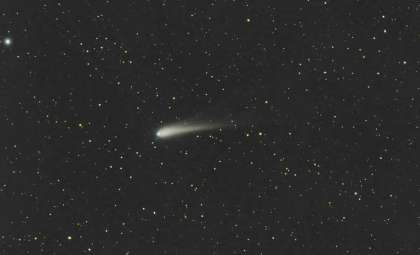
Imaged on December 13, 2025, by the Subaru Telescope situated in Hawaii, the picture combined three distinct light wavelengths—V-band (550 nm, blue), R-band (660 nm, green), and I-band (805 nm, red)—to present a detailed look at the comet’s makeup. This multi-wavelength approach enabled scientists to examine its composition with unprecedented clarity, affording new insights into the chemistry of planetary building blocks beyond our own system.

Insights Into Planet Formation from an Interstellar Visitor
The research, detailed in The Astronomical Journal, uncovers the comet’s distinctive chemical and physical traits. By analyzing such interstellar bodies, astronomers aim to decode mysteries surrounding the origins of planetesimals and planets not only within the solar system but also in other stellar environments. Astronomer Yoshiharu Shinnaka from Kyoto Sangyo University notes, “Studying these objects enriches our grasp of planetesimal and planet formation across various star systems, including our own.”
What elevates this study’s importance is the comet’s status as a pristine relic from the early cosmos, largely unaltered by solar system evolution. These icy travelers harbor ancient dust and gas remnants predating star and planet formation. This research offers a valuable snapshot of primordial conditions in remote galactic sectors, opening new paths for exploring planetary formation processes around distant stars.
Subaru Telescope’s Vital Contribution to the Discovery
The Subaru Telescope was instrumental in capturing this discovery with its state-of-the-art capabilities. Perched atop Mauna Kea in Hawaii, its elevation above atmospheric disturbances ensures clear access to distant cosmic objects. Utilizing advanced imaging and spectroscopic tools, the telescope offered astronomers high-resolution data on the comet’s spectral features, revealing information about its chemistry and structural properties.
The combination of sharp imaging and detailed spectral analysis also allowed researchers to track the comet’s brightness changes and movement through space. This level of precision cements the Subaru Telescope’s role as a crucial observatory for investigating far-flung objects that hold clues to deep cosmic questions.
Broader Impacts for Understanding the Cosmos
The discovery’s significance extends beyond comet research. By decoding the chemical makeup of interstellar visitors like 3I/ATLAS, researchers aim to refine models of how planets form around diverse stars. This breakthrough enriches the growing knowledge about exoplanets and their development processes, with implications for understanding planetary systems that might mirror Earth’s formation.
The study's results also have potential ramifications for the search for extraterrestrial life. If key life-related compounds are detected commonly in these interstellar bodies, it could imply that life’s ingredients are widespread throughout the galaxy. Ongoing research into comets like 3I/ATLAS may one day reveal clues about whether life beyond Earth is a cosmic commonality or a rare phenomenon.
- Categories:
- Astronomy






0 comments
Sign in to Comment