
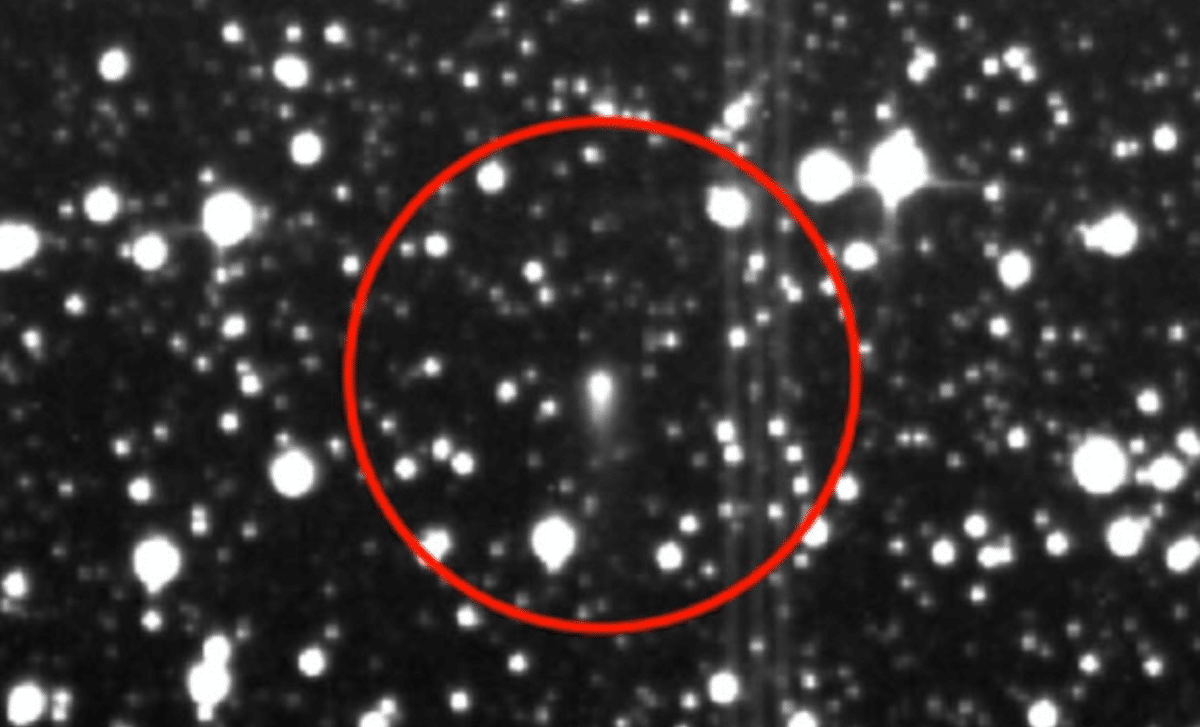
The Transiting Exoplanet Survey Satellite (TESS) operated by NASA has once again amazed the scientific community by observing interstellar comet 3I/ATLAS, a rare object originating beyond our solar system. In January 2026, the satellite conducted a focused observation campaign, gathering data as the comet sped away from the Sun. This effort gave researchers a final window to examine the comet’s spin dynamics and activity. These findings expand upon the results shared by NASA in its January 27, 2026 mission report.
Tracking a Rare Interstellar Visitor on Its Last Solar System Approach
3I/ATLAS is only the third confirmed interstellar object detected entering our solar system. Unlike comets formed in familiar regions such as the Kuiper Belt or Oort Cloud, it follows a hyperbolic path indicating it’s not gravitationally tied to the Sun. Because it travels through our system fleetingly, every observation is especially precious.
As the comet moved outward past the inner solar system, NASA’s TESS satellite tracked minute brightness shifts over extended intervals. These subtle changes provide insights into the nucleus’s rotation, form, and surface features. Scientists analyze how reflected sunlight varies during the comet’s spin to determine whether it is elongated, irregularly tumbling, or relatively spherical.

Observing such an itinerant comet as it recedes poses significant challenges. Its emission of gas and dust diminishes due to weakening solar warmth, reducing visible signals. However, TESS’s capability to perform continuous, wide-field surveillance over many hours allows faint variations to emerge—details likely missed by terrestrial telescopes.
From Searching for Exoplanets to Tracking Comets
TESS was initially crafted to find exoplanets by detecting tiny dips in starlight caused when planets transit their host stars. Its surprising success in comet observation stems from its core capability: providing prolonged, uninterrupted imaging over wide sky areas.
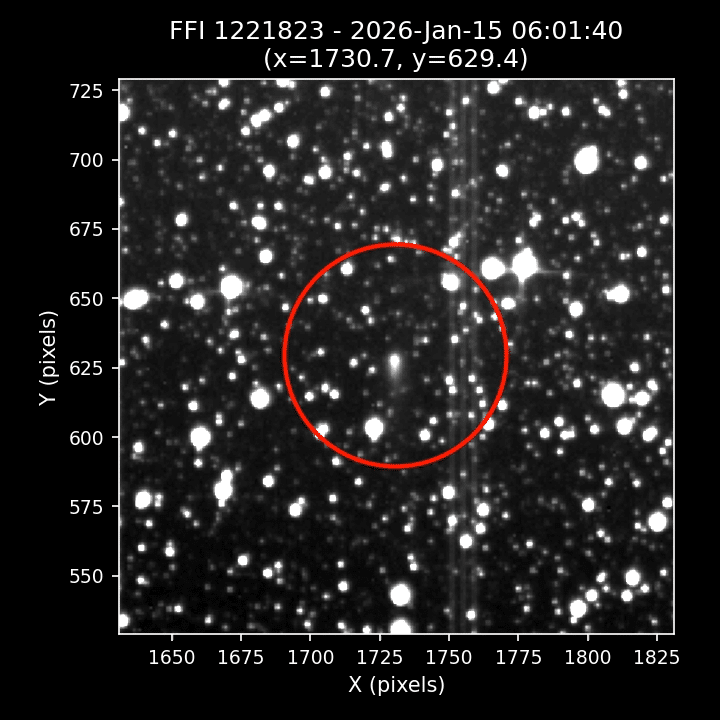
As 3I/ATLAS moved through TESS’s observational zone, it appeared as a swift bright point with a faint tail slicing through dense star clusters. TESS captured numerous full-frame images, which scientists compiled to create a detailed light curve. This information helps isolate brightness fluctuations connected to the comet’s rotational motion.
Mission researchers explain that these observations help quantify the rate at which the comet’s surface material is ejected. This shedding process sheds light on its makeup and inner structure, potentially different from those of comets formed near our Sun. Each measurement enriches a growing dataset comparing interstellar and native solar system bodies.
Insights Gained From NASA’s Follow-Up Observations
In an official mission update, NASA announced that TESS successfully revisited 3I/ATLAS, extending the observation timeline well beyond the comet's initial sighting. The agency underlined that multipoint monitoring is essential for capturing rotational features invisible in single observations.
The fresh dataset is now accessible through the Mikulski Archive for Space Telescopes, enabling global researchers to explore repeated brightness signals. These findings may clarify if the comet maintains a steady spin or undergoes changes caused by uneven gas release.
NASA also emphasized that while these observations don’t trace the comet’s origin star system, they offer valuable physical information. Studying interstellar visitors’ reactions to solar energy improves planetary formation models throughout the Milky Way. Effectively, each interstellar comet acts as a natural sample delivery, transmitting insights from distant regions while remaining accessible in Earth orbit.
Why Studying Interstellar Comets Advances Planetary Science
Objects like 3I/ATLAS provide a unique benchmark between solar system bodies and those forged around other stars. Variations in their chemistry, shape, and activity reveal if our planetary environment is typical. Differences in dust output or rotation may signal diverse formation circumstances.
The contribution of TESS to this research showcases the expanding flexibility of space observatories. Tools designed for one objective are increasingly repurposed to tackle broader questions in astrophysics, proving crucial for observing rare, rapid visitors such as interstellar comets.
As 3I/ATLAS departs back to the depths of space, the gathered observations remain invaluable for ongoing study. Continuous analysis brings astronomers closer to understanding the frequency and nature of these interstellar wayfarers and their stories about the galaxy’s planetary systems.
- Categories:
- Astronomy








0 comments
Sign in to Comment