
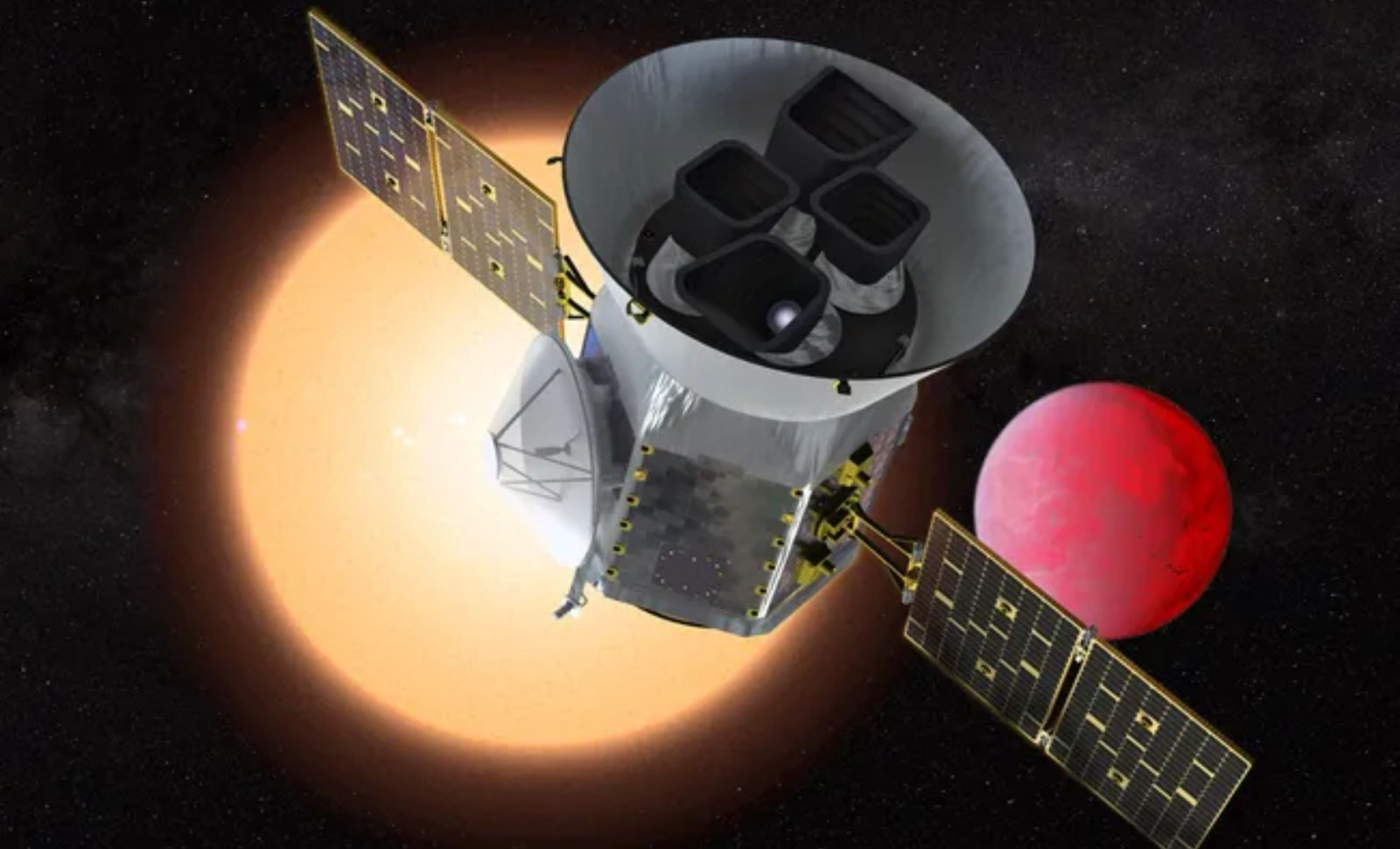
Fresh scrutiny of initial observations from NASA’s Transiting Exoplanet Survey Satellite (TESS) has revealed upwards of 11,000 prospective exoplanets, constituting the most extensive single collection ever detected. This breakthrough greatly broadens the catalog of possible planets outside our solar system and highlights the untapped potential residing in existing datasets.
Since its deployment in 2018, TESS has been hunting exoplanets by monitoring subtle decreases in starlight as planets pass in front of their stars. The mission has already officially confirmed over 750 exoplanets, adding substantially to the global tally that has surpassed 6,000 thanks to observations from various telescopes.
Led by Joshua Roth of Princeton University, the recent research revisits TESS’s first year of data using enhanced analysis methods. By stacking multiple frames, scientists detected signals emanating from dimmer and more remote stars, broadening the scope of our galactic survey.

An Overlooked Treasure Trove of Data
Published on arXiv, the study found 11,554 potential planets, with 10,091 being previously unidentified. The team emphasized this as the largest extraction of exoplanet candidates from a single dataset on record.
These candidates span distances reaching nearly 6,800 light-years toward the heart of the Milky Way, effectively doubling the range TESS had been able to probe. As Joshua Roth explains, scientists long believed that;
“There have been predictions that there were thousands of planets still lurking in the TESS data.” He added: “It just hadn’t been searched yet.”
A Population Dominated by Intense Worlds
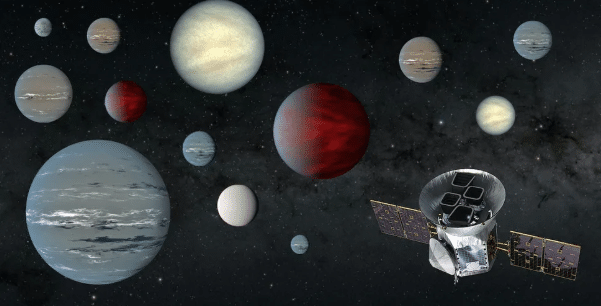
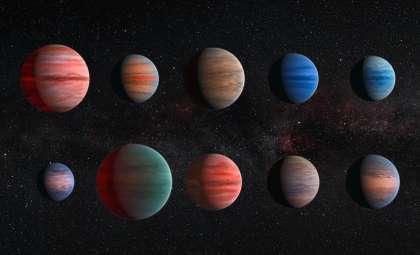
Over 90 percent of these candidates seem to be hot Jupiters, gas giants that orbit very close to their stars, completing a revolution in just a few days. The results indicate that TESS excels at spotting these large, fast-moving planets thanks to their distinct and frequent transit signals.
Smaller planets such as Neptunes and super-Earths form only a minor part of the group. This skew in numbers is likely due to detection limitations rather than reflecting the actual distribution of planets within our galaxy.
Potential Confirmations... and Challenges Ahead
Not every candidate will turn out to be an actual planet. According to Roth, the rate of false positives in TESS data can be near 50 percent, with some signals arising from binary stars or instrumental irregularities instead of planets. Nevertheless, estimates suggest that between 3,000 and 5,000 of these candidates could indeed be genuine worlds.
Jessie Christiansen from the NASA Exoplanet Science Institute highlights how such a vast dataset enables scientists to analyze planetary systems in detail and explore how different types of planets originate.
“I want as many exoplanets as possible so that I can start slicing and dicing things. How are they different? What kinds of different Jupiters do different stars make? These are all questions you can ask when you have a big sample.”
With numerous candidates from prior analyses still pending confirmation, the ongoing data accumulation reinforces the idea that our galaxy likely hosts vastly more planets than formerly believed.
- Categories:
- Nasa







0 comments
Sign in to Comment