
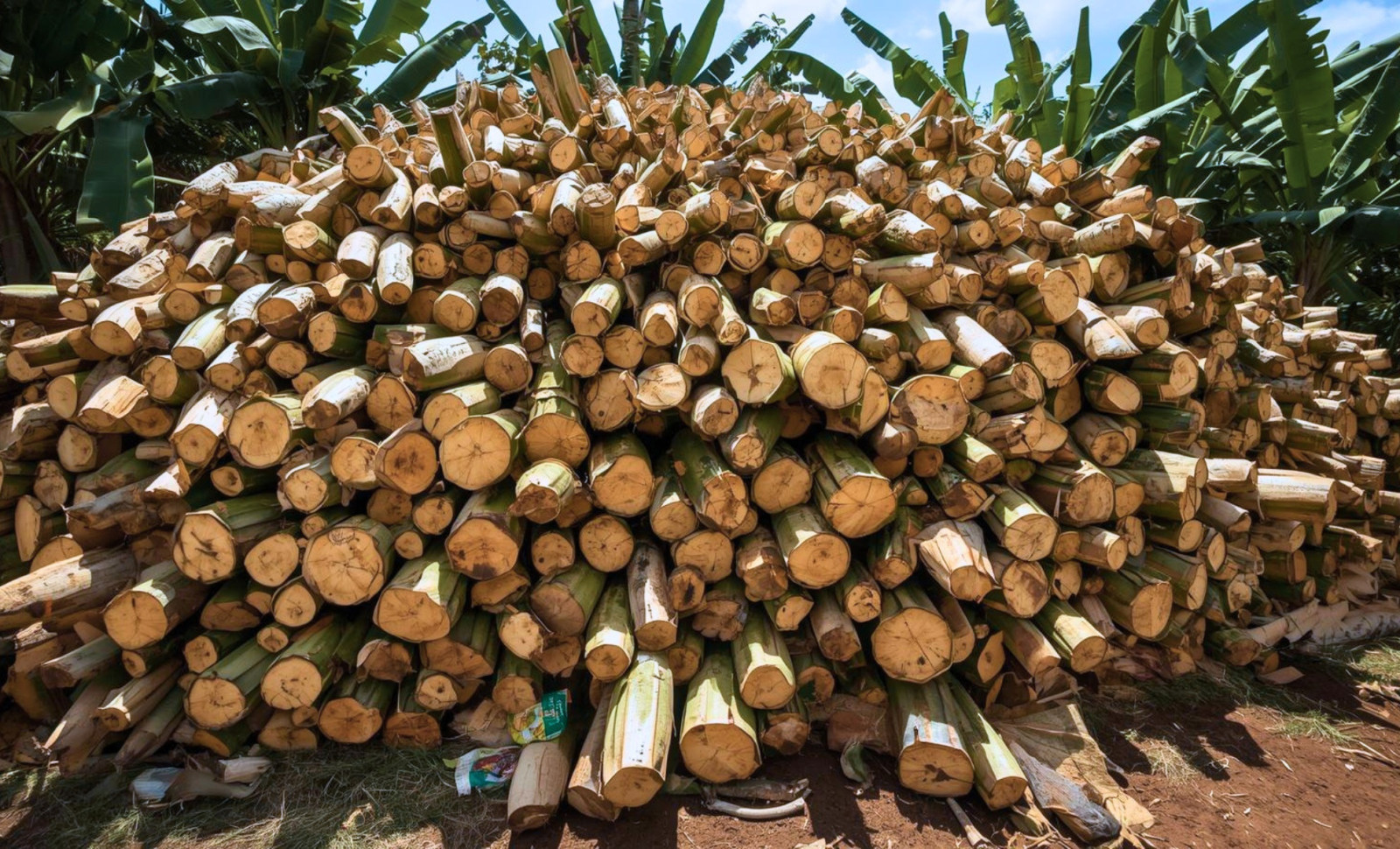
Each banana plant yields fruit only once. After harvesting the bunch, the entire stalk, known as the banana pseudostem, is also cut down. This thick, moisture-laden trunk can reach several meters in height and is heavy enough that transporting it incurs costs. Across countries like Brazil, India, Ecuador, and the Philippines, large amounts of this residual biomass have accumulated for years without a clear purpose. In some farming systems, this leftover material can total up to 220 tons per hectare. Historically, it has either been left to naturally break down or subjected to burning.
This scenario is evolving. Instead of viewing the pseudostem as agricultural waste, producers are now recognizing it as a valuable resource readily available at farm sites, requiring minimal financial investment to obtain. The challenge is developing a method to reliably extract, standardize, and distribute the fibers within, establishing an efficient supply chain. Increasingly, both industrial and academic research indicate this is achievable.
The interest is driven not just by sustainability motives, but by the fibers’ intrinsic qualities. A 2020 article in SN Applied Sciences reported that banana pseudostem fibers mechanically extracted exhibit a tensile strength near 570 megapascals—significantly outperforming jute's 249 megapascals and sisal's 350 megapascals. The study credited this exceptional strength to the fiber’s degree of crystallinity, which measures about 67%, compared to 43% for jute and 46% for sisal.

Turning Agricultural Waste Into Industrial Raw Material
The transition from artisanal use to industrial-scale production first required overcoming logistical hurdles. Fresh banana pseudostems are bulky, saturated with moisture, and prone to quick deterioration. Transporting them over long distances proves costly and accelerates decomposition. Consequently, processing plants tend to situate themselves near cultivation areas to receive stems promptly and process them before spoilage occurs.
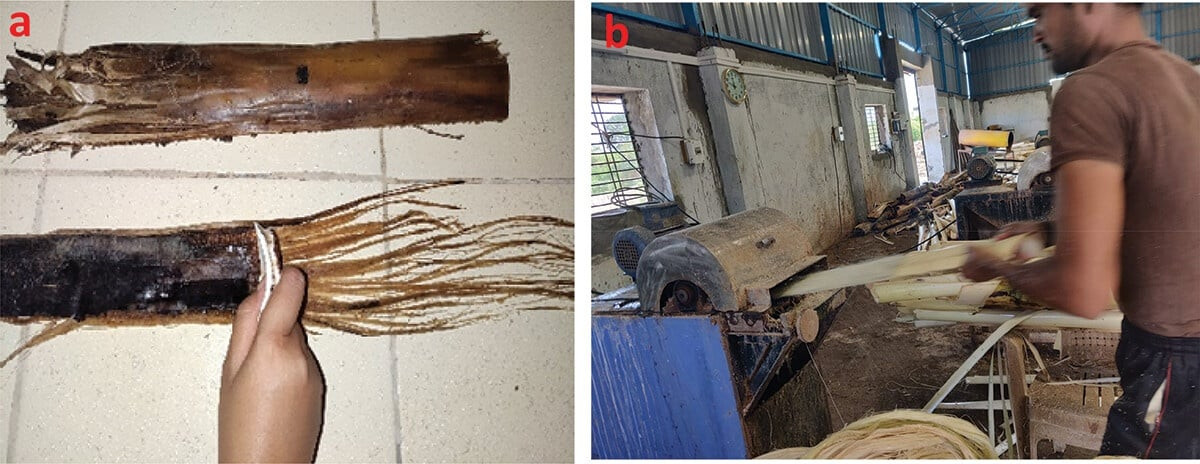
When pseudostems reach a facility, they undergo sorting based on size, moisture content, and condition, as degraded inputs yield shorter fibers with more impurities, influencing overall quality. The key step is mechanical decortication, where rollers and blades crush and scrape the stalk to separate strong fibers from the softer pulp. This mechanical approach avoids harsh chemical treatments common in other fiber extraction methods, cutting down environmental impact and simplifying wastewater management.
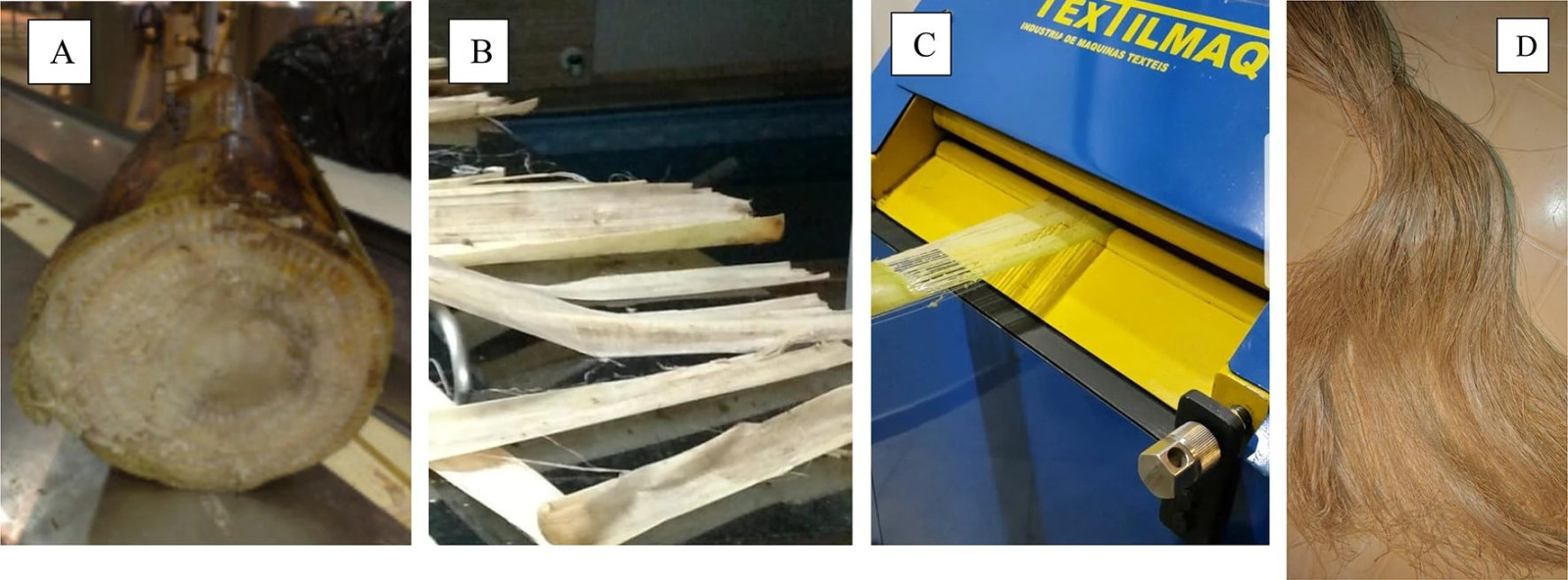
The coarse fiber bundles extracted then pass to washing to eliminate debris, reduce odors, and improve texture. In Brazil, this process is already industrialized. The SENAI Institute of Textile Technology, Apparel and Design in Santa Catarina launched the Banana Têxtil project focused on producing fibers at scale for weaving. As noted by FIESC, this initiative earned a finalist spot at the BRICS Solutions Awards, affirming its acceptance in the manufacturing sector.
Drying Techniques, Quality Assurance, and Applications
Many small-scale operations struggle with drying. Research featured in the Journal of Natural Fibers revealed that drying temperature significantly affects the final fiber’s mechanical and physical properties. Proper drying demands active process control rather than passive air drying. Industrial sites employ ventilated drying and temperature-controlled ovens to achieve consistent moisture levels that prevent mold while preserving fiber strength.
Post-drying, fibers are aligned and opened to prepare them for varied uses. In textiles, banana fiber is spun into yarn, often blended with other fibers like cotton to enhance softness and durability. Laboratory tests found banana fibers average 110 micrometers in diameter, placing them between jute at 59 micrometers and sisal at 205 micrometers. For composite materials, the fibers are formed into mats or nonwoven sheets. In paper and packaging production, they enter pulp processing alongside other cellulose sources.
A 2025 study published in Packaging Technology and Science tested banana pseudostem fibers extracted thermomechanically combined with gum arabic to create molded fruit packaging boards. Results showed mechanical properties on par or superior to recycled paper pulp trays. Although water absorption was higher, posing challenges for moisture-resistance needs, structural integrity was sufficient for transporting and displaying fruit.
Utilizing All Parts: A Circular Approach
The fibers yielded from decortication comprise only a portion of the pseudostem’s components. The leftover pulp, sap, and organic matter form a secondary resource stream. Research available on PubMed Central has investigated banana pseudostem as a base for organic liquid fertilizers, where, combined with microbes, it can enrich crops and reduce reliance on synthetic chemicals.
Facilities that convert the residual pulp into compost, biogas, or liquid nutrients foster a zero-waste cycle, mitigating disposal expenses and local environmental issues. Although zero-waste methods are not universal yet, those who implement them see cost savings and stronger ties with farming partners supplying the raw material.
Overall, this abundant agricultural byproduct, long overlooked, is now gaining serious industry attention thanks to its promising material qualities and viable processing technologies.
While logistics continue to pose challenges, and wastewater treatment and farmer education require continuous effort, the fiber itself proves effective. With established extraction techniques and a growing demand for eco-friendly textiles and packaging, the banana pseudostem stands to become a valuable sustainable resource.
- Categories:
- News








0 comments
Sign in to Comment