
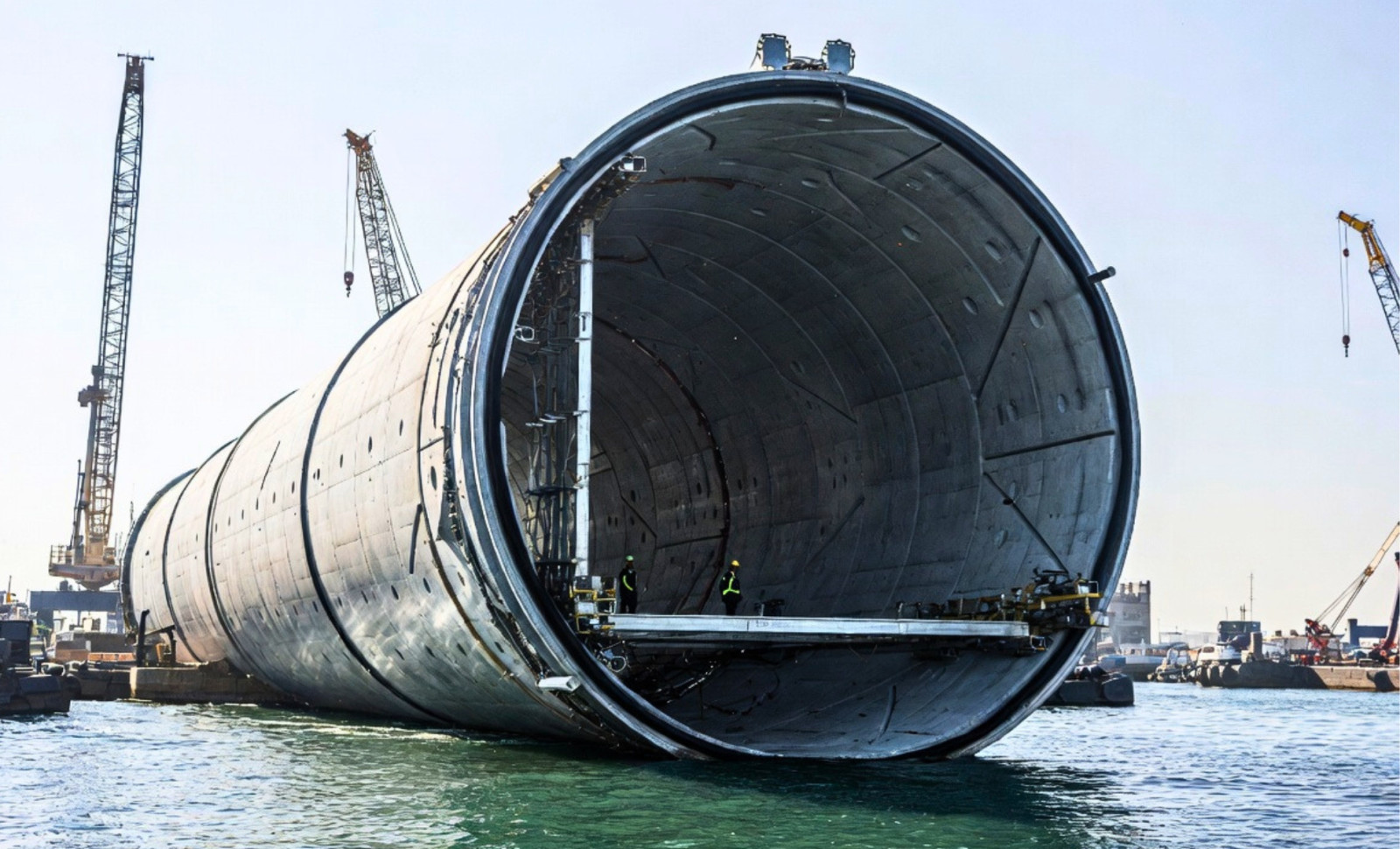
Far beneath the ocean's surface, a crucial rubber barrier prevents water from infiltrating undersea tunnels. Originally engineered to endure for a century, this sealing material is now shown to degrade far more rapidly under actual marine conditions than previously believed.
Scientists at Shijiazhuang Tiedao University in China examined rubber samples extracted from the Yuliangzhou tunnel. Their goal was to understand the true effects of prolonged submersion and constant pressure on the primary watertight seal, known as the GINA gasket. Their findings revealed that the rubber lost an alarming 67.66 percent of its sealing capability when subjected to combined compression forces and seawater exposure.
“The century-long waterproofing safety of immersed tunnel joints hinges critically on the GINA gasket as the core waterproofing element,” the researchers explained in the journal Tunnelling and Underground Space Technology.

Why Previous Estimates Underestimated the Risk
Past forecasts that considered only seawater’s chemical effects projected the gasket would maintain about 2.32 megapascals of sealing force after a century. Incorporating the sustained mechanical compression, the new model revised this estimate down to 1.51 megapascals—a significant 35 percent reduction that impacts assessments of infrastructure longevity.
This adjustment is vital because these rubber seals serve as the final barrier against ocean infiltrations. Immersed tunnels consist of prefabricated segments floated and submerged into trenches, then joined underwater. Once sealed, the GINA gasket remains compressed between steel surfaces, with the continuous pressure preventing water entry.
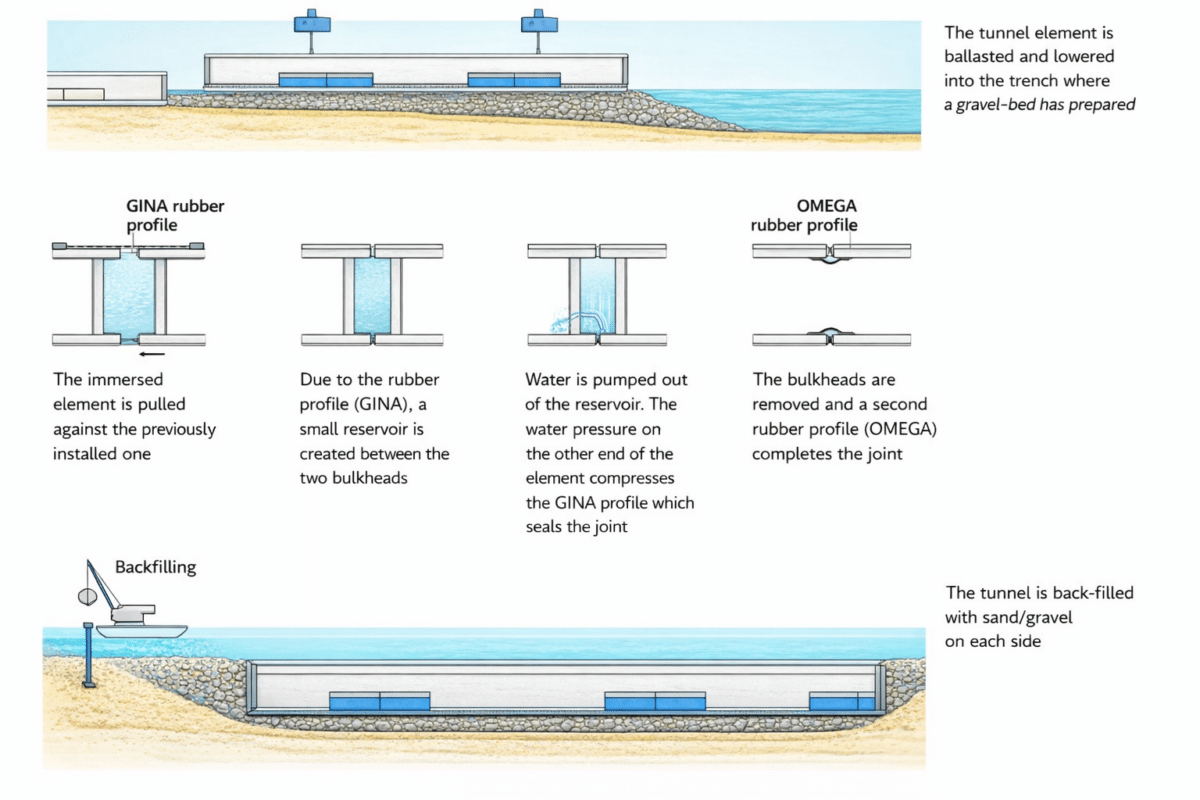
Earlier investigations that ignored the combined mechanical stress missed a critical factor. To address this, the team developed a compression testing apparatus accurately simulating the real-world pressure on the gasket. Introducing this mechanical load alongside seawater exposure accelerated the aging process beyond previous expectations.
Stiffer Rubber Masks Internal Damage
The experiments uncovered a surprising paradox. The gasket’s hardness grew by 14.18 percent and its density increased by 5.88 percent over time. While a harder rubber might visually appear more durable, the material was in fact losing essential sealing properties necessary to keep water out.
“The fundamental cause of GINA gasket aging is structural breakdown within the material,” the researchers noted. Internal polymer chains deteriorated, impairing the rubber’s ability to bounce back after compression. Additionally, the temperature range at which the rubber becomes rigid shifted upward by approximately 5.8°F.
The decline in sealing effectiveness did not follow a simple linear pattern. Instead, it exhibited a three-phase progression: an initial rapid drop, a slower mid-term decline, and a final leveling off. Accelerated aging tests showed signs of molecular alterations within just 90 days, indicating significant performance losses may surface well before the expected lifespan ends.
Lower Edges Are the Most Vulnerable
Not all portions of the gasket are equally at risk. The bottom edge experiences less compression than other sections, making it the weak spot most prone to losing sealing capability. Gaskets may still look intact while their flexibility degrades, jeopardizing waterproofing.
Previous studies on the same tunnel revealed that when the tunnel joint gap widens beyond approximately 1.85 inches, leaks can start occurring. Joint rotation exacerbates this by shifting pressure away from the gasket’s vulnerable lower edge. These insights highlight that beyond material chemistry, structural geometry determines where leaks may develop.
Despite accelerated degradation, the gasket’s sealing pressure remains above the critical 0.61 megapascals threshold needed to prevent water infiltration. The projected 100-year sealing strength of 1.51 megapascals still provides a buffer, but the safety margin is narrowing quicker than previously assumed.
For tunnel operators, these results suggest the 100-year durability target should translate into a proactive inspection and maintenance strategy. Surface hardness alone is insufficient to assess seal integrity; pressure retention must be monitored, with special attention to the lower gasket edge. Future designs may incorporate these findings to optimize rubber formulations and compression criteria before leakage becomes an issue.
The full study is available in Tunnelling and Underground Space Technology through ScienceDirect. The research was conducted at Shijiazhuang Tiedao University.
- Categories:
- News







0 comments
Sign in to Comment