
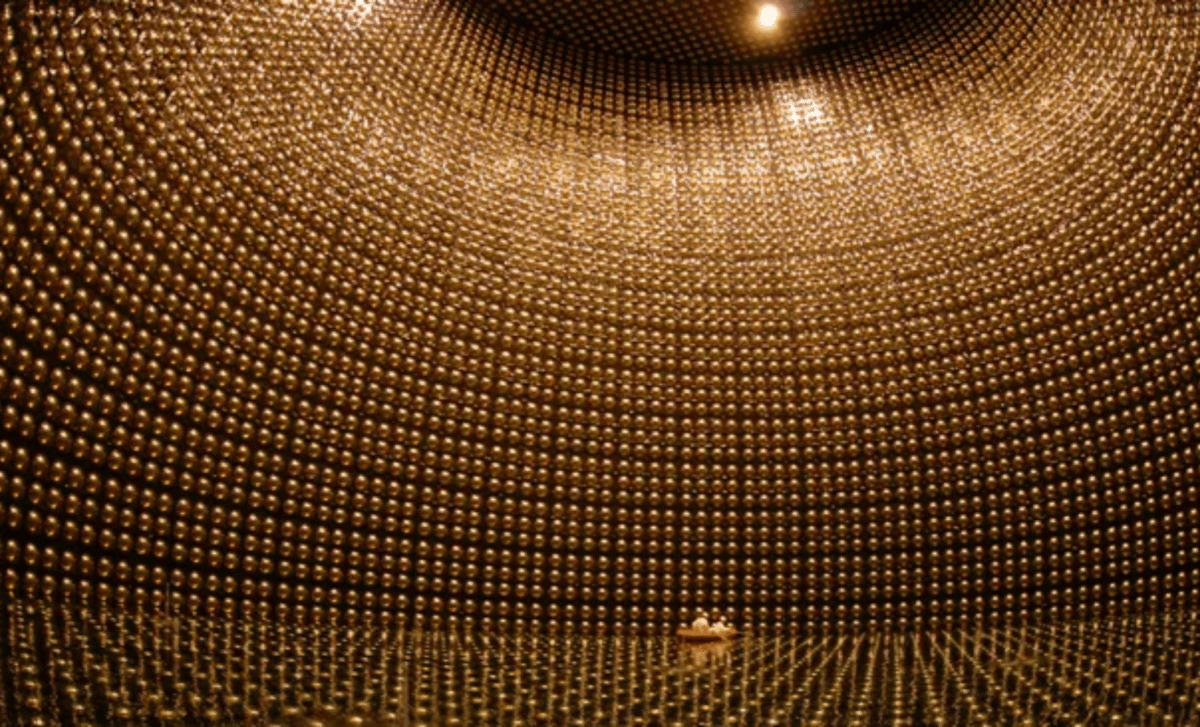
Researchers are approaching the breakthrough of detecting neutrinos, elusive particles generated by supernovae from stars that vanished billions of years ago. The Super-Kamiokande observatory, a cutting-edge detector located deep beneath Japan’s surface, is equipped to intercept these faint signals known as “ghost particles.” This detection could reveal secrets about the universe’s earliest stellar explosions and uncover events predating the formation of Earth. Insights from a recent study in The Conversation highlight how this technology could transform our understanding of star lifecycles and the cosmos’ ancient history.
Super-Kamiokande: A Window into Cosmic History
Central to this groundbreaking effort is the Super-Kamiokande observatory, one of the world’s most advanced neutrino detectors. Situated about 1,000 feet underground in Japan, the facility houses thousands of sensors designed to spot neutrinos—subatomic particles notable for passing through matter nearly unhindered, enabling them to journey across the universe without disturbance.
Recent upgrades have enhanced the Super-Kamiokande’s sensitivity, allowing it to detect the faintest neutrino traces from stars that exploded eons ago. According to the study, these so-called “ghost particles” are born in the violent deaths of massive stars during supernova events. While only a small fraction of a supernova’s energy is emitted as light, about 99% escapes as neutrinos. Capturing these particles offers a rare glimpse into stellar death events unreachable by conventional telescopes.

The Elusive Voyage of Neutrinos
Neutrinos intrigue scientists due to their extremely weak interaction with matter. Despite being incredibly abundant, with billions passing through every square inch of Earth each second, they remain notoriously difficult to detect. For decades, they could only be studied through indirect means. With the newer capabilities of Super-Kamiokande, observing these particles directly is now within reach.
What makes this endeavor particularly remarkable is the incredible age of the neutrinos it can identify. Some may have traversed space for more than 10 billion years, originating from supernovae that exploded before Earth existed. Detecting these “ghosts” will allow astronomers to look back to the distant past and analyze cosmic phenomena that shaped the universe long before life on our planet began.
How Supernova Neutrinos Are Detected
Grasping how neutrinos are produced in supernova explosions is key to appreciating their ability to reveal cosmic secrets. When massive stars exhaust their fuel, they implode and unleash colossal energy in an explosive supernova. This process releases vast quantities of neutrinos alongside other energy forms.
Because neutrinos interact so minimally with matter, they can pass through entire planets unscathed, making them excellent cosmic messengers. The challenge has been developing instruments with enough precision to detect such faint signals.
The Super-Kamiokande detector meets this challenge by combining an extensive sensor network with its underground placement, which reduces interference from cosmic rays and background noise. This unique setup enhances its capacity to distinguish neutrino signals from distant supernovae. If successful, this achievement will represent a landmark moment in astronomy, enabling scientists to observe the subtle echoes of stars that ceased to exist billions of years ago.
- Categories:
- News


0 comments
Sign in to Comment