
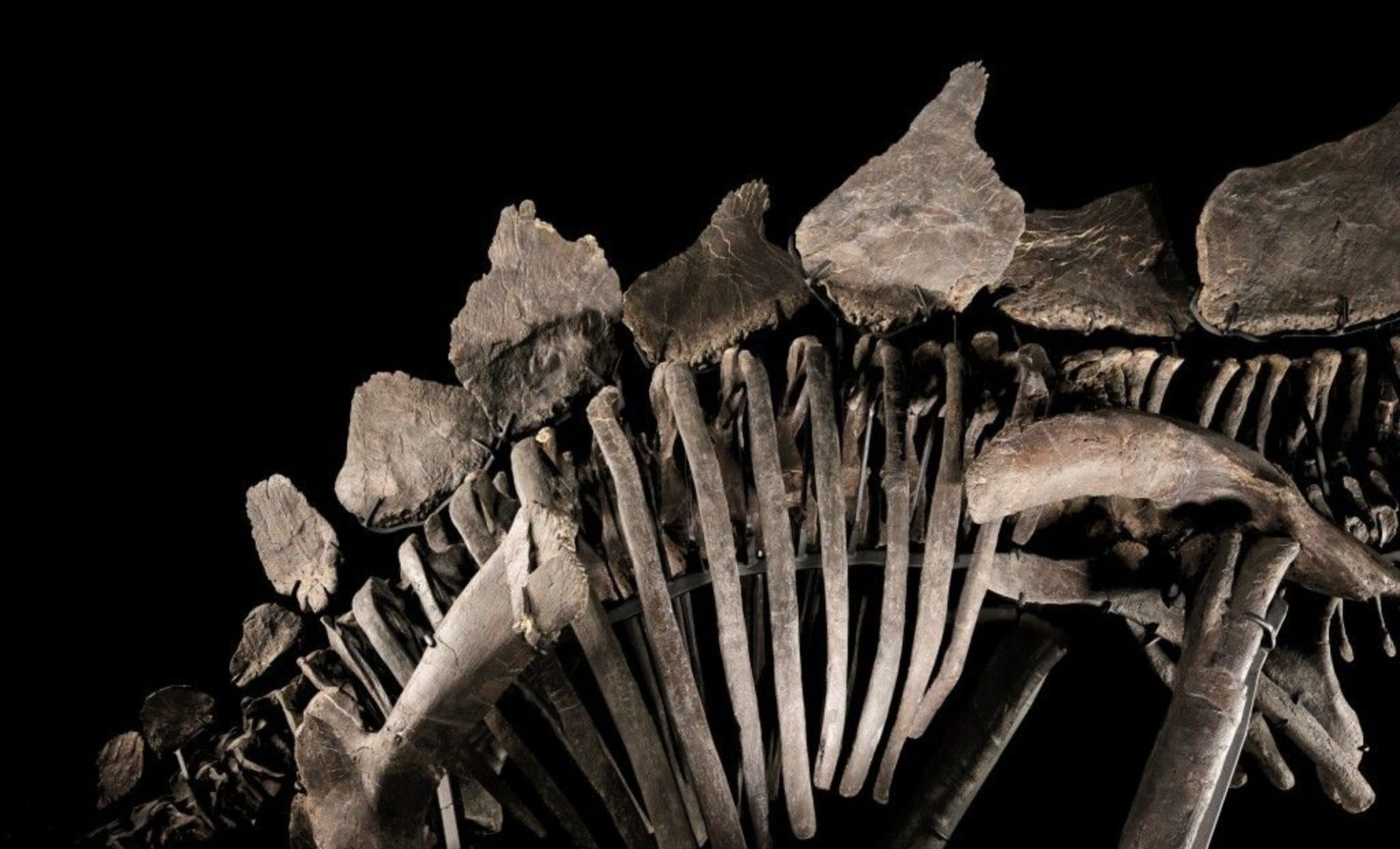
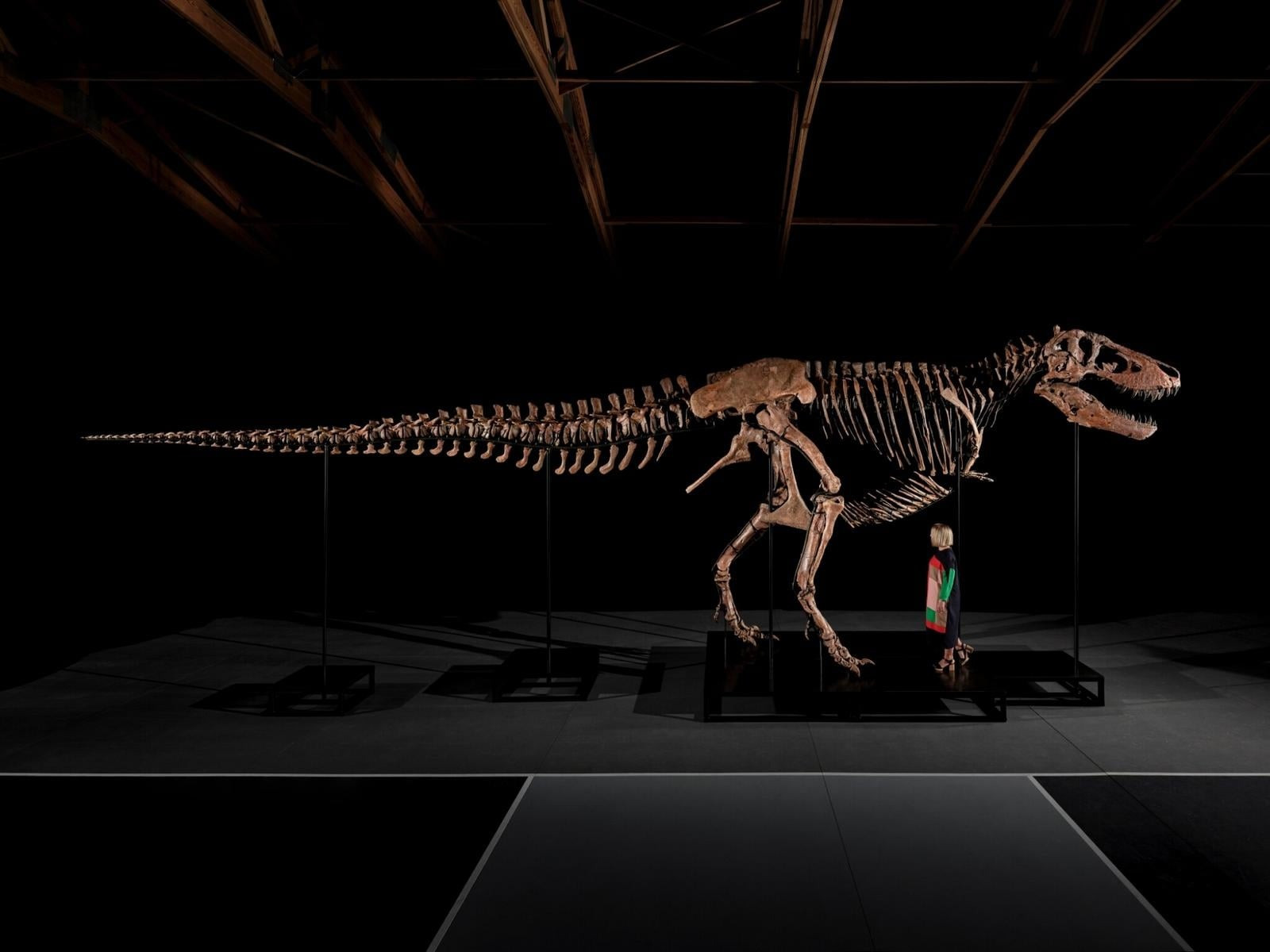
A colossal T. rex skeleton, nicknamed Gus, is poised to captivate collectors worldwide as it goes up for auction at Sotheby’s with an unprecedented valuation. This specimen carries the highest price expectation ever set for a dinosaur fossil at auction.
Ranking among the largest and most intact Tyrannosaurus rex fossils known, Gus measures approximately 38 feet in length and towers at 12.5 feet tall. The fossil's excavation and restoration spanned several years, turning what began as a promising dig site into one of the most remarkable dinosaur discoveries ever to be auctioned.
The discovery’s history is tightly linked to the late rancher Gary “Gus” Licking, whose observations on his property in South Dakota ultimately led to this extraordinary find. Years of excavation and lab work followed before the skeleton was ready to be shown to the public and offered for sale.

From Small Clues to a Dinosaur Breakthrough
The origin of Gus dates back to rancher Gary “Gus” Licking, who frequently stumbled upon dinosaur teeth and bone fragments scattered on his land, sparking suspicion of more complete remains underneath.
As documented in the original report, Licking invited Thomas Heitkamp and his team from Theropoda Expeditions to examine a focused area of the ranch covering 6,500 acres. This decision ultimately led to uncovering the remarkable T. rex in 2021.
The team’s excavation revealed much more than scattered fragments, as the fossils turned out to belong to a large, unusually complete dinosaur. The specimen was named Gus as a tribute to Licking, who unfortunately passed away the year after excavation commenced and never saw the final assembled skeleton.
Six Years of Careful Excavation and Restoration
Extracting the fossil demanded patience and meticulous effort. According to Sotheby’s, the excavation alone spanned three years, involving painstaking fieldwork across multiple seasons to carefully recover fossils from complex rock layers.
“This specimen took three years to excavate, with the team sometimes working for weeks straight without finding a thing. It really does feel like tackling the world’s hardest puzzle, except we have to find all the pieces first.” Heitkamp said in the press release.
Heitkamp further explained the site preserved traces of a broader Cretaceous ecosystem, containing fossils of flora and fauna from that era.
“We documented each stage with quarry maps, inventories, and collection data. In the end, our diligence paid off and we were delighted to discover what turned out to be a huge and incredibly complete T. rex specimen,” he added.
The work continued back in the lab, where another three years were spent cleaning and assembling the fossils. Technicians carefully removed encasing rock, treated each bone, identified skeletal pieces, and meticulously reconstructed the skeleton. Altogether, the excavation and restoration combined took nearly six years.
The Auction Spotlight on an Exceptionally Complete T. rex
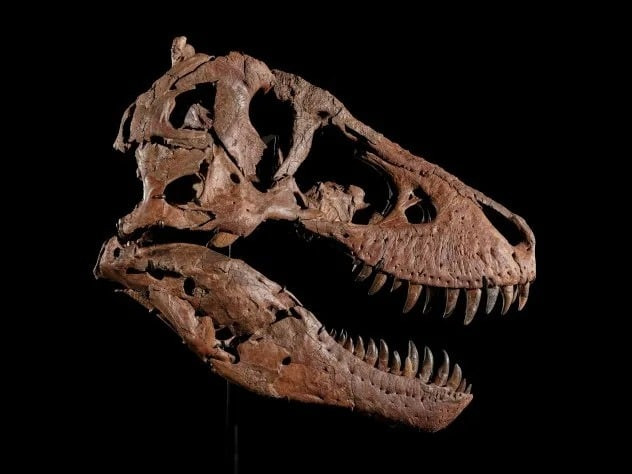
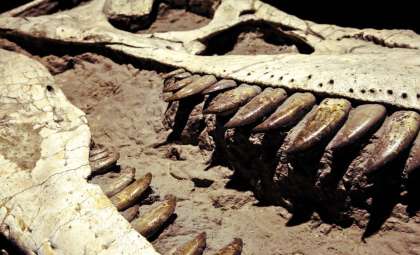
What sets Gus apart is its extraordinary degree of completeness. Containing 183 individual fossil bones, the skeleton accounts for an estimated 82% of the entire T. rex anatomy. Auction details emphasize prized inclusions such as a well-preserved skull, a furcula (wishbone), and a fully intact pelvis.
The sheer size of the fossil is remarkable— the skeleton measures about 38 feet long, while the skull alone exceeds four feet. At approximately 12.5 feet tall, Gus stands out as one of the largest T. rex discoveries ever documented.
These impressive traits contribute to the significant price range Sotheby’s has placed on this fossil. It is estimated to fetch between $20 million and $30 million, marking it as the highest-ever appraisal for a dinosaur specimen headed to auction.
- Categories:
- Science


0 comments
Sign in to Comment