
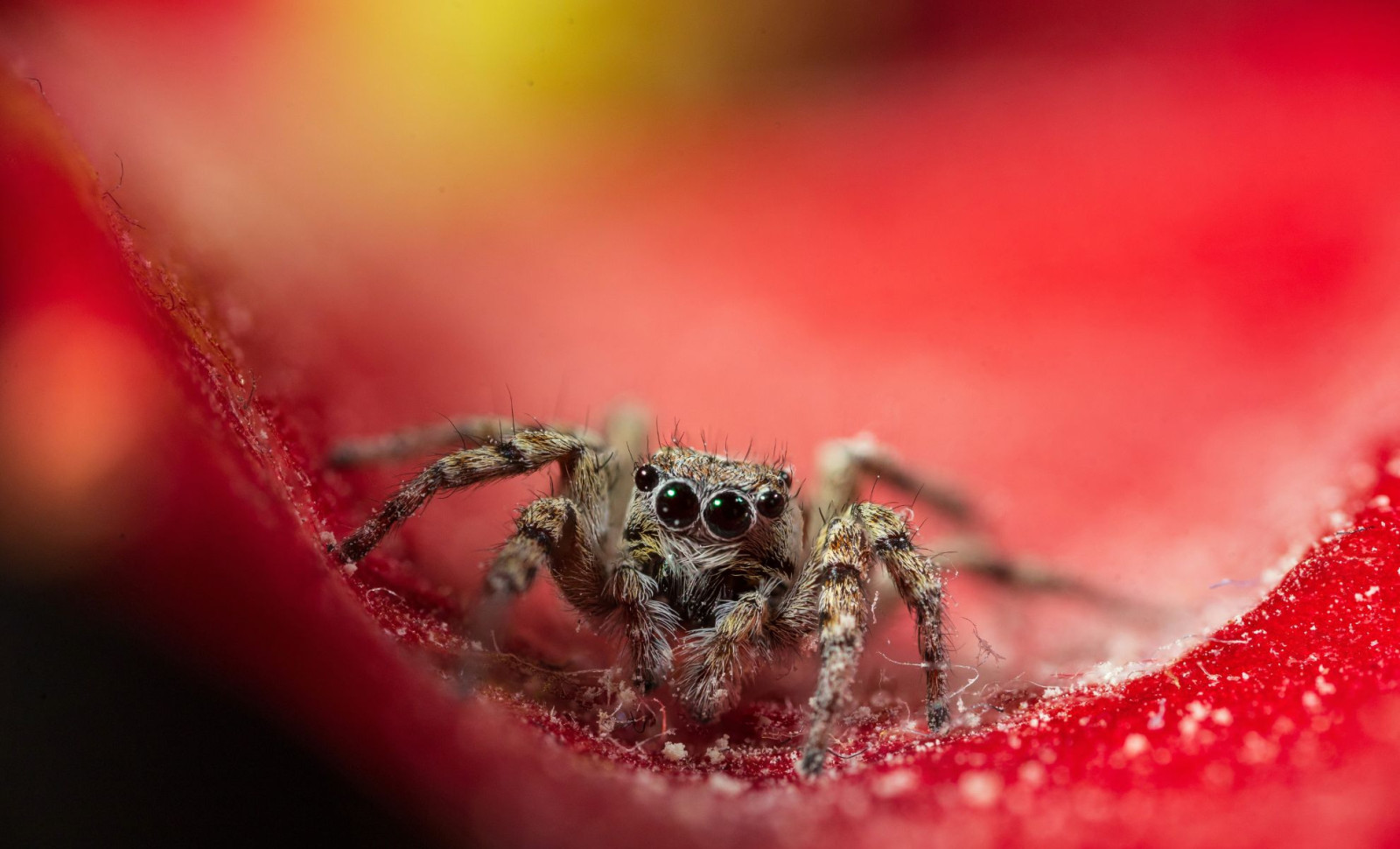
A spider native exclusively to the Canary Islands is causing researchers to reconsider established evolutionary theories. Unlike typical island inhabitants that often enlarge their genomes, Dysdera tilosensis has remarkably cut its DNA content by 50%, marking an extraordinary case of genome shrinking in an animal.
Published recently in Molecular Biology and Evolution, the study highlights how this island arachnid sustains large genetic diversity despite possessing a genome dramatically smaller than that of its nearby continental relatives.
The investigation was conducted by scientists from the University of Barcelona, alongside collaborators from the Spanish National Research Council (CSIC) and the University of Neuchâtel. Through advanced sequencing technologies, they compared two closely related species: D. tilosensis, restricted to Gran Canaria, and Dysdera catalonica, found in Catalonia and southern France.

Genome Size on the Island Less Than Half That of Its Mainland Relative
The research’s standout discovery was the dramatic genome shrinkage. The study reveals that D. catalonica has a genome of around 3.3 billion base pairs, whereas D. tilosensis harbors just 1.7 billion, roughly half as large. Surprisingly, the downsized genome in D. tilosensis does not correspond to lower genetic variation. As Professor Julio Rozas, the study’s lead, stated:
“Despite having a smaller genome, the species from the Canary Islands shows greater genetic diversity.” This contradicts the usual assumption that small, isolated populations, like those found on islands, experience genetic bottlenecks and a drop in diversity due to limited founding individuals.
This finding opposes the common belief that isolated island populations undergo genetic bottlenecks, reducing their diversity. Additionally, chromosome counts differ: D. catalonica possesses four autosomes and a single X chromosome, whereas D. tilosensis displays six autosomes plus one X chromosome.
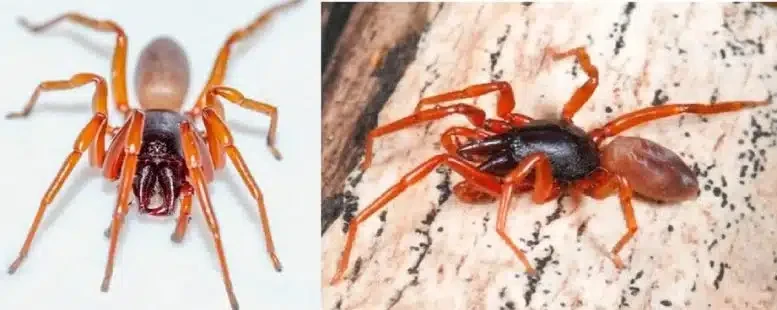
Defying Established Patterns of Evolution
This discovery challenges classical evolutionary concepts. Typically, island species are thought to accumulate extra, non-functional DNA under lower selective pressures, increasing genome size with time. However, D. tilosensis demonstrates the opposite trend.
Professor Sara Guirao, a senior author, noted that genomic and flow cytometry data indicate the common ancestor of both species had a genome around 3 billion base pairs. This confirms that the reduced genome of D. tilosensis is a secondary adaptation following its colonization of the Canary Islands.
Genome contraction is rarely observed compared to expansion, especially within short evolutionary timescales. What makes this instance remarkable is that it involves an animal species undergoing such significant genomic reduction recently. Doctoral candidate Vadim Pisarenco emphasized the implications for founder effect assumptions.
“We observed the opposite: island species have smaller, more compact genomes with greater genetic diversity,” he said in the SciTechDaily article.
Streamlining Over Expansion
The study indicates that natural selection likely remained intense within the island spider population. Instead of expanding its genome, the spider appears to have undergone genomic refinement, discarding repetitive DNA sequences lacking functional importance.
Researchers suggest this process reflects non-adaptive genomic changes, meaning the genome contracted not due to direct survival advantages but via purifying selection effectively removing superfluous DNA. The team proposes that the D. tilosensis population has remained large and stable since colonizing Gran Canaria.
- Categories:
- Science






0 comments
Sign in to Comment