
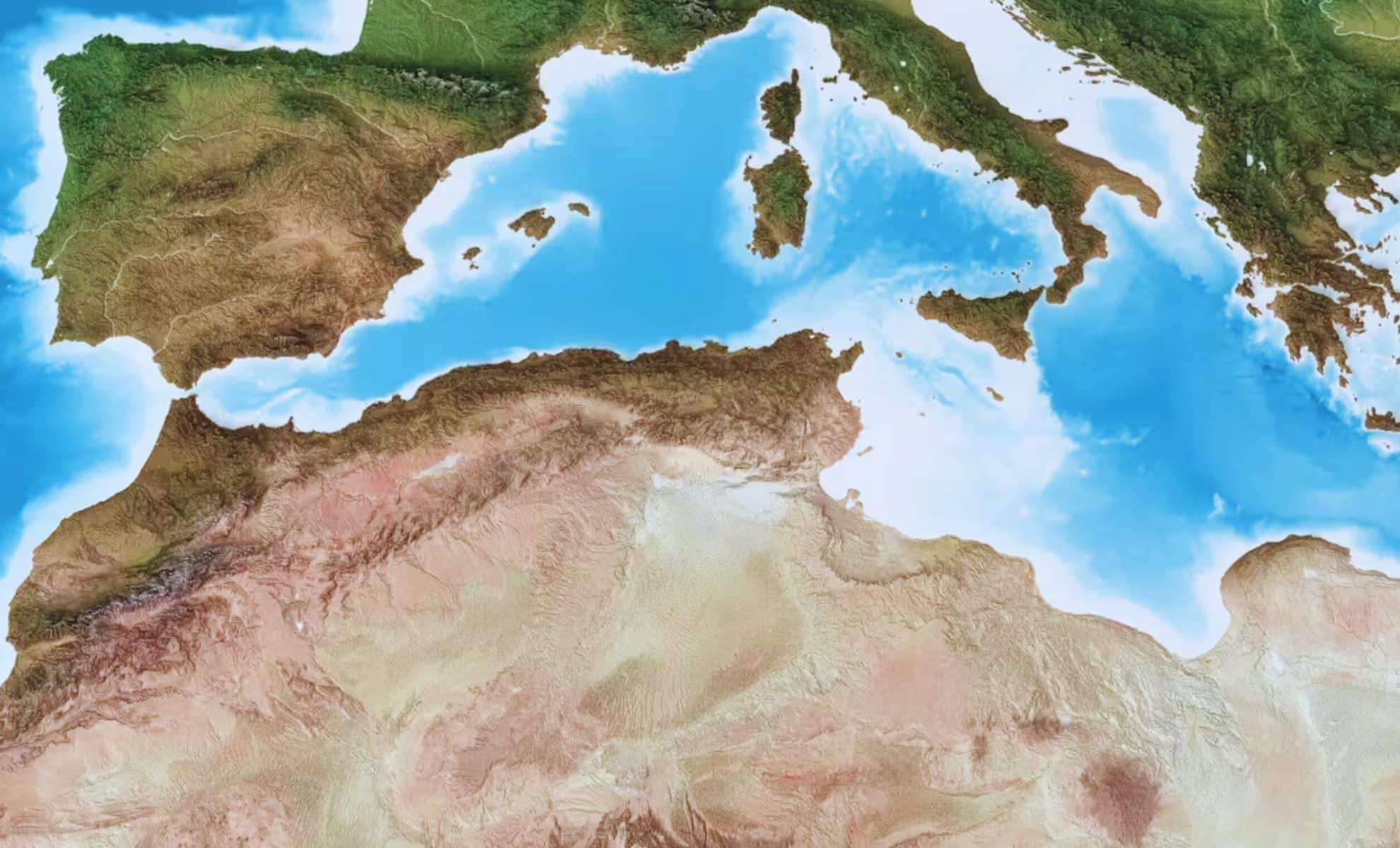
Over five million years ago, a monumental surge of water from the Atlantic Ocean rushed through the Strait of Gibraltar, rapidly refilling what was then a mostly dry Mediterranean basin. This extraordinary event, known as the Zanclean megaflood, ranks among Earth's most significant flood episodes, transforming the arid and salt-encrusted basin into a thriving sea.
The Messinian Salinity Crisis and Origins of the Zanclean Flood
The Zanclean megaflood traces its roots to the earlier Messinian Salinity Crisis. Between 5 and 6 million years ago, the Mediterranean Sea became largely cut off from the Atlantic due to tectonic shifts that blocked their connection.
This isolation caused extensive drying and evaporation, leaving behind a desiccated basin lined with thick salt layers. Scientific drilling into sediment beneath the Mediterranean has uncovered evidence of shallow freshwater lakes that temporarily existed during this arid phase, offering valuable insight into the sea’s dramatic environmental changes.

Geophysical Evidence Corroborating the Flood Hypothesis
In 2009, geophysical research conducted while planning a tunnel beneath the Strait of Gibraltar uncovered an underwater gorge possibly carved by the overwhelming forces of the Zanclean flood.
This interpretation gained further support from a study led by Aaron Micallef, a seabed researcher from Malta. His team concentrated on the area near the Strait of Gibraltar, identifying physical traces consistent with the passage of giga-scale floodwaters into the Mediterranean basin.
Geological Clues in the Landscape of Sicily
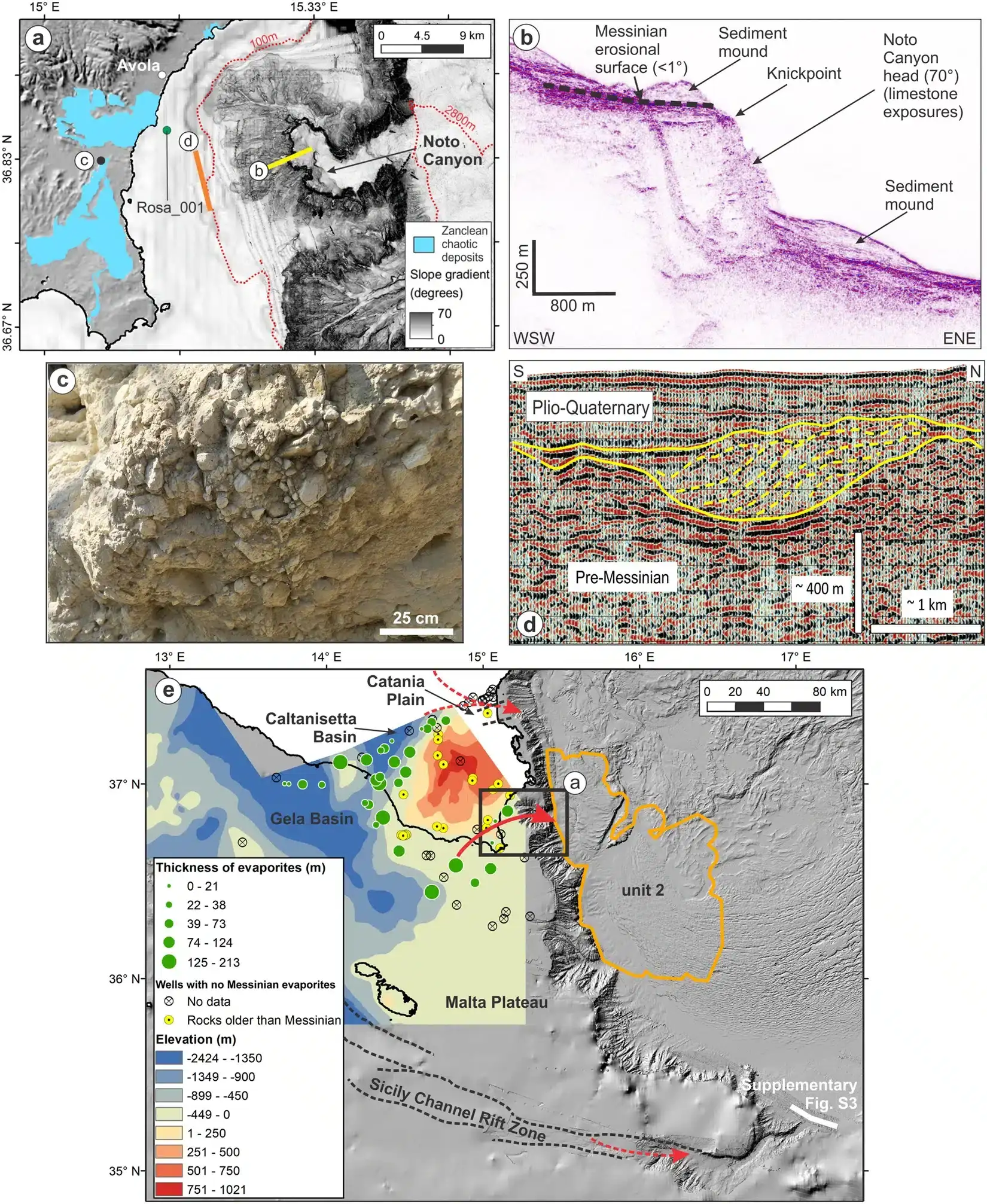
Investigations in southern Sicily revealed unique landforms indicative of ancient flooding. The arrangement of hills and valleys closely resembled flood-shaped topography found in Washington State, evidence of massive water flow from late Ice Age events.
Further analyses uncovered scattered rock debris, including large boulders atop hills, suggesting forceful transport by floodwaters from lower terrain. These deposits featured rock types matching those in the basins below, confirming massive water flow shaped the region over five million years ago.
Simulating the Megaflood’s Dynamics
To quantify the flood’s effects, researchers created detailed computer models to simulate water movement over the Sicily Sill. Results indicated that the floodwaters reached depths of up to 40 meters and surged at velocities reaching 115 kilometers per hour (71 miles per hour).
The model also estimated an astonishing discharge rate of 13 million cubic meters of water per second poured into the eastern Mediterranean basin—vastly surpassing today’s Amazon River flow of roughly 200,000 cubic meters per second.
- Categories:
- Climate change















0 comments
Sign in to Comment