
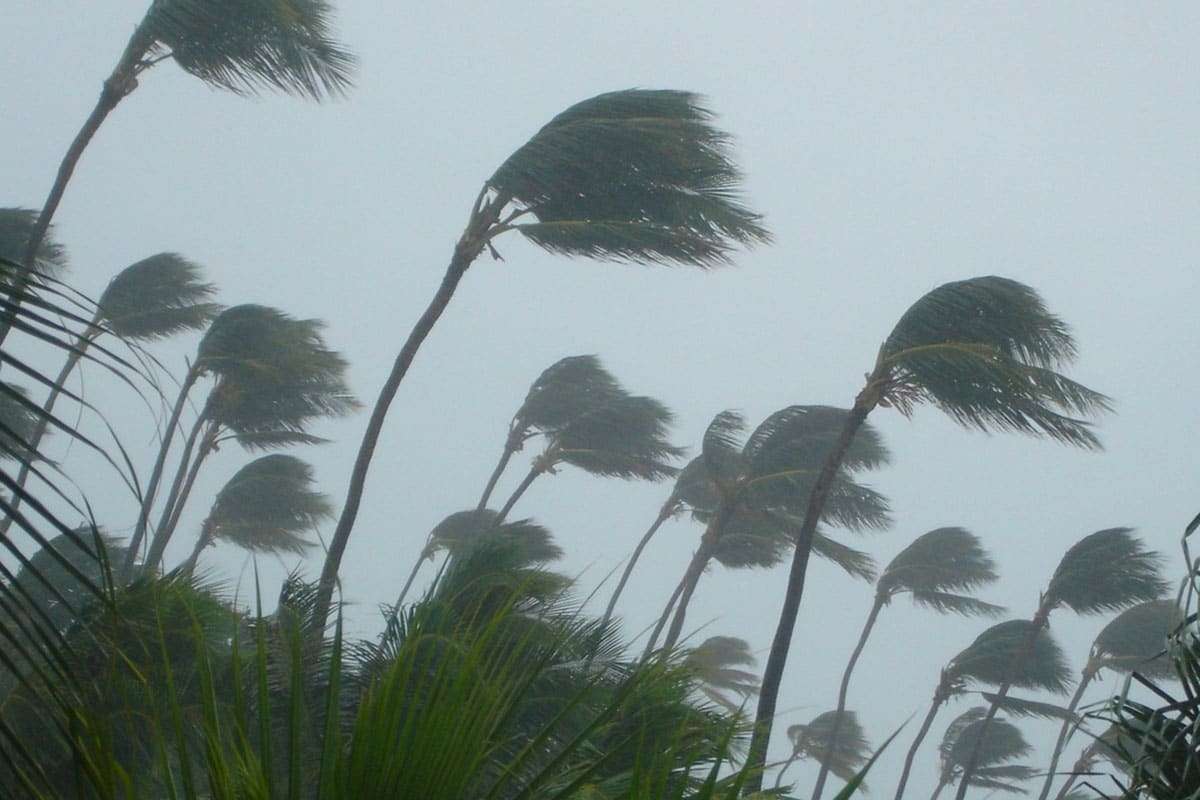
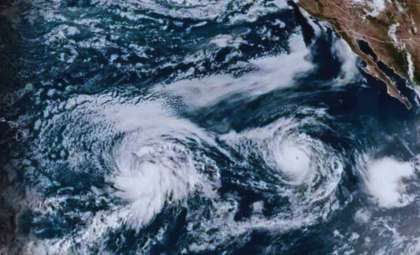
The World Meteorological Organization (WMO) rigorously monitors and authenticates weather extremes globally. Their data show that the strongest wind gust ever measured on Earth reached a staggering 407 km/h (253 mph). This record-setting gust was recorded on April 10, 1996, during a tropical cyclone event on Barrow Island, located off Western Australia's coast.
This extraordinary wind velocity was detected by an anemometer, a device with rotating cups that spin in proportion to wind strength. This record remained relatively obscure for years due to Barrow Island being privately owned by an oil enterprise. Eventually, after a comprehensive review by the WMO, this gust was formally recognized as the fastest ever recorded.
To grasp the magnitude of this speed, consider these comparisons:

- Almost double the top speed of a Formula 1 racing car
- Approximately one-third the velocity of sound at sea level
- Faster than many commercial airplanes during cruise flight
Supersonic Winds in Our Solar System
While Earth’s winds are formidable, they are dwarfed by those on other planets. Neptune, the outer ice giant, boasts the most powerful winds observed within our solar system. NASA data indicate that Neptune's winds can reach supersonic speeds nearing 1,770 km/h (1,100 mph), about 1.5 times the speed of sound.
These extreme wind speeds were derived from observations by telescopes and spacecraft, notably NASA's Voyager 2 mission, which passed close to Neptune in 1989. Instruments aboard the probe tracked cloud movements, enabling scientists to estimate wind velocities by analyzing cloud motion patterns.
Below is a comparison of the highest wind speeds documented on Earth and Neptune:
PlanetMaximum Wind SpeedProportion of Sound SpeedEarth407 km/h~0.33 MachNeptune1,770 km/h~1.5 Mach
Verification Challenges and Contested Records
Although the WMO endorses 407 km/h as the official peak wind speed on Earth, higher speeds have been suggested. Such claims face scrutiny due to difficulties in consistent verification. Examples include:
1. A 1999 tornado in Bridge Creek, Oklahoma, was estimated to reach 486 km/h (302 mph).
2. In May 2024, tornadoes near Greenfield, Iowa, were reported to have gusts ranging from 497 to 512 km/h (309-318 mph).
These speeds were recorded using mobile Doppler radar systems mounted on vehicles, which measure wind flow remotely. Given potential inaccuracies inherent to this technique, these speeds remain equivalent to earlier claims rather than surpassing them with certainty.
The WMO maintains a strict policy of only including direct measurements from physical devices such as anemometers in its official registry. This approach, while ensuring accuracy, limits records to accessible locations, leaving extreme winds at high altitudes—where jet streams can exceed these speeds—unrecorded by conventional instruments.
Current investigations involve radiosonde data from weather balloons, revealing wind velocities up to 483 km/h (300 mph) above Japan and the western Pacific. If validated, this would mark the highest atmospheric wind speed officially detected on Earth.
Consequences of Intense Wind Speeds on Earth
Powerful winds can cause severe damage to natural environments and human-built structures, uprooting vegetation and demolishing buildings. Remarkable storms can create unusual scenarios, such as lions and giraffes encountering snowfall in South Africa, illustrating the surprising effects of extreme weather.
High winds are often linked to disruption, but they also play a vital role in Earth's climate by redistributing heat and moisture globally, shaping weather systems and ecosystems. Occasionally, atypical wind patterns can cause strange temperature shifts, like unexpected heatwaves during the Southern Hemisphere's winter season.
As climate change reshapes global weather dynamics, scientists remain vigilant in monitoring wind extremes to better anticipate natural hazards and deepen understanding of Earth's atmospheric behavior.
- Categories:
- Climate change







0 comments
Sign in to Comment