
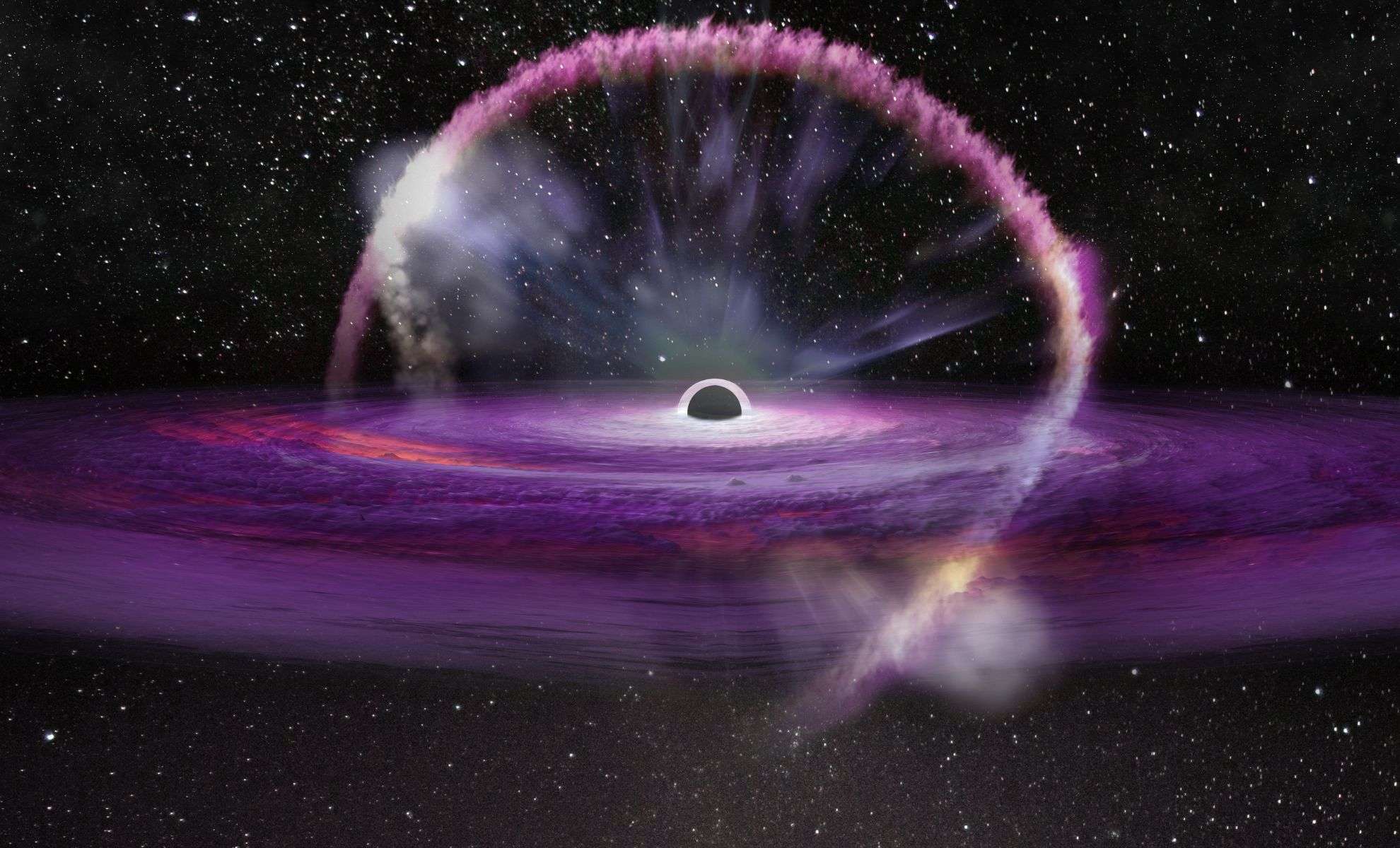
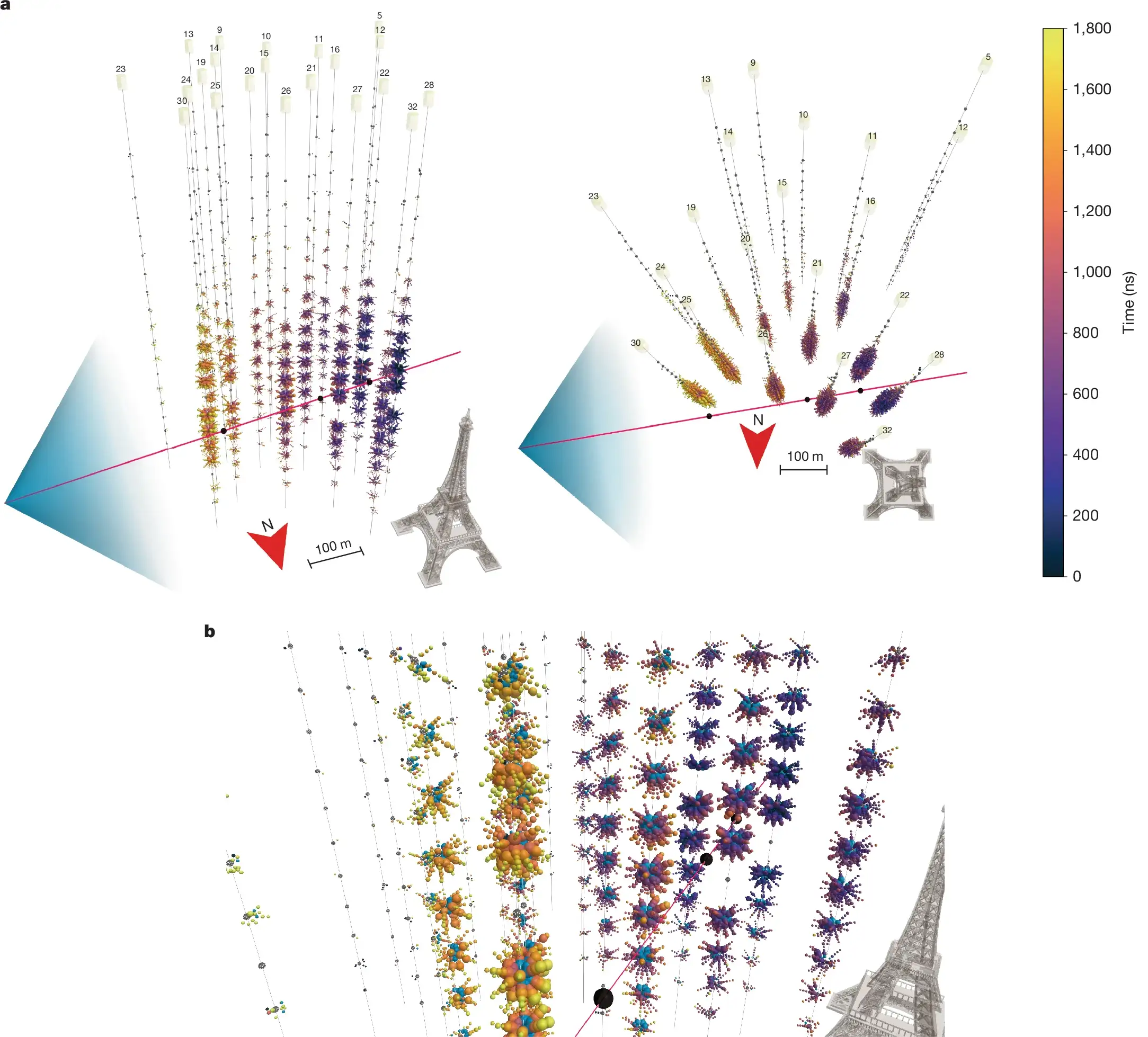
On February 13, 2023, an exceptionally powerful subatomic particle traversed the Mediterranean near Sicily, activating thousands of detection sensors. This particle, known as a neutrino or a “ghost particle,” exhibited the highest energy level ever measured. Researchers at MIT suggest it may originate from a small primordial black hole that recently underwent a cataclysmic explosion.
Captured by the KM3NeT observatory, this detection represents a major advance in neutrino research. Neutrinos are nearly massless and rarely interact with matter, making them notoriously difficult to observe. The energy of this neutrino, around 220 peta electron volts, surpasses what current particle accelerators can produce, prompting scientists to explore new explanations for its source.
Breaking New Ground in Neutrino Observation
Neutrinos are elusive particles that pass through space and matter with minimal interference. To catch them, scientists rely on sophisticated detectors tuned to spot rare particle interactions. The KM3NeT telescope, positioned offshore Sicily, recorded the signal when this ultra-energetic neutrino collided with matter.

Earth.com highlights how the particle’s energy challenged existing astrophysical models, which typically link such emissions to supernovae or active galactic nuclei. This newly documented neutrino blows past the previous record of 6.05 peta electron volts observed by the IceCube experiment, raising fresh debates about the origins of such extreme cosmic particles.
Exploring the Primordial Black Hole Hypothesis
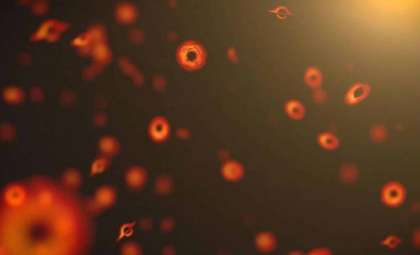
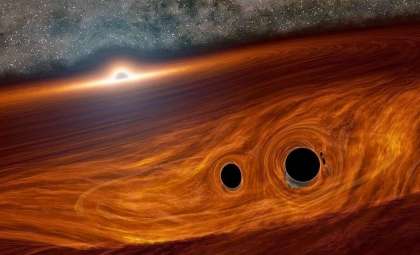
Researchers from MIT have put forward an intriguing hypothesis to account for this neutrino’s enormous energy: it may have originated from the terminal burst of a primordial black hole. Unlike black holes formed by stellar collapse, these primordial black holes are thought to have formed shortly after the Big Bang and are considerably smaller. Through Hawking radiation, such a black hole gradually loses mass and heats up over cosmic time, culminating in a final explosive release of particles including energetic neutrinos.
The MIT team estimates this explosive event occurred within roughly 2,000 astronomical units, or nearly 186 billion miles, from Earth — a distance beyond Pluto but still inside the outer Oort Cloud region. If this scenario is accurate, the neutrino recorded in February could be a direct product of this cosmic cataclysm.
A New Frontier for Understanding the Universe
This discovery holds potential significance for dark matter studies, which focus on the invisible substance making up approximately 85% of the universe’s mass. According to Earth.com, primordial black holes might account for a fraction of dark matter, meaning their explosive deaths could serve as rare cosmic laboratories to probe the universe’s fabric and black hole dynamics.
The final moments of primordial black holes could unlock valuable clues about dark matter’s composition and provide fresh tests of black hole physics. In particular, this event might offer evidence supporting Stephen Hawking’s theory that black holes emit radiation as they evaporate. Validating this could address some of the universe’s most fundamental mysteries.





0 comments
Sign in to Comment