
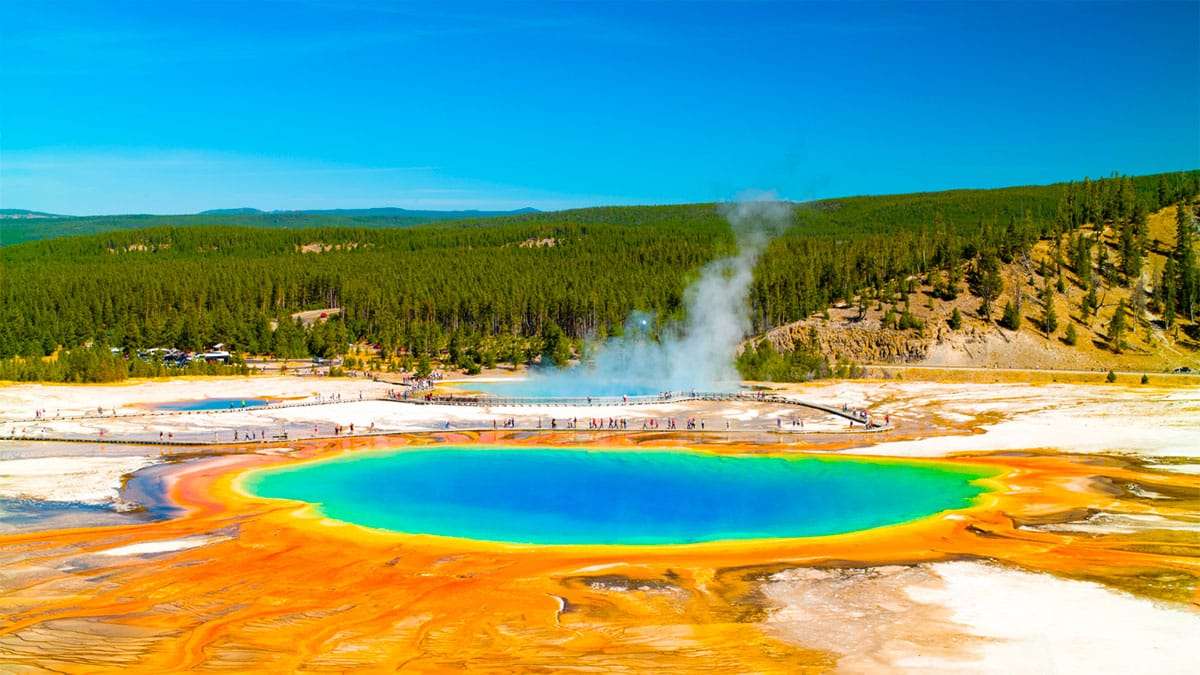
Amidst the sensationalized portrayals of natural catastrophes in popular media, the Yellowstone supervolcano remains a genuine geological marvel that captivates researchers and enthusiasts alike. A recent investigation published in the prestigious Nature journal on January 1, 2025 has brought renewed focus to this remarkable feature of the Earth’s crust. The study provides essential information for predicting potential eruptions and deepening our comprehension of the subsurface mechanisms at play.
Hollywood Disaster Flicks vs. Scientific Reality
Disaster movies, such as Roland Emmerich’s 2012, often portray Yellowstone erupting with spectacular effects. Although these films entertain, they underscore the need for rigorous scientific inquiry to convey the true nature of such events.
A recent report by researchers at the University of Geneva, highlighted in a Washington Post article titled “There Will Be Eruptions,” offers a detailed examination of ongoing volcanic processes beneath Yellowstone. These discoveries are crucial for debunking myths surrounding supervolcanoes and providing factual clarity beyond cinematic exaggerations.

Understanding Volcanic Landforms: Craters versus Calderas
The study emphasizes differentiating volcanic landforms such as craters and calderas. Craters typically form as smaller circular depressions resulting from explosive eruptions and span a few hundred meters. In contrast, calderas are massive depressions created when volcanic chambers collapse after large eruptions, often stretching several kilometers. The Yellowstone caldera, measuring nearly 65 kilometers across, exemplifies the immense forces shaping our planet.
Tracking Magma Movement Beneath Yellowstone
Home to one of the planet’s most renowned supervolcanoes, Yellowstone National Park is under constant surveillance to detect magma shifts that could signal future volcanic activity. The main magma types found here are basaltic and rhyolitic. Basaltic magma exhibits low viscosity and flows more readily, while rhyolitic magma is more viscous and requires greater pressure buildup to erupt. Currently, basaltic magma is migrating towards the northeastern section of the caldera but remains sufficiently deep beneath the crust, posing no imminent hazard.
This continuous monitoring is vital because understanding subterranean magma behavior helps scientists assess eruption risks. As Erik Klemetti Gonzalez, Associate Professor at Denison University, explains: “An eruption at Yellowstone isn’t expected soon. While eruptive events will happen eventually, they are likely thousands of years away.”
Reflecting on Yellowstone’s Eruptive Past to Predict Its Future
Yellowstone has experienced three significant eruptions within the last 2.1 million years, the most recent occurring approximately 620,000 years ago. That massive eruption released over 1000 km³ of volcanic ash and pyroclastic materials, demonstrating the volcano’s extraordinary power.
Current scientific insights suggest another major eruption remains a possibility but not one expected within the foreseeable future. These findings provide reassurance in the face of sensational media portrayals.
Ongoing research into Yellowstone and similar natural phenomena enriches public understanding and readiness. Whether you’re a researcher or simply curious, staying informed about these geological forces enables us to appreciate their grandeur and prepare for what may come in millennia ahead.
- Categories:
- Nature









0 comments
Sign in to Comment