
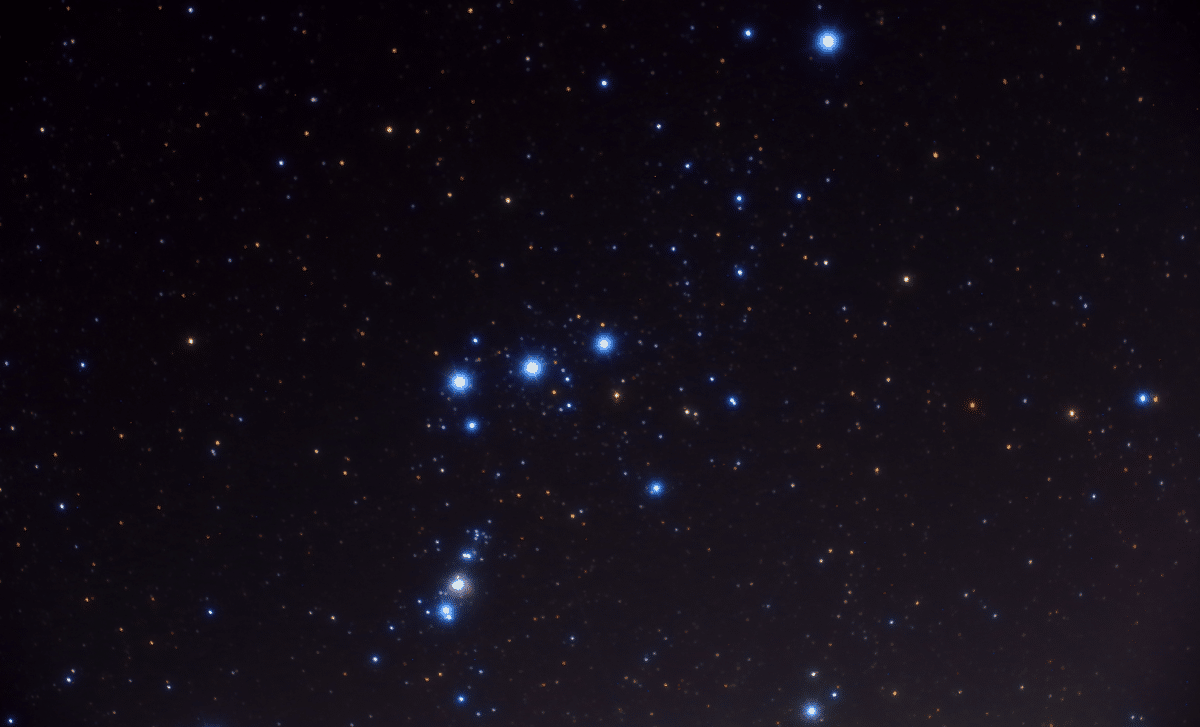
Orion’s Belt stars stand out as some of the most dazzling fixtures in the night sky, captivating viewers especially during the winter months. According to Space.com, the trio of stars—Alnitak, Alnilam, and Mintaka—are massive blue supergiants, radiating with a brightness more than 200,000 times that of the Sun. These luminous giants shine prominently throughout winter, offering an extraordinary celestial spectacle. This article explores the astronomical importance, cultural meanings, and reasons winter offers an optimal viewing window for these stars.
A Striking Celestial Alignment: Orion’s Belt
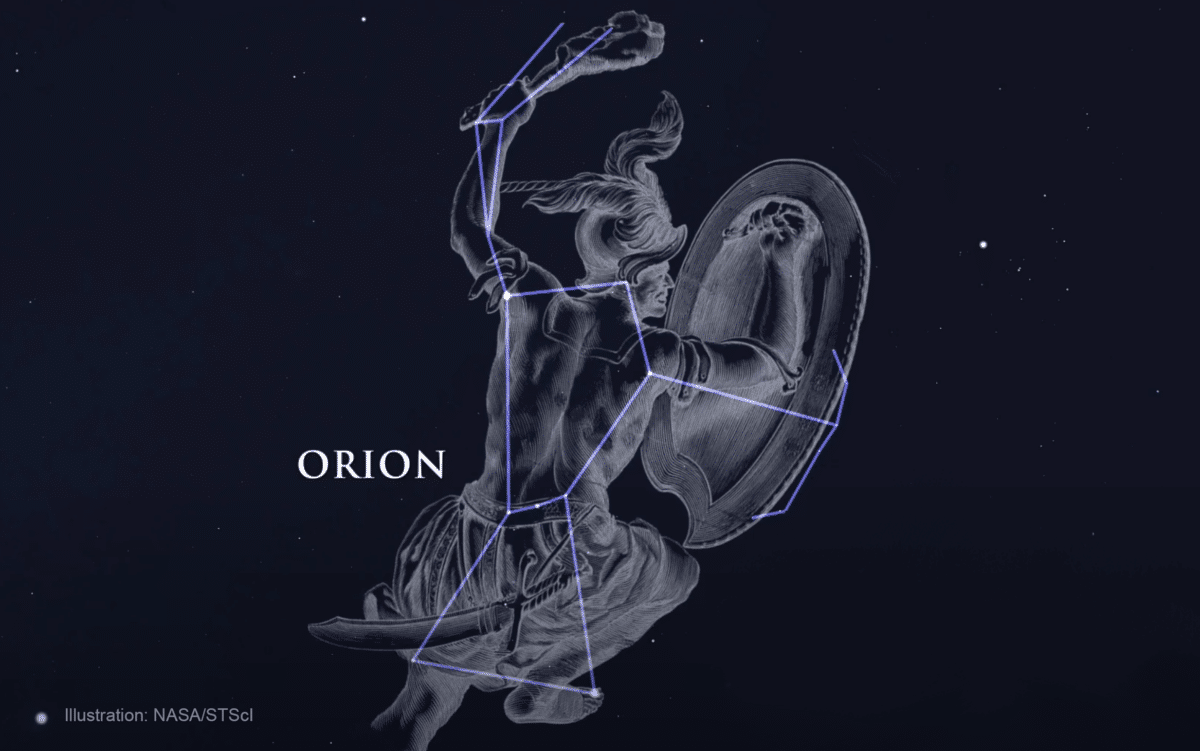
Known widely as one of the most recognizable star patterns, Orion’s Belt consists of three stars aligned in a nearly perfect row: Alnitak, Alnilam, and Mintaka. Positioned between 900 to 2,000 light-years from Earth, these stars emit a vivid blue-white glow that dominates the winter night sky. They form part of the larger stellar arrangement called Gould’s Belt, named in honor of astronomer Benjamin Apthorp Gould.
In his work Introducing the Constellations (Viking Press), astronomer Robert H. Baker beautifully captures the timeless nature of this cosmic display, stating:

“The same drama will be repeated next winter, and the next. Each year it will be watched by vast and appreciative audiences as it has been watched since man first turned intelligent eyes to the heavens.
Orion’s Belt in World Cultures
The stars of Orion’s Belt have long been woven into the mythologies and beliefs of various civilizations. In ancient Egypt, these three stars were linked with deities and the afterlife, symbolizing the pharaohs’ souls journeying to join the gods, with Orion embodying Osiris, lord of the underworld.
In Chinese tradition, Orion’s Belt was seen as a balance beam symbolizing harmony in the cosmos. Meanwhile, Australian Aboriginal stories interpret the trio as three young men dancing to the tunes of the Pleiades star cluster. These narratives reflect the profound human connection to the night sky, which persists in modern times as people continue to be inspired by Orion’s brilliance.
Why Winter Offers the Best View of Orion’s Belt
The winter months provide ideal conditions for observing Orion’s Belt due to clearer, crisper skies. With less atmospheric moisture and haze than in warmer seasons, colder air allows stargazers to detect even faint stars more easily. During winter evenings, Orion climbs higher above the horizon, making its luminous belt more visible to observers across the globe, particularly in the northern hemisphere.
As highlighted by Space.com, this optimal visibility creates an exceptional chance for amateur astronomers and sky enthusiasts to appreciate Orion’s radiance. Whether experienced or new to stargazing, winter nights offer an unforgettable encounter with these stellar giants.
The Evolutionary Journey of Orion’s Belt Stars
Classified as blue supergiants, the stars in Orion’s Belt are among the hottest and most luminous in the Milky Way. Their rapid consumption of nuclear fuel means they have relatively brief lifetimes compared to the Sun’s estimated 10 billion years. These stars live only a few million years before exploding as supernovae, brilliant events that can temporarily outshine entire galaxies.
The remarkable luminosity and ephemeral nature of these stars captivate astronomers. Their intense light brightens the surrounding space, creating stunning cosmic vistas. Situated within Gould’s Belt, these young, massive stars contribute significantly to the Milky Way’s splendor. Their brilliant yet fleeting existence continues to spark wonder and inspire stargazers worldwide.
- Categories:
- Astronomy













0 comments
Sign in to Comment