
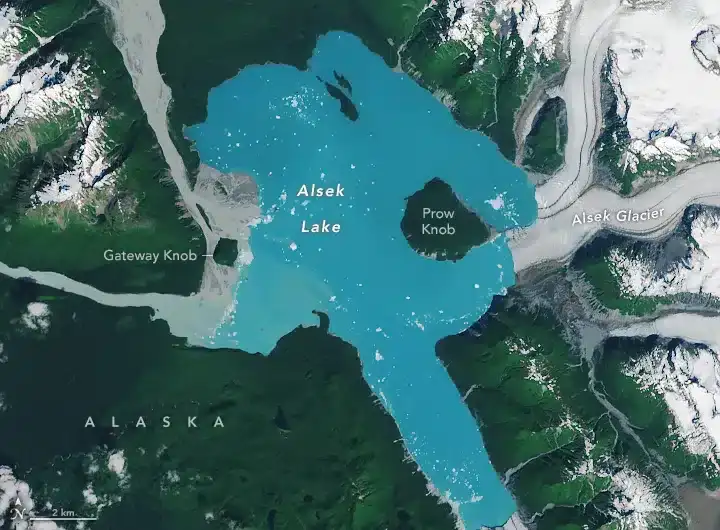
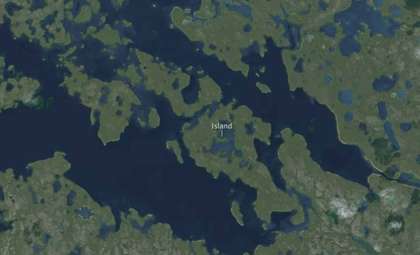
It’s rare to witness the sudden appearance of a new island, particularly one formed due to the gradual disappearance of a glacier. This phenomenon was recently observed in Alsek Lake located in southeastern Alaska. The island, named Prow Knob, has officially separated from the Alsek Glacier after decades of slow recession. Scientists documented this striking development in a study highlighted by the NASA Earth Observatory. While the island’s appearance is fascinating, it also signals deeper environmental concerns.
The Glacier’s Gradual Retreat and the Birth of an Island
Prow Knob didn’t materialize overnight. Its formation spans several decades, driven by the steady withdrawal of the Alsek Glacier. As the glacier retreated, the lake’s waters expanded, slowly creating the island’s footprint. By 1984, a portion of what would become Prow Knob was already forming near the lake’s edge, but it wasn’t until 2025 that the island became fully detached. Using imagery from satellites, researchers identified that Prow Knob officially became isolated between July 13 and August 6 of this year.
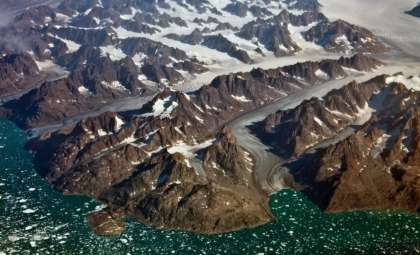
This slow retreat, where the ancient glacier ice receded, is a classic example of glacial calving. The frequency of such calving events has increased in Arctic regions due to rising temperatures, a sign of accelerating climate change that is raising alarms worldwide.

Understanding the Consequences of Glacial Withdrawal
While the emergence of new islands is an intriguing development, the wider implications are far more critical. The retreat of glaciers like Alsek not only forms fresh landmasses but also destabilizes adjacent terrains. In regions like Prow Knob, these changes heighten the risk of landslides as slopes around fjords and lakes lose their stability. This evolving environment increases the likelihood of natural hazards and signals a landscape in transition.
Consider the example of Alaska’s 2015 Taan Fjord landslide, which generated waves towering over 600 feet. This was not an isolated event; in 2023, a separate landslide in Greenland produced seismic activity lasting for days. These incidents demonstrate the rapid transformations occurring when glaciers retreat after millennia of shaping the land.
Accelerated Warming in the Arctic
The rate of warming in the Arctic is especially concerning, occurring at about four times the global average. This rapid change has far-reaching effects that are already noticeable in locations such as Alaska and Greenland. For instance, as permafrost thaws, it liberates methane—a highly potent greenhouse gas—into the atmosphere.
Even the acidity levels of Arctic rivers are shifting, with studies revealing increases in acidification caused by sulfuric acid dissolving hazardous metals from rocks into waterways. This disrupts delicate ecosystems and presents challenges that were unimaginable just decades ago. The appearance of Prow Knob from beneath the Alsek Glacier thus represents a visible symptom of global environmental shifts occurring at varied speeds depending on the area.
- Categories:
- News






0 comments
Sign in to Comment