

Researchers have uncovered a collection of minute stone shards in Uzbekistan's mountainous terrain that could reshape our understanding of early hunting technologies. Published in PLOS One, the study proposes that these relics, dating back roughly 80,000 years, might represent the oldest arrowheads ever discovered, predating earlier finds by millennia.
These fragile stone points offer more than just fragments of the past; they suggest that either humans or their contemporaries might have employed sophisticated projectile weaponry much earlier than previously believed.
Unearthing Secrets in the Tien Shan Foothills
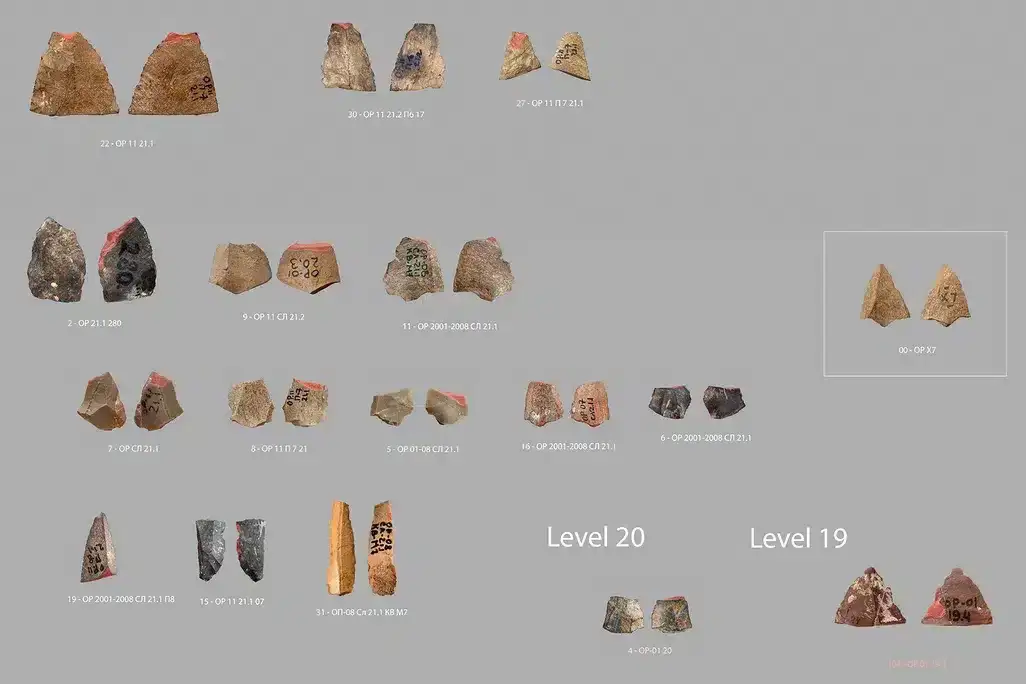
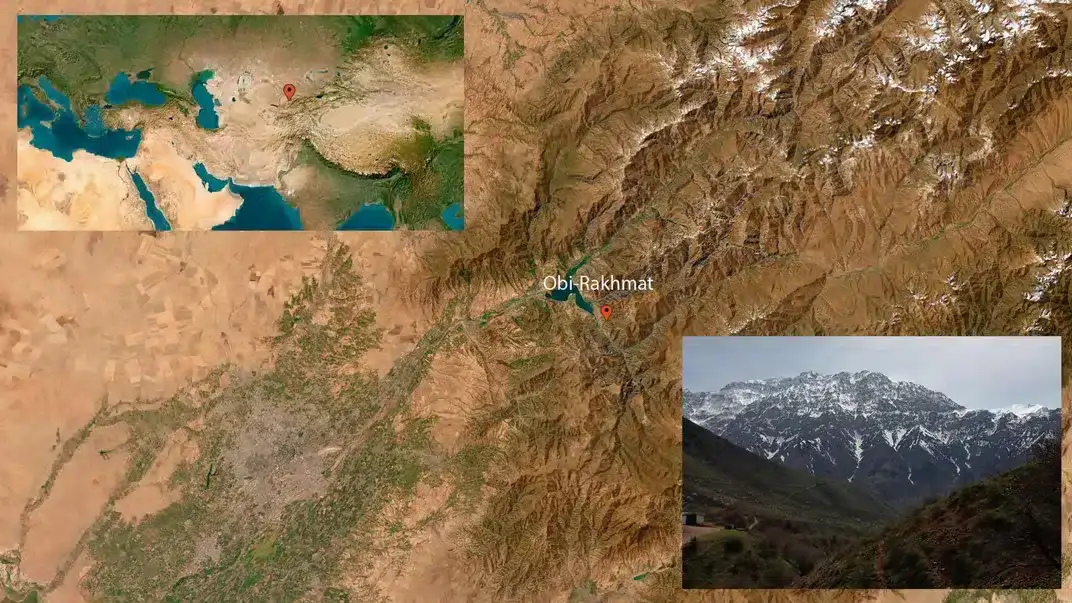
Obi-Rakhmat, a prominent rock shelter nestled in northeast Uzbekistan's Tien Shan range, has been a focal point for archaeological exploration since the 1960s. The site has produced a variety of artifacts, including ancient stone tools and the remains of a child believed to have mixed Neanderthal and Homo sapiens ancestry. For years, however, a set of tiny, triangular microliths found there were largely ignored due to their small size and delicate nature.

Once dismissed as too fragile for practical application, recent detailed examinations revealed that these slender fragments were unlikely mounted on hand-held tools or spears. Notably, many exhibited distinctive breakage patterns that align with impacts from high-speed projectile strikes, pointing to their use in hunting.
While direct evidence, such as a projectile's tip embedded in bone, is rare, the researchers utilized microfracture and wear analysis to infer how these implements were deployed.
Pushing the Boundaries Beyond Previous Discoveries
Stratigraphic evidence dates these microliths to approximately 80,000 years ago, surpassing the age of the notable Ethiopian arrowheads found in 2002 by about 6,000 years. They also predate comparable finds from Sri Lanka and France by tens of thousands of years.
No bows or wooden shafts were recovered alongside the points—a common situation given the perishability of organic material over such vast time periods. Instead, the study concentrated on the stone points' construction and damage patterns, which bear striking similarities to arrowheads identified from more recent archaeological contexts. Hugues Plisson, a co-author, notes that the damage observed aligns well with that found on confirmed arrowheads.
Deciphering the Makers and Their Methods
The creators of these tools remain unidentified. During this period, Central Asia was chiefly inhabited by Neanderthals, renowned for their hunting but not typically linked to small, lightweight projectile arms. Their arsenal was generally composed of sturdy tools like spears and hand axes suited for close combat.
However, the technology found at Obi-Rakhmat paints a different picture. Andrey Krivoshapkin, another co-author, highlights that these artifacts correspond with the era when anatomically modern humans are believed to have spread into Eurasia from the Middle East, possibly introducing advanced weaponry such as the bow and arrow. The advantage of striking prey from a distance would have been significant, particularly in competitive environments with Neanderthals.
Rethinking Early Human Ingenuity
This find supports a growing consensus that early humans, and perhaps Neanderthals as well, possessed a higher level of innovation than formerly assumed. Christian Tryon, an archaeologist from the University of Connecticut not associated with the research, comments that complex hunting weapons were widespread across different regions much earlier than previously documented.
These discoveries remind us that ancient intelligence often leaves modest traces. Though original materials like bows have not survived, these stone tips convey stories of adaptation, movement, and the understated creativity of our prehistoric ancestors.
- Categories:
- News









0 comments
Sign in to Comment