
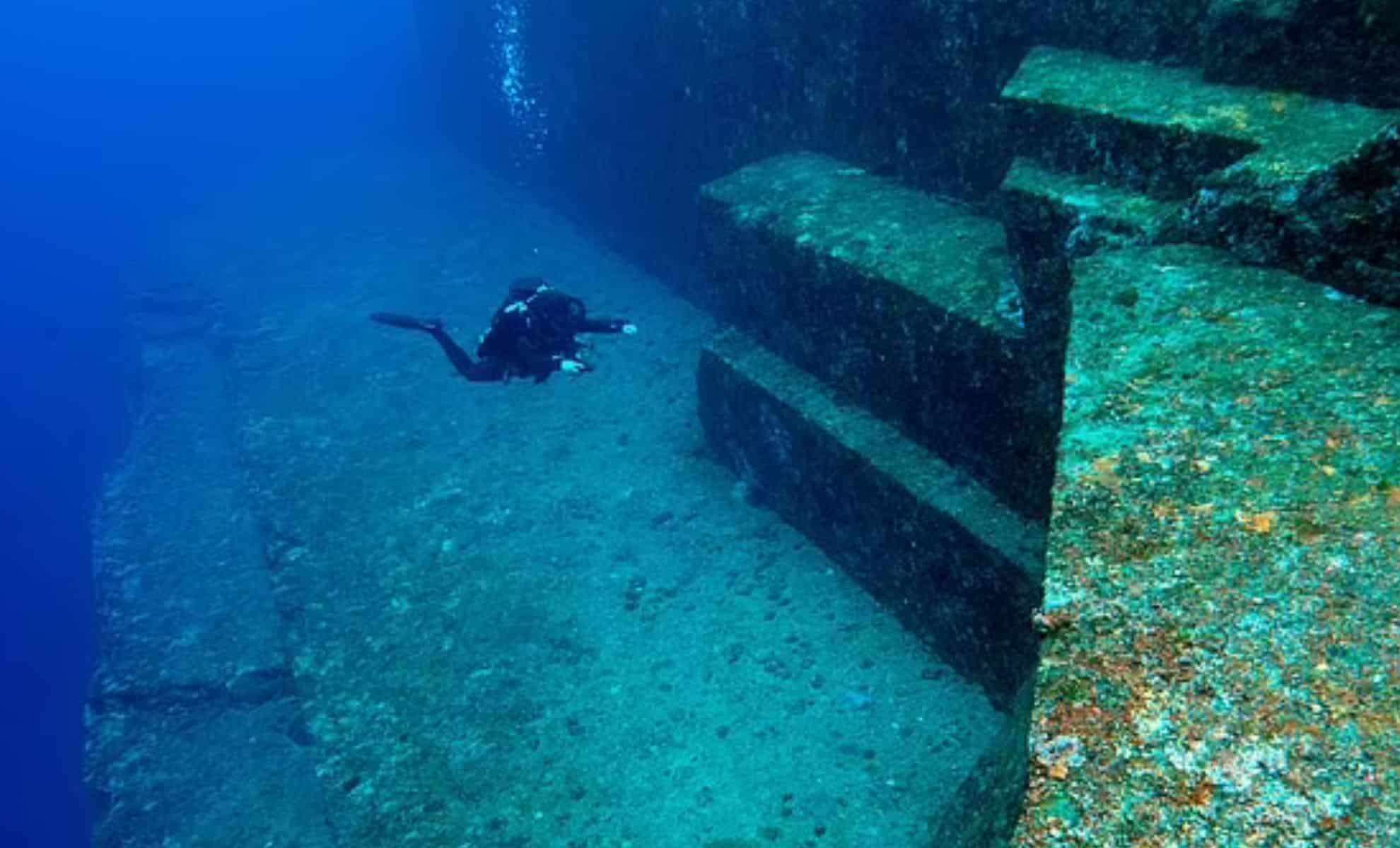
Hidden beneath the ocean near Taiwan lies a remarkable submerged structure that is causing scientists to reassess the timeline of early human societies. Found close to Japan's Ryukyu Islands in 1986, the Yonaguni formation resembles a stepped pyramid with distinct angular features. Positioned about 82 feet underwater, this stone formation rises roughly 90 feet, prompting debates about whether it is a product of natural processes or human craftsmanship.
Analysis of the rock indicates it dates back more than 10,000 years. If humans constructed it, then the monument would have been created before the area was submerged over 12,000 years ago, predating landmarks such as the Egyptian pyramids and Stonehenge by several millennia. This challenges conventional understanding of ancient civilizations and hints at the possibility of an advanced culture existing far earlier than previously believed.
Deciphering the Yonaguni Structure: Artifact or Geological Wonder?
The nature of the Yonaguni monument remains highly contested among experts. Some attribute its formation to natural geological activity molding the rock into seemingly architectural shapes over time. Others point to its sharp edges and stepped design as evidence of deliberate human engineering, possibly by a civilization now lost to history.

Dr. Masaaki Kimura, who dated the rock, supports the theory that the structure was once above sea level at the close of the last Ice Age, roughly 12,000 years ago, before rising seas submerged the region. During that era, sea levels were approximately 400 feet lower, allowing ancient people to potentially build such complex stone formations. These findings draw parallels with other enigmatic sites like Göbekli Tepe in Turkey, dating to around 9500 BC.
Contrastingly, Dr. Robert Schoch, a geologist at Boston University, argues the monument is probably a natural structure. He suggests the broken and flat surfaces that resemble steps may be the result of sandstone fracturing naturally over time. While acknowledging the intriguing appearance, Schoch remains skeptical that humans intentionally shaped the formation.
Exploring Lost Civilizations and the Atlantis Connection
The Yonaguni monument has sparked fascination regarding forgotten civilizations and the potential existence of advanced cultures predating recorded history. Sometimes dubbed “Japan’s Atlantis,” it fuels legends of sophisticated societies lost beneath the ocean, possibly erased by coastal flooding.
Echoing the myth of Atlantis, the structure embodies the mystery of prehistoric advanced civilizations disappearing due to environmental changes. Author Graham Hancock, well-known for investigating lost cultures, proposes that the monument might have been created by a highly developed society long before mainstream ancient civilizations emerged. Confirmation of this would dramatically alter our understanding of human capability in early history.
Whether the Yonaguni monument is the handiwork of an ancient civilization or a remarkable natural formation, its existence challenges current historical models and remains a captivating topic for ongoing archaeological and geological inquiry.
- Categories:
- News








0 comments
Sign in to Comment