
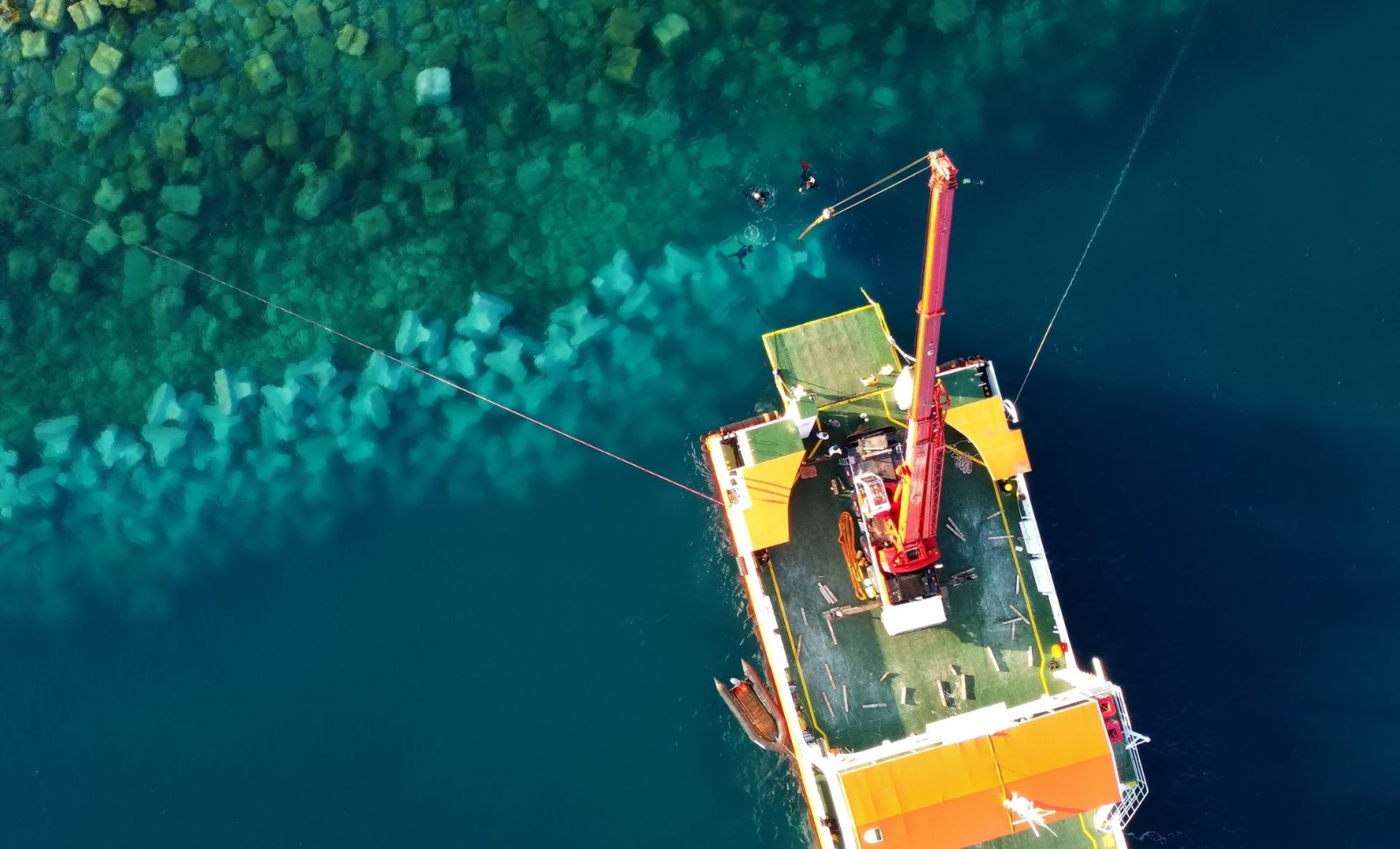
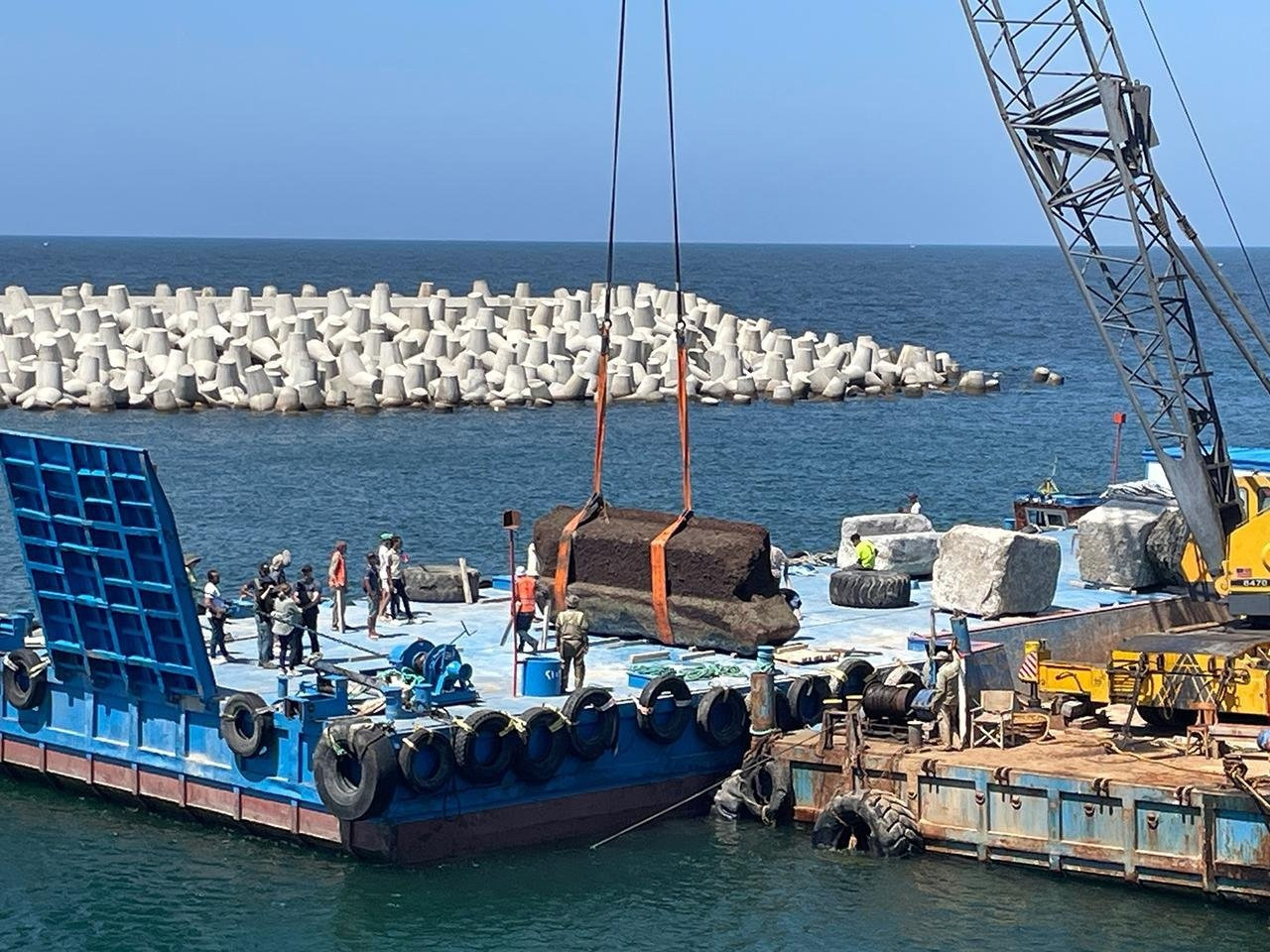
For centuries submerged beneath the Mediterranean, fragments of the famed Lighthouse of Alexandria have resurfaced. Recently, divers hauled up 22 colossal stone blocks from the sea near Egypt’s coast. These remnants once formed part of the monumental lighthouse that safely guided vessels into Alexandria’s port for over a millennium.
Constructed circa 280 B.C. during the era of Ptolemy II Philadelphus, this lighthouse was a groundbreaking architectural feat and ranked among the Seven Wonders of the Ancient World. Standing tall for hundreds of years, it ultimately succumbed to devastating earthquakes in the 14th century. Lost underwater since, the recent recovery of its remains offers scholars new insights into this legendary structure.
The Lighthouse’s Final Days
Rising over 100 meters, the Lighthouse of Alexandria was among the tallest edifices of its time, crowned with a fire whose glow extended as far as 50 kilometers. Reflective devices likely amplified the beacon’s reach across the waters.

In the 1300s, multiple strong earthquakes struck the region, badly damaging the landmark. As reported by ZME Science, quakes in 1303 and 1323 caused the lighthouse to collapse and submerge beneath the Mediterranean Sea. Its scattered ruins lay on the seabed for centuries until recent archaeological efforts began retrieving pieces, offering new clues about its original construction.
Reviving History Through Digital Innovation
The retrieved blocks, some weighing as much as 80 tons, are undergoing detailed examination and 3D scanning as part of the PHAROS project, a joint venture involving France’s CNRS, Egypt’s Ministry of Tourism and Antiquities, and the Dassault Systèmes Foundation. Their goal is to generate a precise digital replication, or “digital twin,” of the lighthouse. As described in a foundation statement:
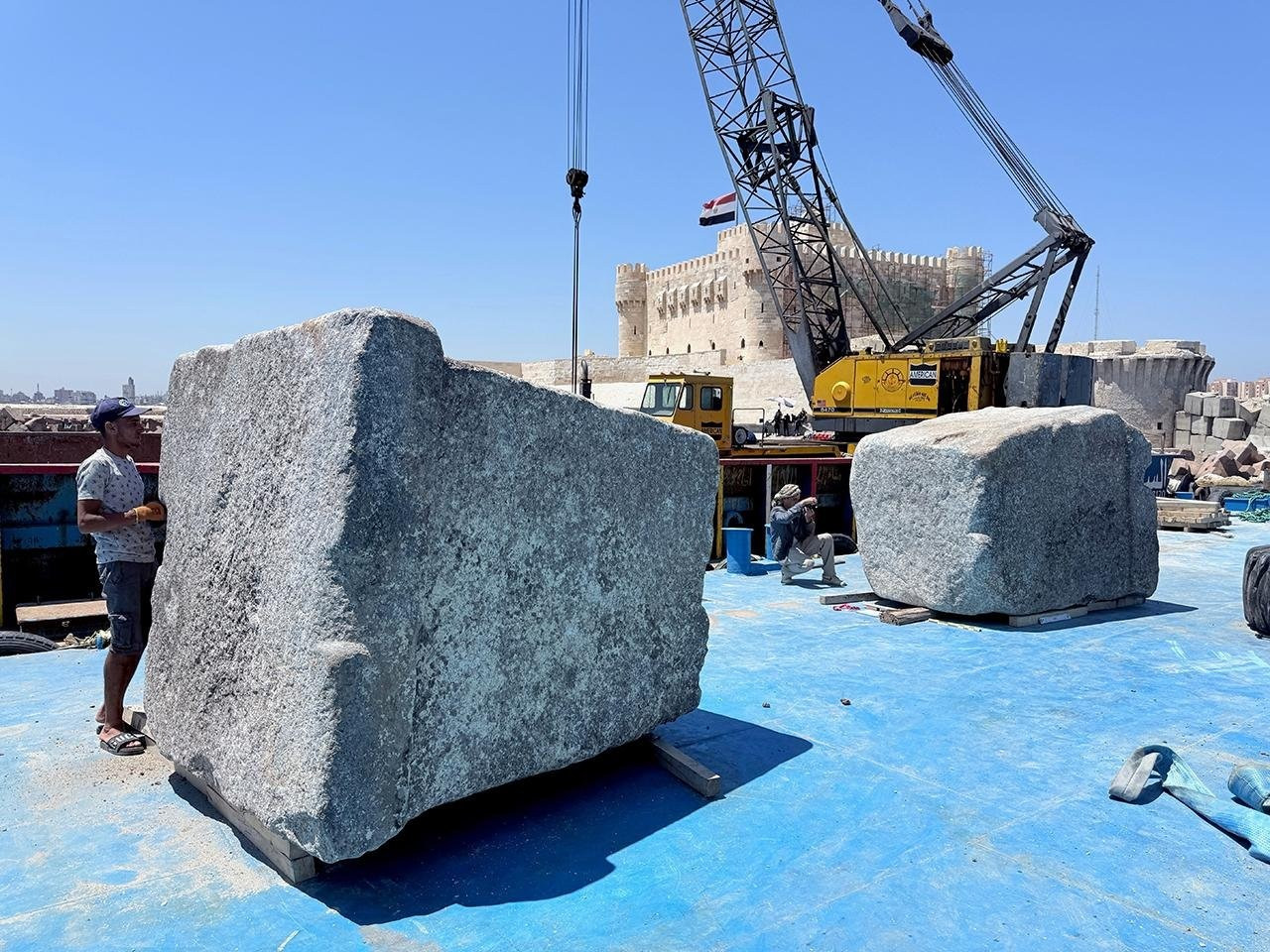
The fragments include sections of the original doorway and base, helping map the structure’s footprint. Utilizing advanced 3D scanning methods, engineers are building a virtual model that will enable researchers to explore how the lighthouse’s illumination system operated and how it eventually sank into the sea.
A Symbol of Alexandria’s Golden Age
In its prime, Alexandria was a thriving hub for commerce and scholarship, rivaling prominent ancient cities like Rome and Athens. The lighthouse was an emblematic feature at the entrance to the city’s bustling harbor, welcoming maritime traffic spanning the Mediterranean.
According to an official press release from the CNRS, ongoing ventures to recover and analyze the lighthouse’s remnants are reconnecting us with Alexandria’s rich historical heritage.
“The virtual model will revive the lighthouse’s original grandeur, allowing visitors to explore it as if they were on site.”
This immersive digital reconstruction is also expected to resolve enduring mysteries, such as whether mirrors or lenses intensified the lighthouse’s light and how its architectural design evolved over time.
- Categories:
- News










0 comments
Sign in to Comment