
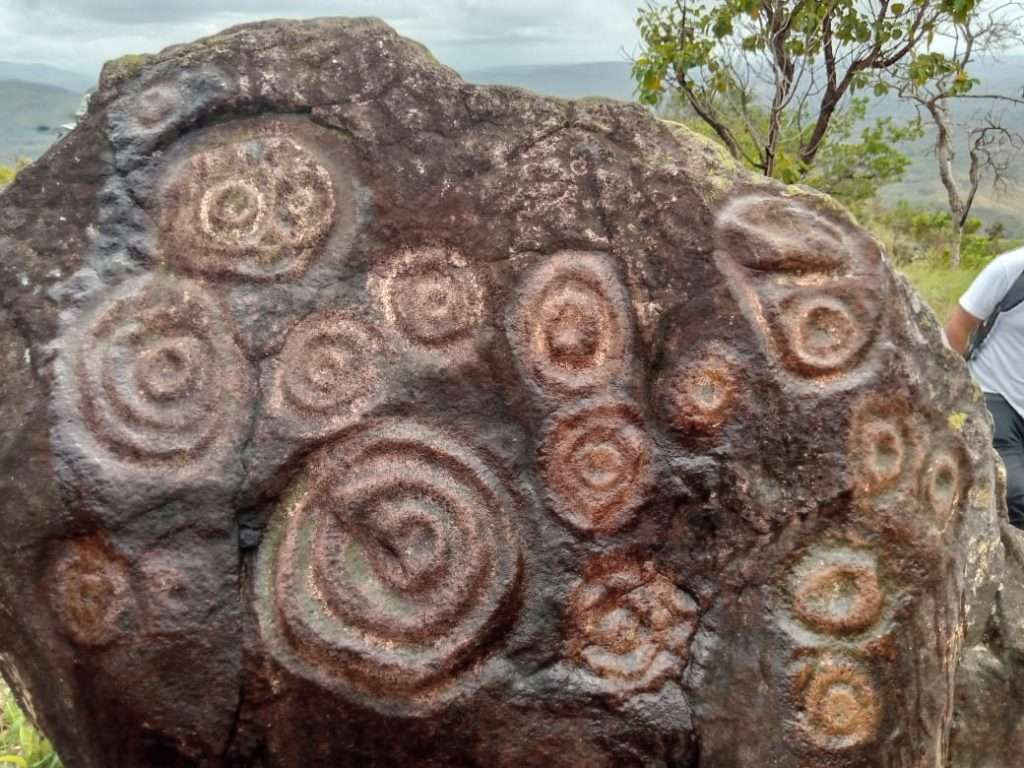
Dating back approximately 4,000 to 8,000 years, a recently discovered panel of petroglyphs in Monagas state is emerging as one of Venezuela’s most ancient rock art treasures. These elaborate engravings, depicting spirals and humanoid shapes, may challenge existing ideas about early symbolic practices in eastern Venezuela.
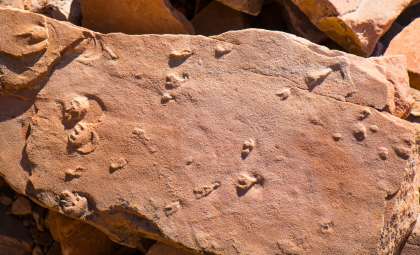
The local government of Cedeño, an area already renowned locally as the “petroglyph hub” of Monagas, has revealed a find that establishes the region as an archaeological landmark. Following thorough exploration, a research team, together with Mayor Daniel Monteverde, pinpointed the petroglyph site in the upper reaches of Quebrada Seca, approximately 3.5 kilometers from the San Félix community. Positioned at around 650 meters in elevation, the location contains a collection of geometric and anthropomorphic carvings meticulously incised onto a natural rock surface.
Insights into Ancient Symbolism
The petroglyphs found at Quebrada Seca are more than mere random marks. They represent a conscious pictorial system characterized by spiraling forms, concentric patterns, and stylized depictions of humans. Researchers believe these symbols carry profound meanings.

Preliminary information from Últimas Noticias indicates that archaeologists and officials interpret these images as possible portrayals of cosmological beliefs, cycles of water, solar phenomena, and ancestral presences. This points to a previously underappreciated complexity in symbolic thinking in the Monagas region during ancient times.
Since Cedeño is already recognized as a major center for petroglyph art within Monagas, it supports the perspective that this area has been a vital cultural hotspot for indigenous communities across millennia. Historian Luis Peñalver shared his thoughts with the press.
“These engravings demonstrate that Cedeño was a crucial transit and settlement corridor in the region.”
Urgent Efforts to Conserve a Delicate Legacy
The discovery highlights an urgent need: safeguarding these petroglyphs from environmental damage and human disruption. Once a site becomes publicly known, it often faces increased risks. Local authorities are aware of this vulnerability and are actively initiating protective measures. Mayor Daniel Monteverde commented:
“With this discovery, the Cedeño municipality reaffirms its potential as a cultural epicenter of eastern Venezuela, inviting the country to set its sights on a land that still holds ancient secrets to be discovered.”
Even seemingly harmless acts, such as touching the rock surface, can introduce oils that accelerate wear. Practices like using chalk or outlining the designs to enhance photographic visibility can irreversibly harm these ancient engravings. As reported by Últimas Noticias, authorities have begun collaborating with national heritage agencies to obtain official cultural protection and ensure these petroglyphs endure for thousands of years to come.
- Categories:
- News




0 comments
Sign in to Comment