
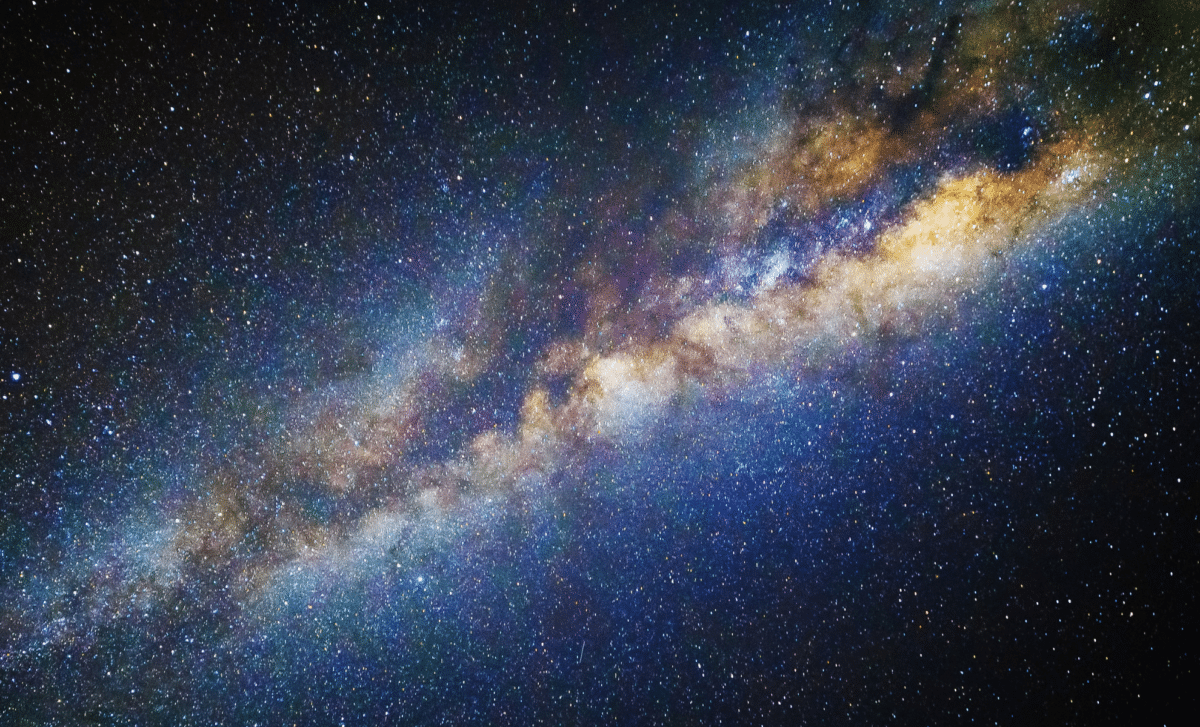
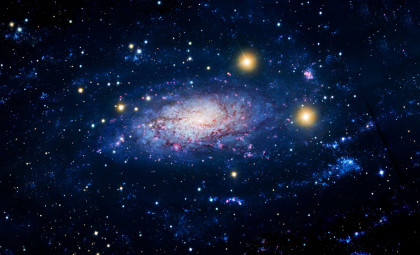
Scientists have attained one of the most accurate assessments of the Milky Way’s distant spiral arms, uncovering that certain regions of our galaxy are situated farther from Earth than long-standing charts suggested. Published in Astronomy & Astrophysics, the discovery employs an innovative technique using time-delayed echoes from intense cosmic blasts, bypassing conventional galactic rotation models to offer a sharper understanding of the Milky Way’s authentic layout.
A Revolutionary Technique for Measuring Our Galaxy
Charting the Milky Way has posed a significant challenge for astronomers due to our position inside its disk, surrounded by billions of stars and clouds of dust obstructing observations. Traditionally, astronomers gauged distances to the galaxy’s outer spiral regions by tracking gas cloud velocities and matching those with theoretical models of the galaxy’s rotation.
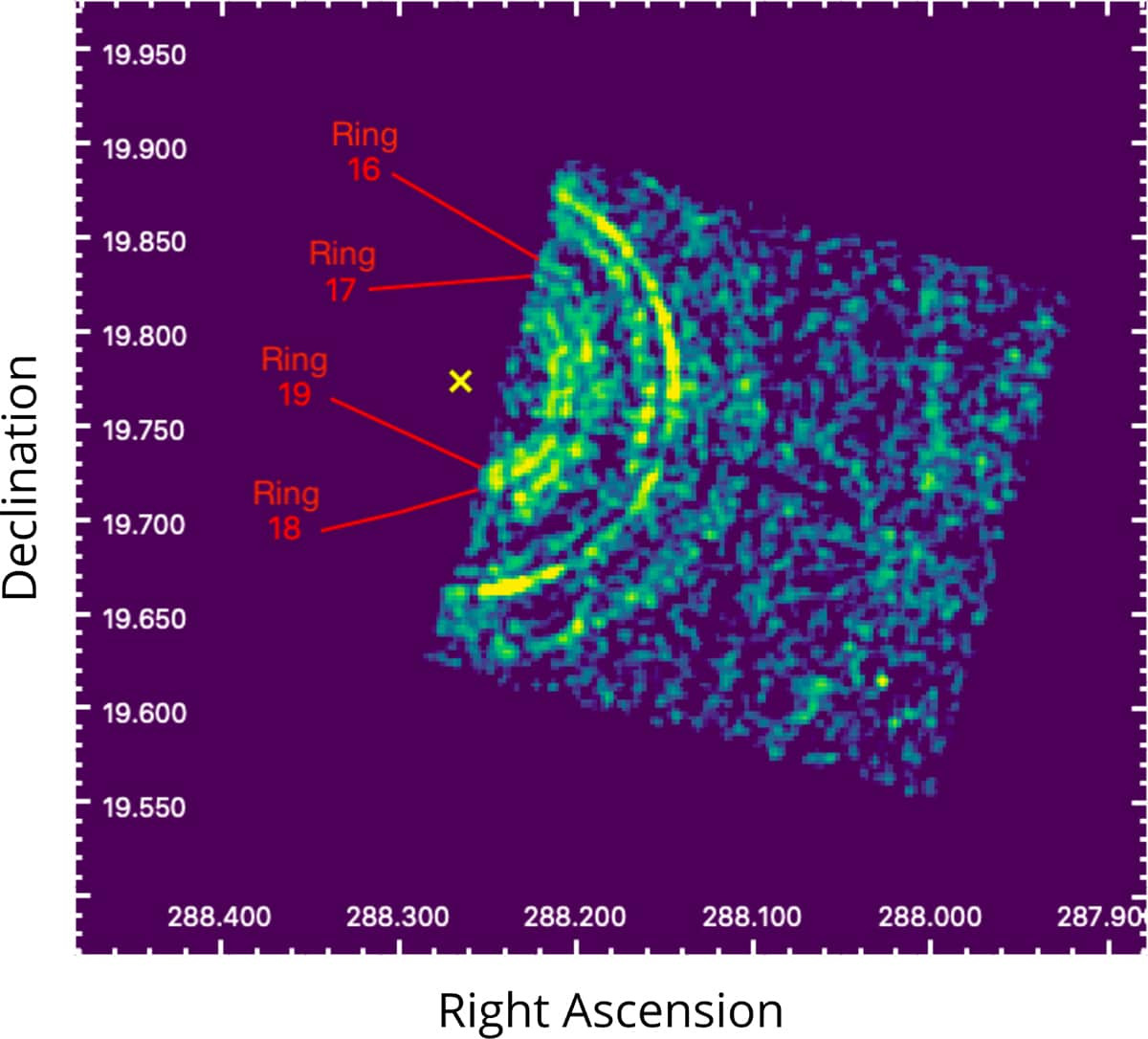
However, these rotation-based models grow less reliable towards the galaxy’s edges, where the presence of dark matter dominates gravitational effects and familiar landmarks thin out. The new approach sidesteps these complications by using geometric measurements derived from X-ray light scattered by interstellar dust clouds, eliminating dependence on rotation assumptions.

“This is a very direct way, relying only on geometry, to precisely measure distances to the Milky Way’s spiral arms,” said Dr. Vaia.
This novel method yields independent, trustworthy distance estimates even in the galaxy’s most remote sectors.
Utilizing Cosmic Bursts as Accurate Distance Indicators
The study leverages gamma-ray bursts—among the universe’s most powerful explosions—which unleash vast amounts of energy within seconds, generating intense X-ray emissions. As these X-rays journey through the Milky Way, some interact with tiny dust particles embedded in spiral arms. The scattered radiation travels a lengthier route, causing a slight delay compared to the direct emission. When observed with space-based X-ray instruments, this delay manifests as expanding rings of light surrounding the burst’s origin.
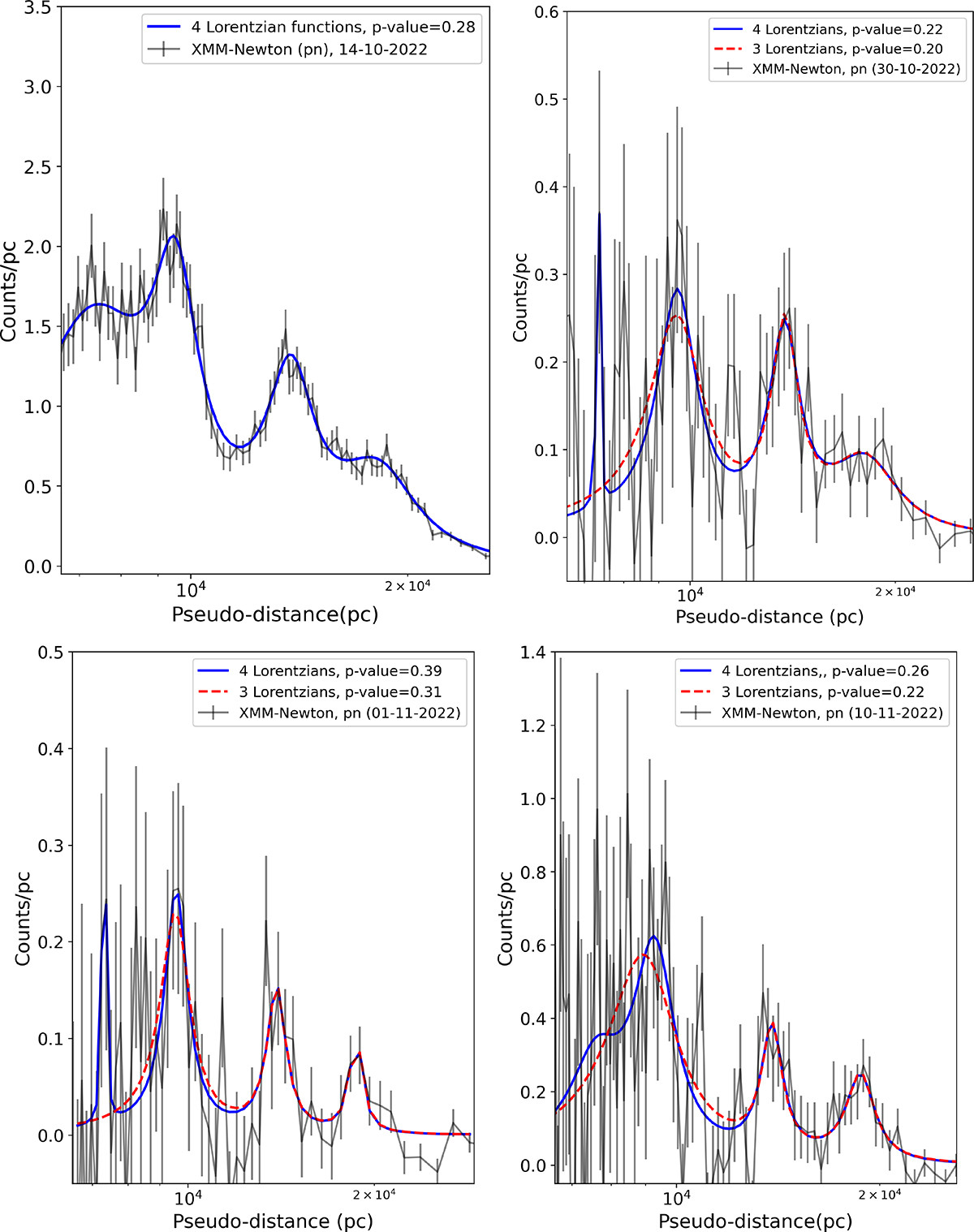
Because the speed at which these rings expand depends purely on geometry, scientists can accurately deduce the distance to each dust cloud responsible for the scattering. Researchers analyzed archived data from ESA’s XMM-Newton and NASA’s Chandra X-ray Observatory, including signals from a particularly bright gamma-ray burst detected in 2022. This event produced multiple concentric rings, enabling the team to probe distant dust structures tens of thousands of light-years away with extraordinary precision.
Distant Spiral Arms Are Sited Further Than Earlier Believed
This new measurement marks one of the most detailed mappings of the Milky Way’s outer spiral structure to date. Researchers found the Outer Scutum-Centaurus Arm lies about 62,000 light-years away with a margin of error near just one percent—among the most precise distance evaluations for such a distant section. Earlier direct assessments carried uncertainties nearly tenfold higher, dramatically enhancing confidence in the revised distances.
The team also reaffirmed the established distance to the Perseus Arm, corroborating the new method's accuracy. Crucially, two of the furthest spiral arms were located noticeably farther out than traditional rotation-based estimates suggested, with discrepancies approaching ten percent—highlighting how previous models have systematically underrated distances to the Milky Way’s remote sectors.
Refining Galactic Models and Future Exploration
Published in Astronomy & Astrophysics, these results have implications beyond just repositioning spiral arms. They indicate that galactic rotation curves, mass distribution estimates, and the role of dark matter may require adjustment to reflect the increased distances. Enhanced galactic maps can deepen understanding of star formation, disk morphology, and the evolutionary history of our cosmic environment.
This research also highlights the value of gamma-ray burst echoes as precise cosmic measuring tools. Although exceptionally bright bursts like the 2022 event are infrequent, upcoming X-ray observatories with improved sensitivity are expected to uncover many more such light echoes across the sky. This will allow astronomers to extend geometric distance measurements throughout the Milky Way, replacing indirect inferences with direct data and gradually building the most comprehensive 3D map of our galaxy yet.
- Categories:
- Astronomy



0 comments
Sign in to Comment