
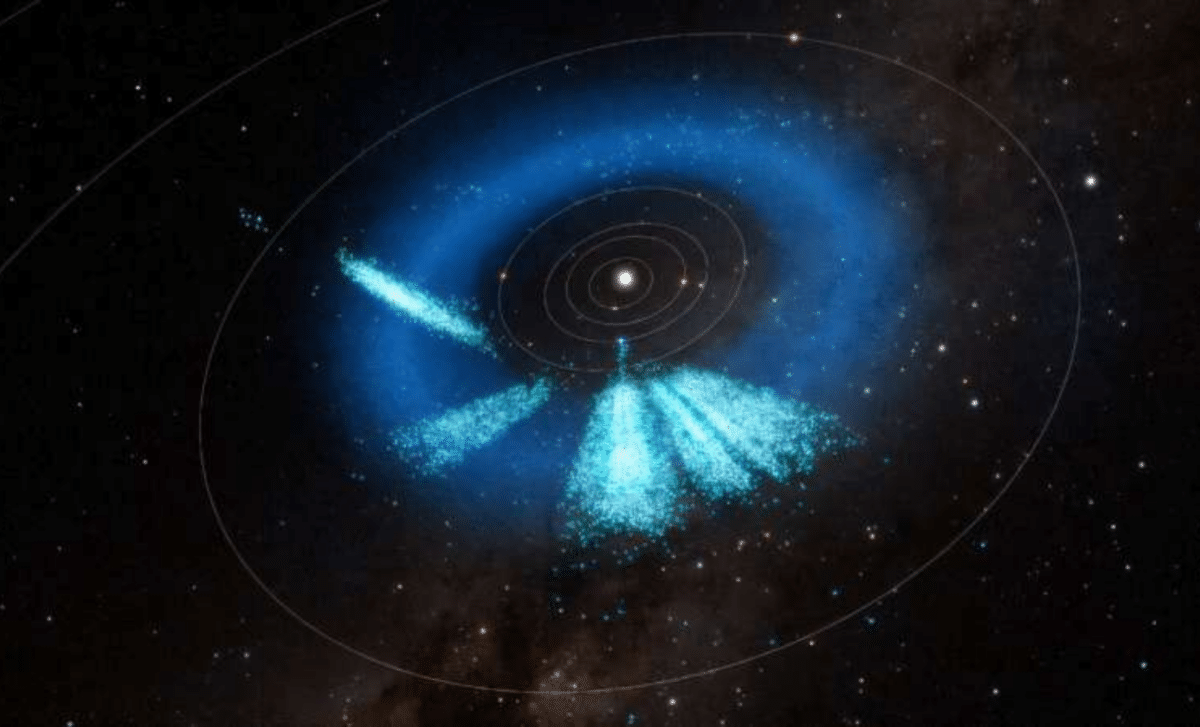
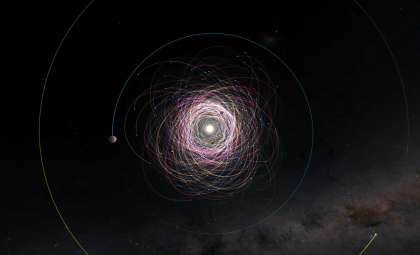
Data from an early observing campaign with the Vera C. Rubin Observatory has led to the identification of more than 11,000 previously unknown asteroids. These discoveries represent one of the most substantial advances in mapping our solar system in recent memory, as detailed in a collaborative report with the International Astronomical Union’s Minor Planet Center.
An Unprecedented Surge in Astronomical Discovery
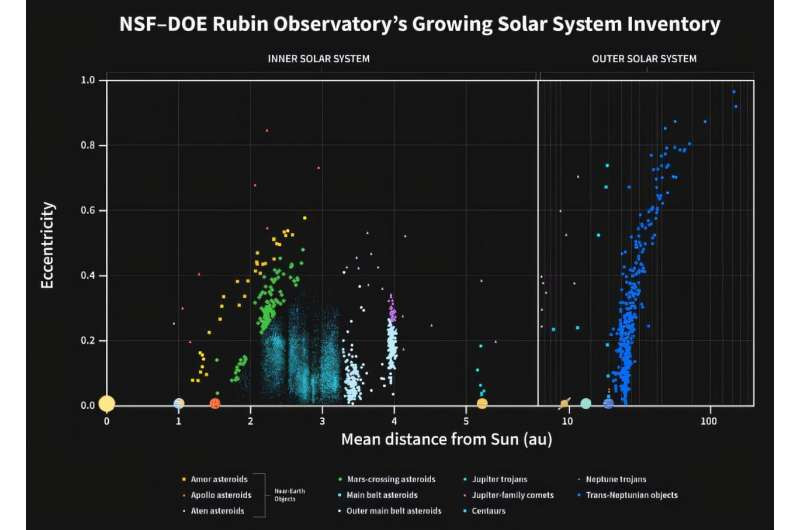
The sheer volume and rapidity of these findings are unprecedented. Over just six weeks, the Rubin Observatory has amassed close to one million individual measurements, unveiling thousands of new asteroids and refining the trajectories of more than 80,000 already documented objects. Many of these previously tracked bodies had faded from reliable observation due to ambiguous orbital paths, but now have been precisely re-identified.
What stands out is not only the incredible number of discoveries but also the accelerated pace at which they have been made. Historically, confirming and cataloging asteroids was a painstaking process that could take years. Rubin Observatory’s technological advances compress this timeline dramatically, enabling near real-time solar system mapping.

“This first large submission after Rubin First Look is just the tip of the iceberg and shows that the observatory is ready,” says Mario Juric, faculty at the University of Washington and Rubin Solar System Lead Scientist. “What used to take years or decades to discover, Rubin will unearth in months. We are beginning to deliver on Rubin’s promise to fundamentally reshape our inventory of the solar system and open the door to discoveries we haven’t yet imagined.”
This swift detection capability signals a major shift in planetary science—from static cataloging to dynamic and continuous monitoring, turning the solar system into a closely observed, ever-evolving domain.
Technology Behind Rubin’s Astounding Achievements
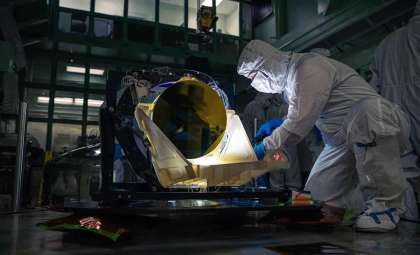
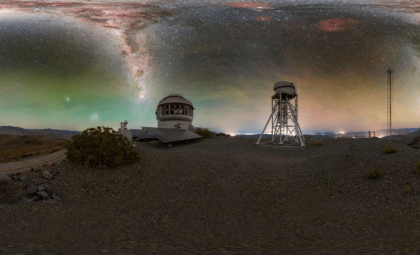
At the heart of these breakthroughs is a sophisticated fusion of innovative hardware and cutting-edge software. The Vera C. Rubin Observatory integrates an enormous mirror with the most advanced digital camera ever constructed for astronomy, delivering remarkably deep and frequent scans of the southern celestial hemisphere.
This intense observational rhythm creates vast streams of data, demanding state-of-the-art computational techniques to detect faint, rapidly moving objects obscured by countless stars. The challenge now lies in high-scale pattern detection rather than mere imaging.
“Rubin’s unique observing cadence required a whole new software architecture for asteroid discovery,” says Ari Heinze of the University of Washington. “We built it, and it works. Even with just early, engineering-quality data, Rubin discovered 11,000 asteroids and measured more precise orbits for tens of thousands more. It seems pretty clear this observatory will revolutionize our knowledge of the asteroid belt.”
As noted by NOIRLab, these advanced systems not only detect an object’s movement but anticipate and clarify it, stitching scattered sightings into continuous orbital pathways. This transforms ephemeral glimmers into thoroughly characterized objects with remarkable speed and accuracy.
Tracking Near-Earth Objects and Boosting Planetary Safety
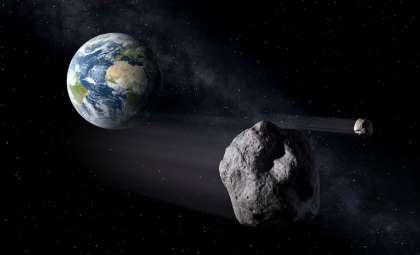
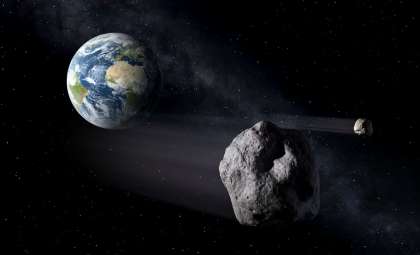
Among the recent finds are 33 near-Earth objects (NEOs), notable for their orbits close to Earth. Although none of these newly cataloged bodies present any current hazard and the largest is about 500 meters in diameter, their detection underscores significant gaps in our planetary defense awareness.
Current estimates suggest only about 40% of mid-sized NEOs—objects greater than 140 meters—have been discovered. These mid-range asteroids pose potential regional threats in the event of an Earth impact, making early identification crucial for mitigation strategies.
Once fully active, Rubin is predicted to detect up to 90,000 new NEOs, potentially doubling the number of recognized hazardous objects. This advancement will vastly improve early warning capabilities and allow more time for potential threat response.
The observatory’s persistent monitoring ensures objects are consistently tracked, minimizing the chances of losing sight of newly found threats. This ongoing surveillance marks a transformational approach in defending our planet against cosmic risks.
Exploring the Outer Solar System
Beyond the asteroid belt and near-Earth space, Rubin’s initial observations have discovered approximately 380 trans-Neptunian objects (TNOs), icy worlds orbiting far beyond Neptune. Two of these, 2025 LS2 and 2025 MX348, follow highly eccentric orbits that stretch to distances about 1,000 times that between Earth and the Sun, ranking them among the solar system’s most distant known bodies.
Locating such remote objects is especially challenging due to their slow motion, faint luminosity, and the overwhelming background of stars.
“Searching for a TNO is like searching for a needle in a field of haystacks—out of millions of flickering sources in the sky, teaching a computer to sift through billions of combinations and identify those that are likely to be distant worlds in our solar system required novel algorithmic approaches,” explains Matthew Holman of the Center for Astrophysics | Harvard & Smithsonian.
These finds are more than just statistics; they provide crucial scientific insights.
“Objects like these offer a tantalizing probe of the solar system’s outermost reaches, from telling us how the planets moved early on in the solar system’s history, to whether a hitherto undiscovered ninth large planet may still be out there,” notes Kevin Napier, also with the Harvard-Smithsonian Center for Astrophysics.
Each new trans-Neptunian detection adds valuable context to studies of planetary migration, gravitational influences, and the potential existence of massive unseen worlds in the solar system’s distant zones.
The Horizon of Solar System Discovery
This preliminary dataset is merely a glimpse of the Rubin Observatory’s full potential. When the Legacy Survey of Space and Time (LSST) reaches full capacity, the facility is forecasted to discover tens of thousands of asteroids every few nights. Within a decade, this effort could more than triple the number of known asteroids and greatly increase the catalog of trans-Neptunian bodies.
Such an explosive growth will revolutionize not just object count but our scientific models. With richer information streams, astronomers can reconstruct the solar system’s evolutionary past with unprecedented detail, uncover hidden patterns in orbital mechanics, and rigorously test theories about distant planetary influences.
The transformation is already underway. What was once a gradual accumulation of discoveries is evolving into a continuous flow of new knowledge, revealing an ever more dynamic and complex solar neighborhood at an accelerating rate.
- Categories:
- Astronomy




0 comments
Sign in to Comment