
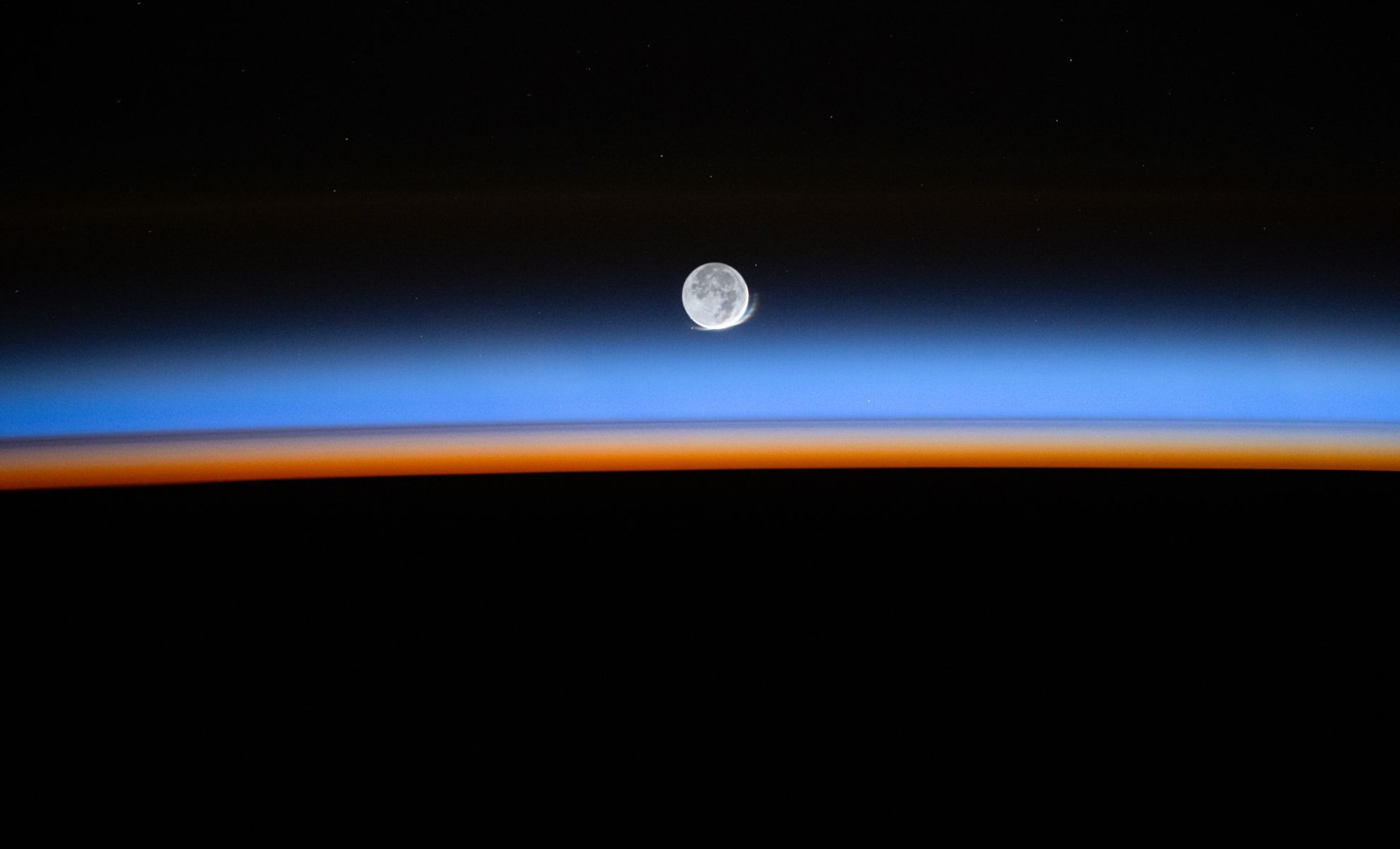
While aboard the International Space Station (ISS), an astronaut recently captured an extraordinary image showing a rare lunar halo encircling the Moon. Taken over the Indian Ocean, this stunning photo reveals how moonlight bends through tiny ice crystals suspended in Earth's upper atmosphere. This phenomenon, called a lunar halo, arises when moonlight refracts through high-altitude ice crystals, creating luminous rings or arcs around the Moon.
The Science Behind Lunar Halos
NASA explains that lunar halos form as moonlight passes through ice crystals in the upper atmosphere. The light is bent at specific angles, splitting into subtle color spectrums and generating rings or arcs. The most frequently observed halo spans approximately 22 degrees and results from refraction through six-sided ice crystals. From the ISS’s vantage point just beyond most of Earth's atmosphere, astronauts can observe this mesmerizing effect when the Moon lies just behind the thin ice layer within the mesosphere, the planet’s uppermost atmospheric region.
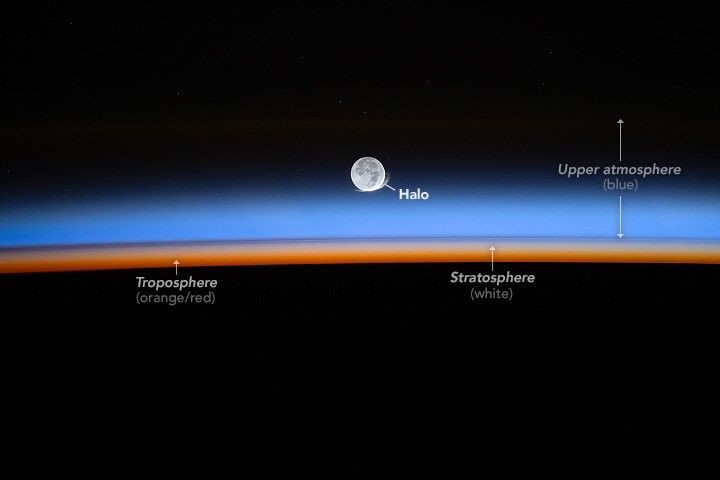
The shape of the ice crystals plays a vital role in the halo’s form. In the astronaut’s picture, the halo appears as a curved arc rather than a complete ring. This partial halo happens when the ice crystals partially encircle the Moon from that perspective, producing a delicate curve. Minor changes in the angle of these crystals can adjust the halo’s clarity and shape.

ISS Offers an Exclusive View of Atmospheric Wonders
Circling Earth at roughly 200 nautical miles altitude, the ISS is positioned above most weather and cloud cover. This unique location enables astronauts to photograph rare natural events like lunar halos that are often invisible from the planet’s surface. When the Moon aligns precisely behind the atmospheric ice crystals, it offers an unobstructed view of how light is refracted through Earth's upper atmosphere with crisp clarity.
This photographic work, driven by NASA’s Crew Earth Observations program, plays a critical role in monitoring Earth's atmosphere. As the ISS passes over different areas, it captures fleeting atmospheric phenomena that might otherwise go unnoticed. Each photo contributes to improving scientists’ insights into the interactions between light, weather, and atmospheric chemistry on a global scale. The recent lunar halo image offers valuable data on ice crystal behavior and the rare environmental conditions that produce such halos.
Fragile Ice Crystals High Above the Earth
The ice responsible for the halo exists far above typical cloud layers. Research published recently in Atmospheric Chemistry and Physics reveals that these mesosphere ice crystals form roughly 30 to 54 miles above Earth’s surface. This thin, frigid region of atmosphere hosts ice sensitive to subtle temperature shifts. Unlike common cloud ice, these crystals emerge from unique atmospheric processes requiring very specific conditions.
Gravity waves—created by disturbances such as storms or terrain—affect ice crystal formation in the mesosphere. These delicate ripples help shape the ice structures necessary for a lunar halo to be visible. Scientists are increasingly focused on understanding these upper atmospheric ice layers and their impact on phenomena like lunar halos.
- Categories:
- News



0 comments
Sign in to Comment