
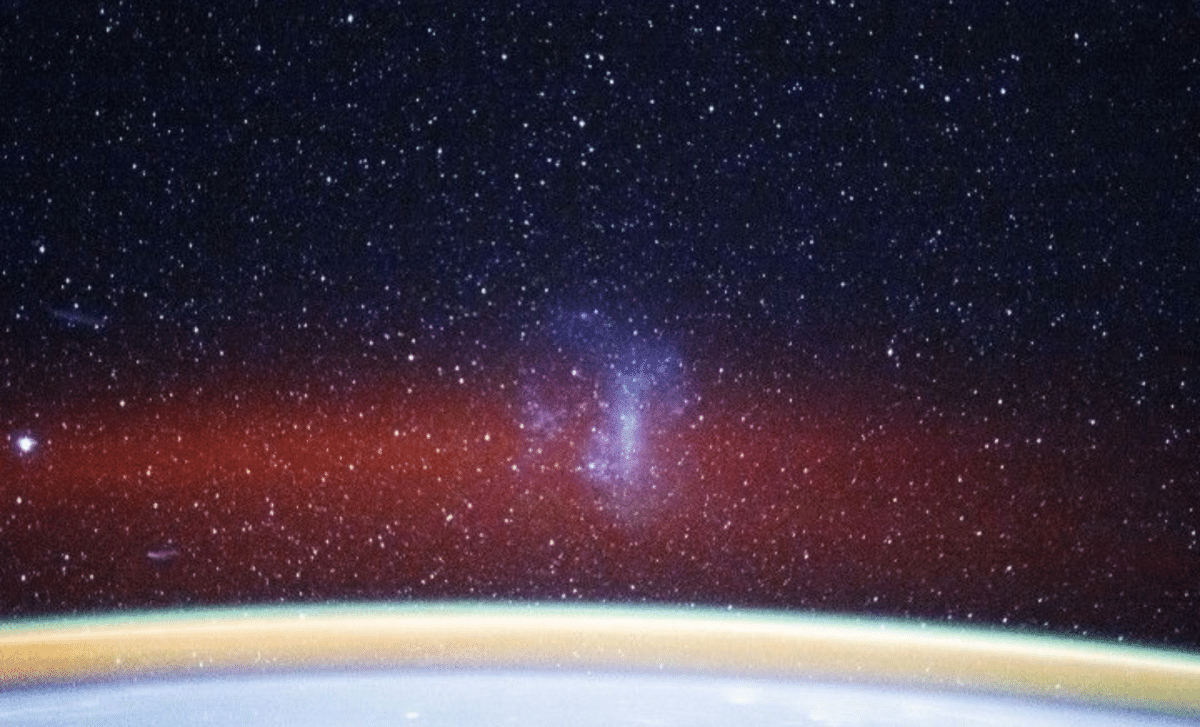
The Large Magellanic Cloud (LMC), a close galactic neighbor to the Milky Way, continues to captivate astronomers with its intense star formation and dramatic history. A unique photograph taken by an astronaut aboard the International Space Station has reignited fascination within both the scientific community and the public, revealing fresh insights into this dwarf galaxy and its cosmic significance.
A Stellar Nursery Just 160,000 Light-Years Away
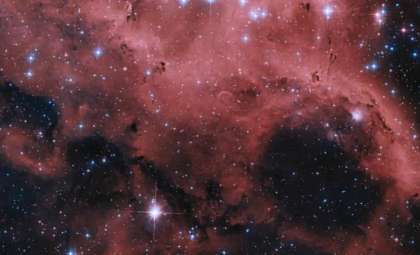
Though it appears as a faint blur when viewed from Earth's Southern Hemisphere, the Large Magellanic Cloud is a powerhouse within the nearby universe. This irregular dwarf galaxy, situated approximately 160,000 light-years from us, boasts a rich variety of star-forming clouds, nebulae, and supernova remnants. Unlike the symmetric spiral arms of the Milky Way or Andromeda, the LMC’s uneven shape provides astronomers with a rare chance to study diverse astrophysical processes up close.
Packed with billions of stars at multiple phases of their life cycles, this small galaxy features the famed Tarantula Nebula, an extraordinarily active region of stellar birth. Due to its proximity within the Local Group, the LMC acts as a natural laboratory where the entire journey of stars—from formation to their explosive ends—can be closely monitored, offering details unattainable in far more distant galaxies.

The Unique Perspective from the ISS
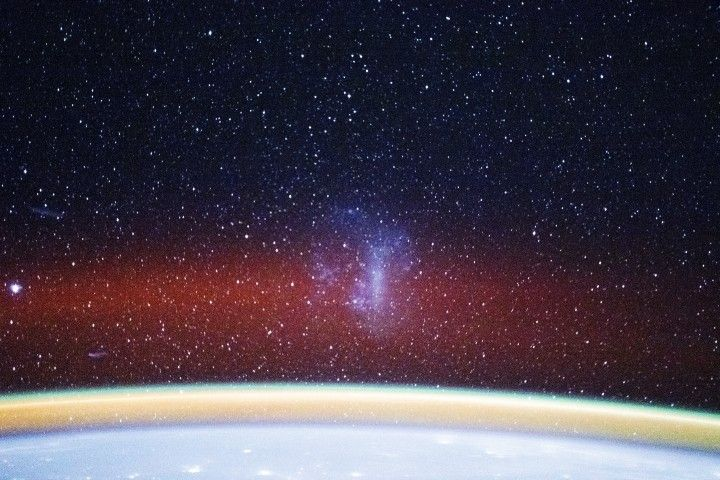
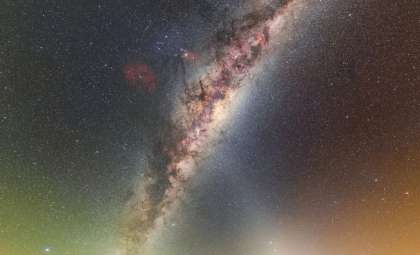
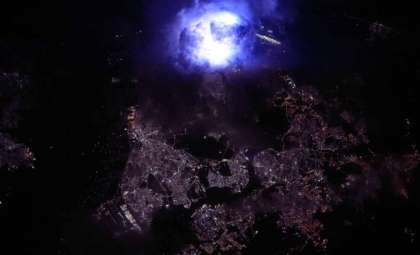
On November 28, 2025, an astronaut aboard the ISS captured an impressive image of the LMC using a Nikon Z9 camera, providing an extraordinary viewpoint from low Earth orbit. This photograph, highlighted as the Image of the Day on NASA’s Earth Observatory, showcases the striking glow of Earth’s atmospheric layers alongside the luminous cloud of the LMC.
Though the Large Magellanic Cloud is visible from the ground in certain parts of the Southern Hemisphere and select northern latitudes, this orbital perspective uniquely contrasts Earth’s delicate atmospheric shell with the energetic brilliance of a star-forming galaxy. It highlights the fragile environment of our planet set against the vast and dynamic universe beyond.
This striking image serves a dual purpose, supporting astrophysical research while inspiring cultural reflection on humanity's cosmic place. As part of the ISS Earth Science initiatives, such photographs connect scientific discovery with public engagement, encouraging stargazers worldwide to deepen their curiosity.
Exploring Star Death Through Supernova 1987A
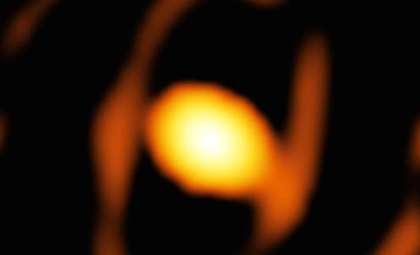
A key scientific highlight of the LMC is its hosting of Supernova 1987A, the closest supernova observed in more than three centuries. Discovered in 1987, this enormous stellar explosion gave astronomers an exceptional opportunity to study the end stages of a massive star and the genesis of new interstellar matter.
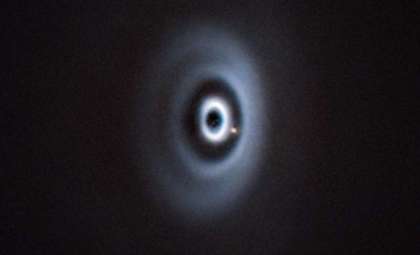
The supernova’s intense light output equaled that of 100 million suns, and its aftermath remains an active field of study. The fading glow now shapes a complex ring of gas and dust — the raw ingredients for future star systems and planets.
NASA and international observatories like Hubble and Spitzer have observed this evolving remnant across multiple wavelengths. Continuous monitoring of SN 1987A enhances our understanding of stellar lifecycles, element formation, and planet birth processes within dwarf galaxies like the LMC.
A Vital Neighbor in Our Galactic Community
The Large Magellanic Cloud is more than a mere companion to the Milky Way; it forms part of the Local Group, a cluster of about 50 galaxies including Andromeda and Triangulum. Despite its smaller size compared to these spirals, the LMC’s gravitational influence, orbit, and vigorous star formation impact the region’s galactic dynamics.
Current models propose the LMC may eventually collide with the Milky Way, though this event lies billions of years in the future. The properties of its dark matter halo and trajectory inform new perspectives on galaxy behavior. Thus, the LMC acts as a significant cosmic player shaping the evolution of galaxies in our neighborhood.
- Categories:
- News




0 comments
Sign in to Comment