
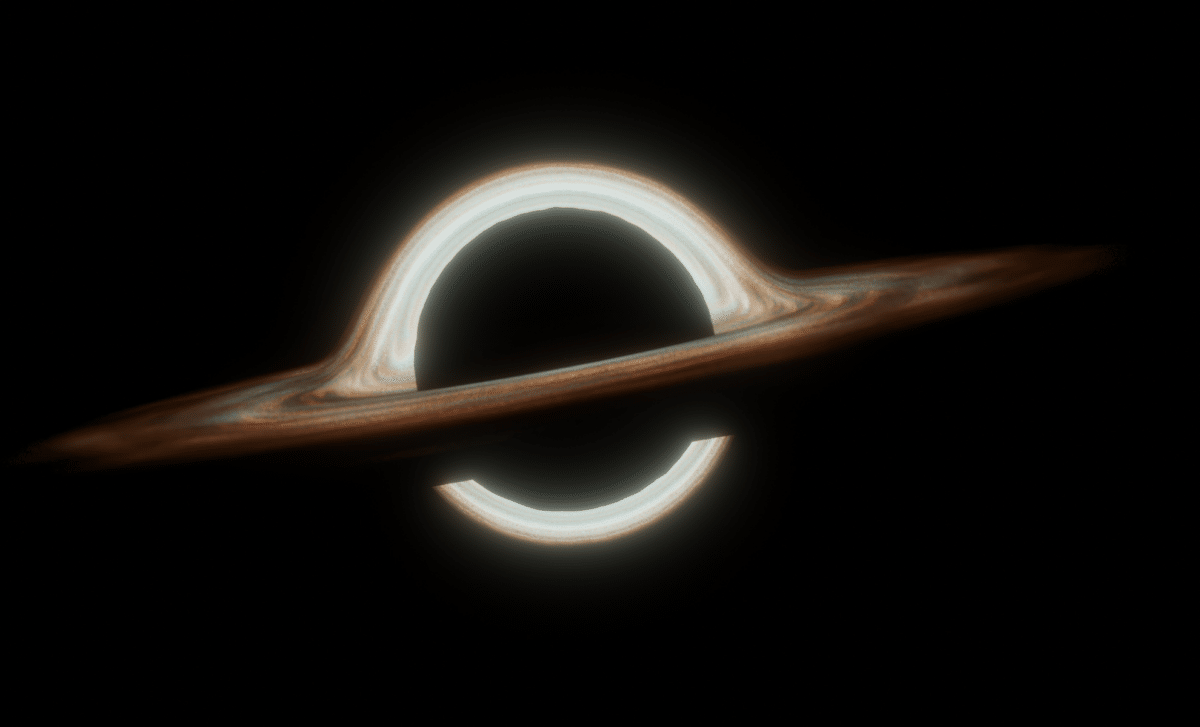
In 2019, a distant star residing in the Large Magellanic Cloud exhibited an unusual, hour-long brightening that challenged existing stellar models. After thorough examination, scientists propose this extraordinary glow could be caused by a primordial black hole, a mysterious object formed shortly after the universe’s birth, potentially exposing a population of small, moon-sized black holes. The study detailing these results is available as a preprint on arXiv, offering rare insight into a lesser-known cosmic phenomenon.
A Stellar Outburst That Puzzle Scientists
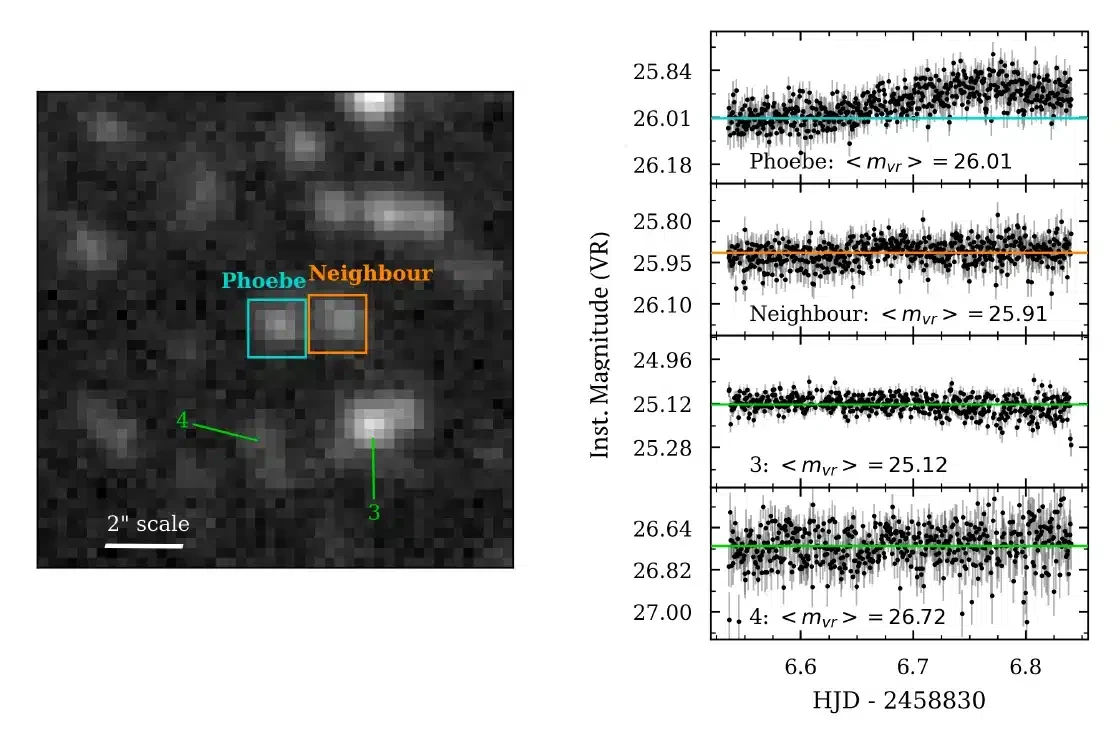
Over the span of around an hour, light from a star roughly 163,000 light-years away experienced a gentle but distinct surge before settling back to its usual brightness. This light pattern did not match any known stellar flare, supernova event, or typical variability. The observation was made using the Dark Energy Camera (DECam) during the Asteroid-Mass Primordial black hole Microlensing (AMPM) survey.
Leading the investigation, Renee Key and her team at Swinburne University of Technology considered various explanations, ranging from technical errors to conventional stellar fluctuations. "Phoebe suggests a population of compact, lunar-mass objects associated with the dark matter distribution of the Milky Way, and potentially opens a new window to the physics of inflation," they report in their arXiv preprint. Their analyses strongly favor the scenario of a tiny black hole, about three times the Moon’s mass, passing in front of the star and creating a brief brightening known as microlensing.

Peering Into the Early Universe Through Primordial Black Holes
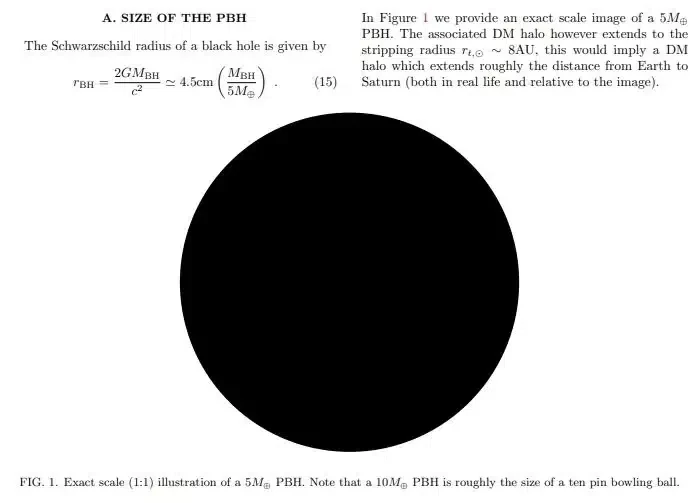
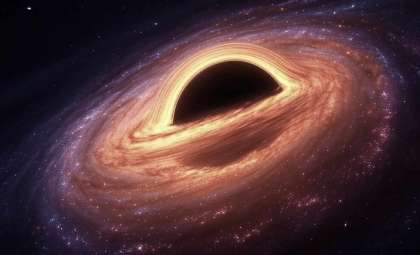
Primordial black holes differ from those formed by stellar collapse; they are thought to have arisen from quantum fluctuations shortly after the Big Bang. These black holes are extremely small, with event horizons tinier than a marble. Direct observation is nearly impossible because even matter falling into them produces minimal light.
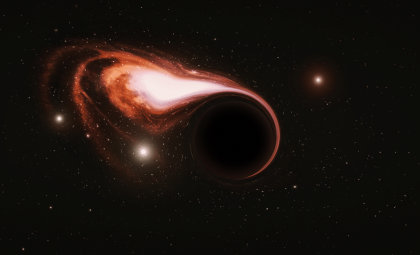
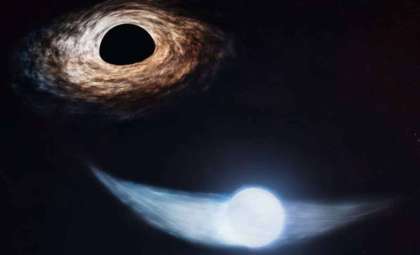
Yet their gravitational pull can serve as a natural cosmic magnifier. When such a black hole crosses the line of sight to a far-off star, it temporarily boosts the star’s brightness—a microlensing event exactly like the one detected by DECam, dubbed Phoebe. Uncovering these events might shed light on dark matter and the universe’s formative moments.
Microlensing as a Tool to Detect Hidden Cosmic Objects
Although microlensing occurrences are uncommon, they provide a powerful method to pinpoint invisible entities. Key and her group conducted thorough modeling to exclude explanations such as wandering exoplanets or faint stars. Their results suggest Phoebe is thousands of times more likely to be part of the Milky Way’s dark matter halo than any known luminous object.
This finding strengthens the ongoing discourse about primordial black holes’ existence. Previous 2026 research utilizing the Subaru Telescope found possible microlensing signals in Andromeda, posited to be from similar compact objects, though some researchers debated that these might be from normal stars. Phoebe adds compelling evidence toward the presence of small black holes lurking in galactic halos and promises exciting prospects for upcoming high-resolution observations.
- Categories:
- Astronomy




0 comments
Sign in to Comment