
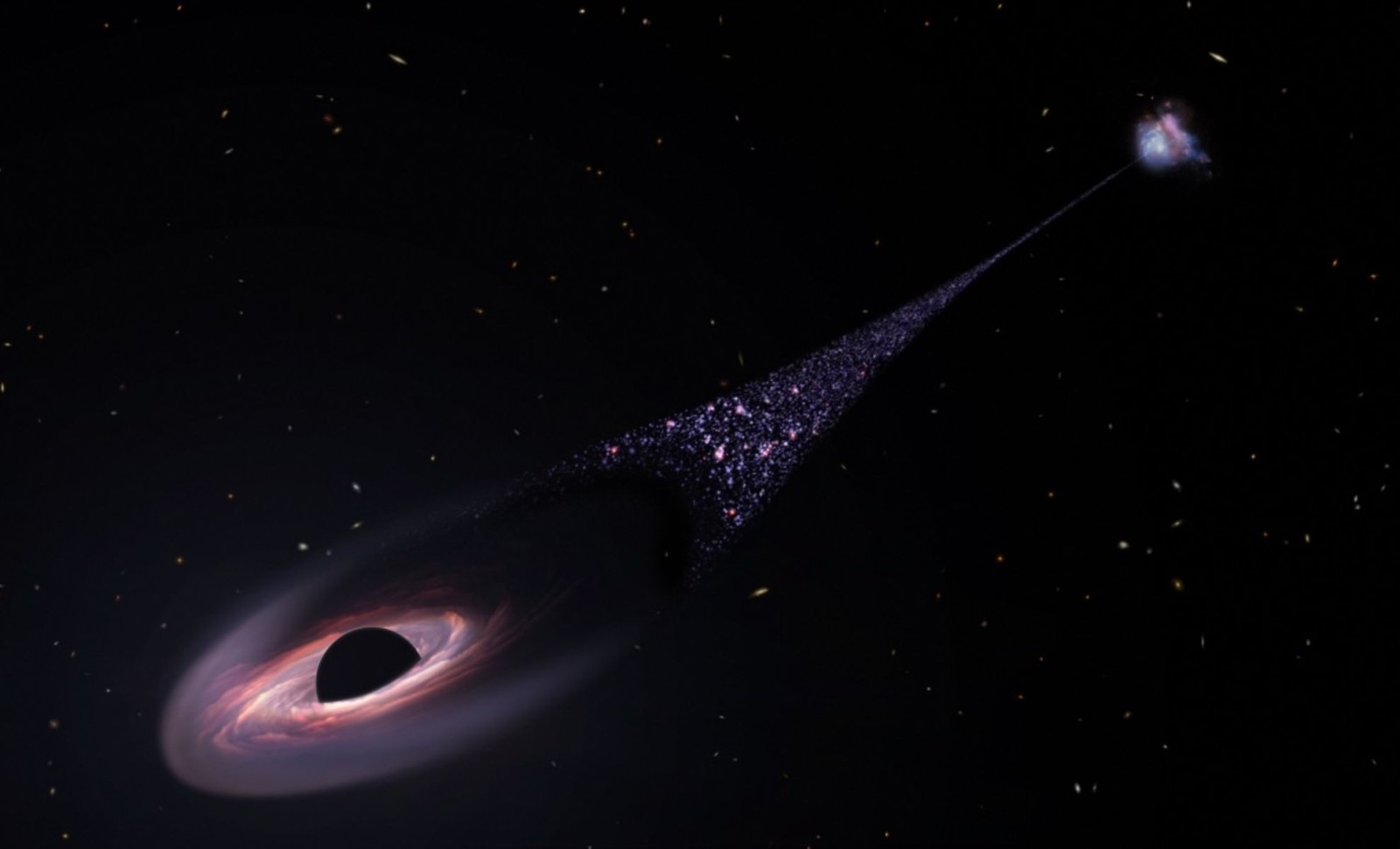
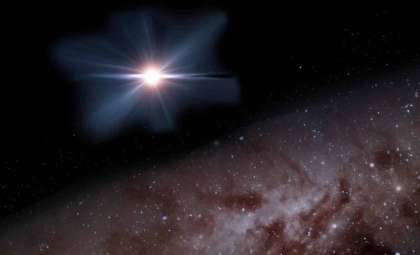
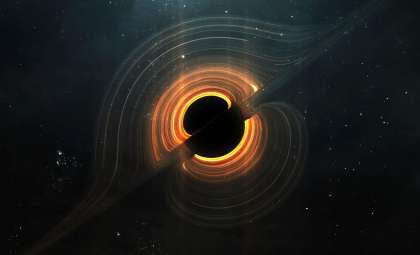
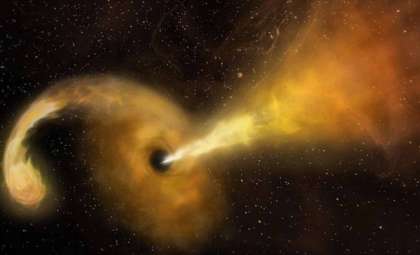
An extraordinary black hole, with a mass 10 million times that of our Sun, has been observed hurtling through space at an astonishing speed of 2.2 million miles per hour, ranking it among the fastest known celestial objects. Situated within the Cosmic Owl galaxy system, this discovery challenges our current perspectives on black hole dynamics in the cosmos.
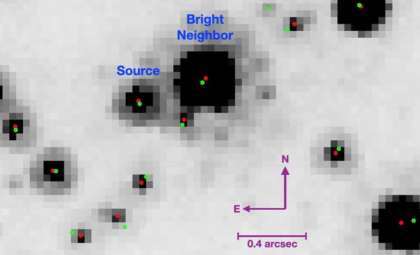
This runaway black hole was initially flagged as a possible candidate in 2023 following the detection of an unusual trail of gas trailing an unidentified source. Definitive confirmation and detailed measurements of its incredible velocity awaited the advanced observational capabilities of the JWST.
Origin Story of the Runaway Black Hole
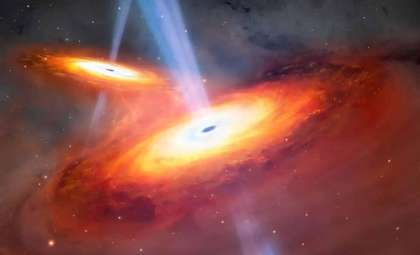
A NASA-published study suggests that this speeding black hole was born from a dramatic collision of two galaxies. Their supermassive black holes merged, creating a single immense gravitational behemoth at the heart of the newly combined galaxy.

“We think we’re seeing a wake behind the black hole where the gas cools and is able to form stars. So, we’re looking at star formation trailing the black hole,” said Pieter van Dokkum, professor of Astronomy and Physics at Yale University, “What we’re seeing is the aftermath. Like the wake behind a ship, we’re seeing the wake behind the black hole.”
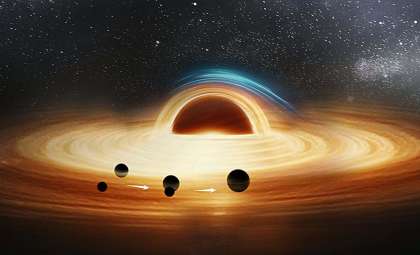
The intense gravitational forces unleashed during this merger likely delivered a potent “kick” to the new black hole, propelling it at speeds up to 1,000 kilometers per second and ejecting it from its original galaxy. JWST data confirmed this phenomenon, underscoring the violent and unpredictable processes involved in cosmic collisions.
“The original binary may have remained intact, or the new interloper black hole may have replaced one of the two that were in the original binary, and kicked out the previous companion,” as explained by the U.S. space agency.
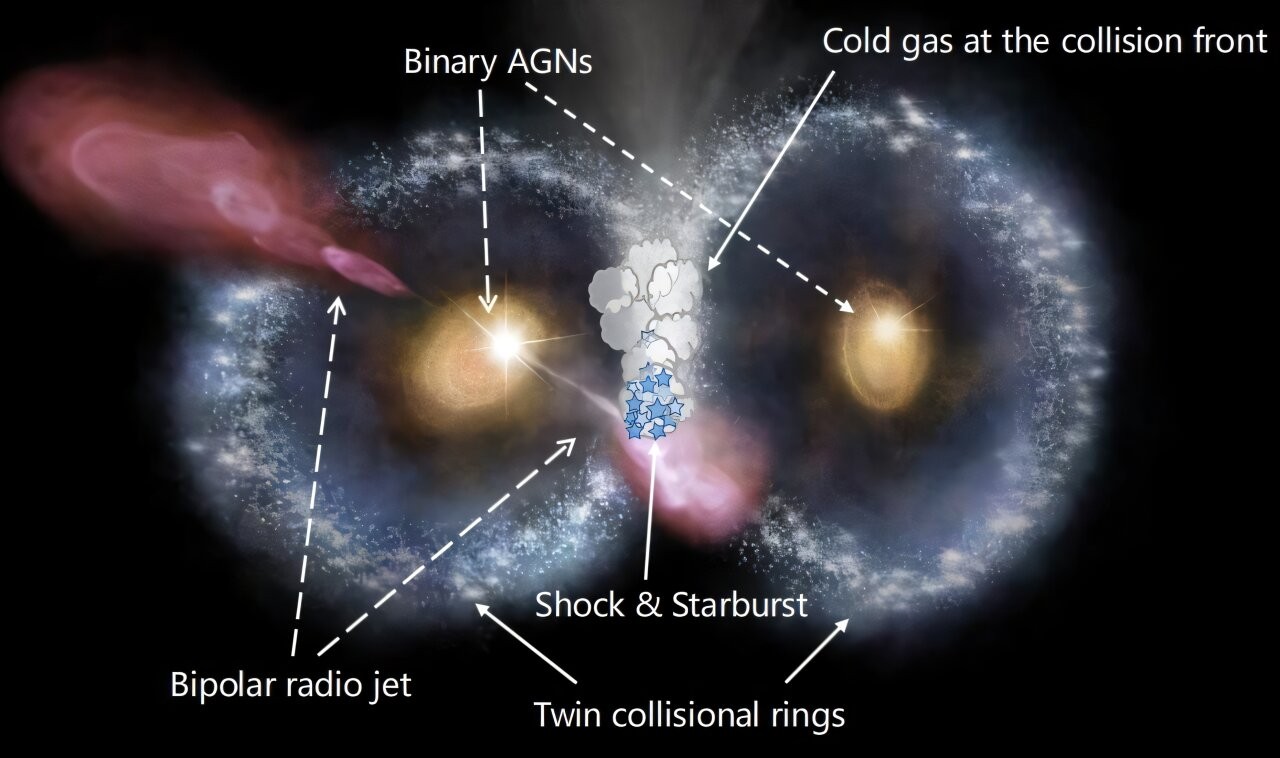
Star Formation Sparked in the Black Hole's Wake
As this dark giant tears through space, it leaves behind a remarkable streak of newly formed stars. The shockwave generated by its rapid movement compresses surrounding gas, igniting star birth. Van Dokkum notes:
“The velocity of the displaced gas is directly related to the velocity of the black hole,” meaning that the black hole’s rapid movement is the driving force behind the creation of stars in its wake.
Intriguingly, the newly formed stars trailing this cosmic traveler have an estimated combined mass around 100 million times that of our Sun. This phenomenon offers a novel window into the process of star formation triggered by such an extraordinary cosmic event.
Broader Cosmic Consequences
Although the Cosmic Owl galaxy system lies approximately 9 billion light-years away from Earth, the significance of this runaway black hole discovery extends well beyond its locale. Should it encounter another galaxy, the shockwave it triggers could have profound effects. As van Dokkum explains, when the shockwave interacts with dense galactic gas, it may set off bursts of fresh star formation.
Such interactions might be more common than once believed. Given the frequency of galaxy mergers throughout the universe, additional runaway black holes could be present. With JWST and future observatories like the Roman Space Telescope, astronomers are poised to uncover more of these rare “star trail” phenomena across the cosmos.
- Categories:
- News


0 comments
Sign in to Comment