
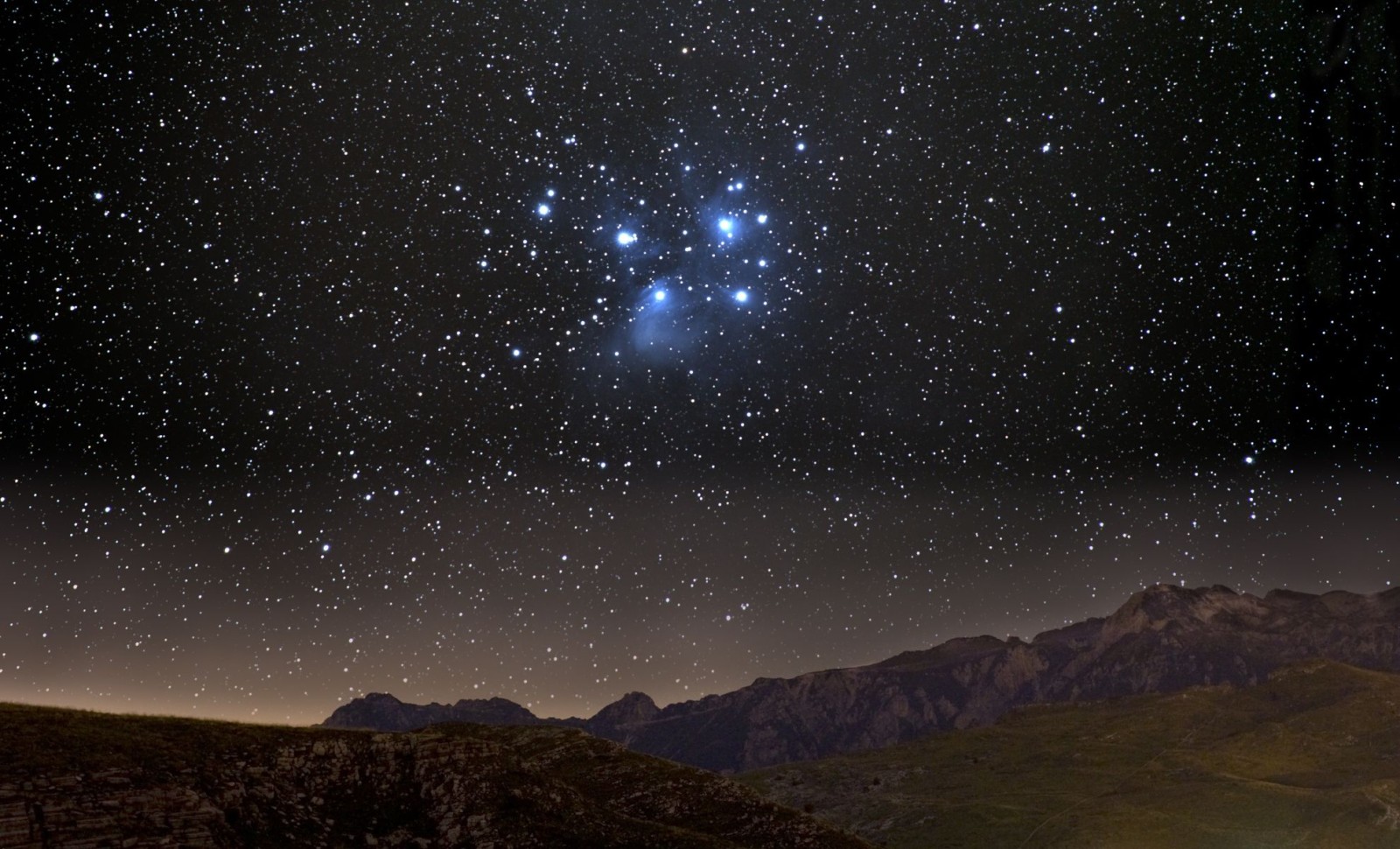
Once thought to be a compact gathering of a few luminous stars, the Pleiades have now been revealed as the dense center of a sprawling stellar assembly extending over a thousand light-years. Researchers have found that hundreds of stars, previously considered unrelated, actually share a common birthplace with this well-known cluster. This groundbreaking discovery, featured in The Astrophysical Journal, transforms our perspective on one of the most iconic star groups visible from Earth.
Thanks to observations from the TESS and Gaia space missions, what was once dubbed a tightly knit star cluster is now seen as the luminous hub of a vast cosmic family. The investigation, headed by Andrew Boyle at the University of North Carolina-Chapel Hill, proposes that the Pleiades cluster is the enduring core of an enormous star-forming region, with many member stars having drifted far from their initial assembly over millions of years.
The Pleiades—commonly known as the Seven Sisters across various traditions—have fascinated humanity for thousands of years. Historically seen as a small star grouping within the constellation Taurus, they have inspired countless myths and scientific scrutiny. Yet this latest research challenges the common portrayal of this stellar family.

Finding Hidden Stellar Kin
Stars originate within dense clouds of gas and dust, bound briefly by gravity before they scatter over time. Though this process is well-known, the true scale and coherence of the Pleiades were not fully appreciated until now. According to the Astrophysical Journal, Boyle’s team combined detailed motion data from Gaia with rotational measurements from TESS to uncover dozens, perhaps hundreds, of stars that share an origin with the Pleiades.
Many of these stars now reside far beyond the bright handful visible to the naked eye, with some positioned as distant as 1,200 light-years away from the cluster’s core.
“By measuring how stars spin, we can identify stellar groups too scattered to detect with traditional methods,” Boyle said, highlighting how this approach offers a “new window into the hidden architecture of our galaxy.”
The Core of an Ancient Stellar Assembly
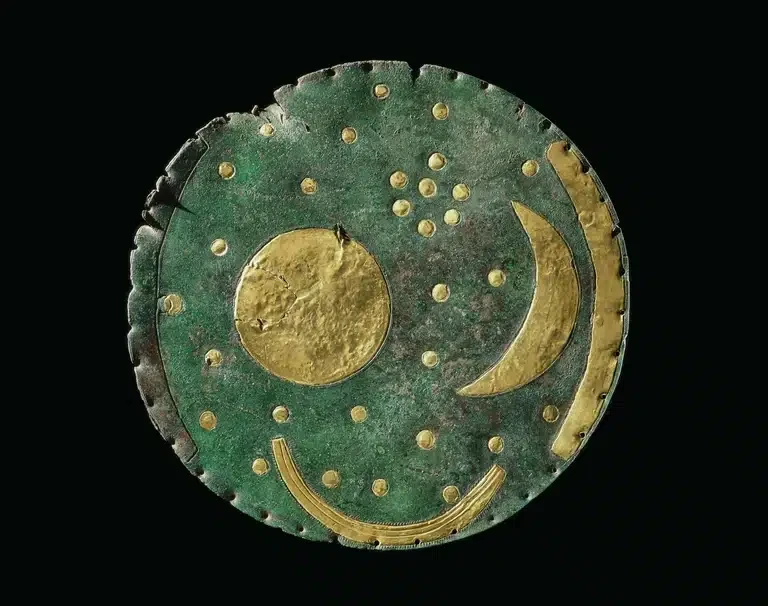
The Pleiades feature prominently in Greek mythology, Aboriginal stories, and ancient relics such as the Nebra Sky Disk, a 3,600-year-old bronze artifact believed to illustrate the cluster. Known variously as the Seven Sisters, the Seven Sages, or spiritual guides, these stars have long held cultural significance.
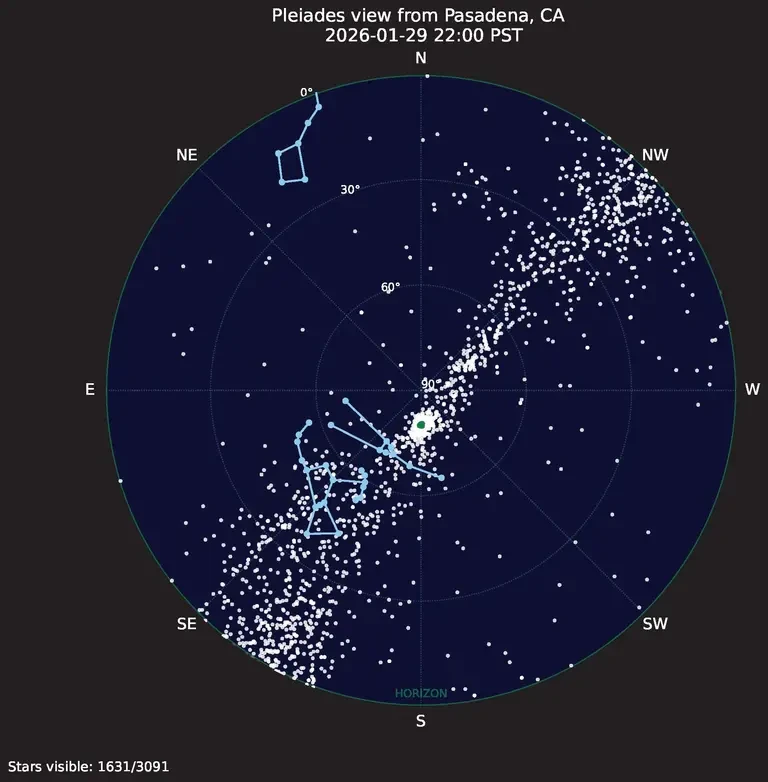
Astronomers have documented hundreds of faint stars within a tight patch of sky, about two degrees wide, equivalent to roughly eight light-years across. As IFLScience reports, these past observations focused mainly on the cluster’s immediate neighbors. The recent study reveals that the actual stellar family is spread much more widely than thought.
Reconsidering Old Assumptions
Earlier models had suggested extended star structures around some clusters, but none approached the breadth found around the Pleiades. Groups such as the AB Doradus moving group were once speculated to have originated from this cluster.
Nevertheless, Boyle’s analysis reveals that many of these supposed connections don’t stand up when considering the new detailed data on stellar motions and spins. Professor Andrew Mann, a co-author, remarked:
“many stars near the Sun are part of massive extended stellar families with complex structures. Our work provides a new way to uncover these hidden relationships.”
This insight fundamentally changes how scientists trace the evolutionary paths of stars, especially those with relatively young ages. At approximately 100–150 million years old, the Pleiades retain much of their original population, old enough for significant dispersal but young enough that many of their founding stars remain observable today.
- Categories:
- Astronomy



0 comments
Sign in to Comment