
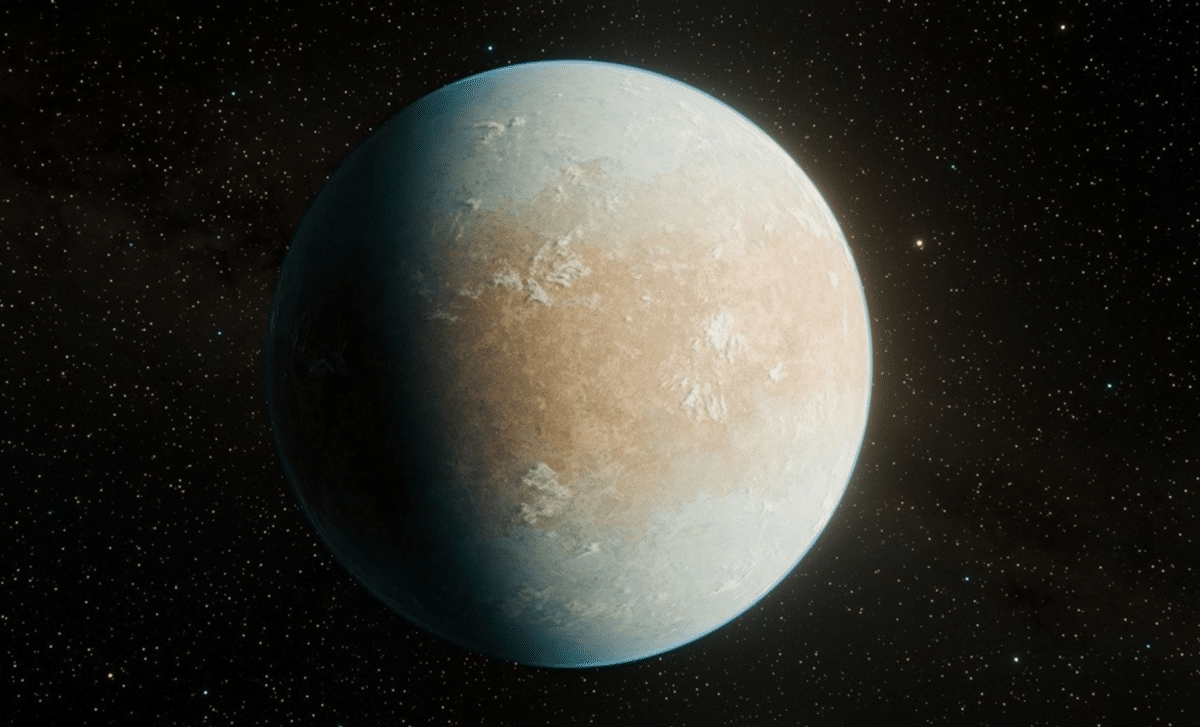
A recent breakthrough in the quest to find Earth-like worlds was unveiled in The Astrophysical Journal Letters on January 27, 2026, introducing a fascinating candidate: HD 137010 b. Situated 146 light-years from our solar system, this exoplanet is somewhat larger than Earth and circles a star comparable to the Sun. Nevertheless, despite sharing similarities in size and orbital distance, its surface temperatures are expected to be much colder than Mars, potentially plummeting to around minus 90°F (minus 68°C). The international research team led by Alexander Venner has made a discovery that redefines habitability prospects and advances our understanding of whether planets like ours exist elsewhere.
Three Decades Pursuing Earth’s Counterpart
For over 30 years, astronomers have concentrated their efforts on locating exoplanets resembling Earth.
“Since the discovery of the first exoplanet 30 years ago, we’ve always tried to find Earth’s twin,” Dr. Huang, a key member of the research team, explained.
Add Cosmo Herald as a Preferred Source

The newly identified HD 137010 b offers a step forward in this pursuit, though it is not an exact replica. The detailed findings, shared in The Astrophysical Journal Letters, emphasize that the planet resides within its star’s so-called "habitable zone," where conditions could allow liquid water to be present—an essential ingredient for life.
Dr. Venner highlighted the concept of the habitable zone, stating,
“The definition of a habitable zone, which astronomers use, is the area around the star where water could exist in liquid form.”
Although the planet’s environment is expected to be cold, this discovery enriches our knowledge of possible life-supporting niches beyond the solar system.
A Cold but Possibly Life-Friendly Exoplanet
Despite orbiting inside the habitable zone, HD 137010 b faces a significant challenge for sustaining life as we know it: its icy surface conditions. The host star, HD 137010, is cooler and less luminous than the Sun, which means the planet is receiving a fraction of Earth’s stellar energy. Consequently, surface temperatures may drop to nearly minus 90°F, ranking it among the chilliest exoplanets discovered so far.
Yet researchers remain optimistic about the planet’s potential. Dr. Venner noted that despite the frigid exterior, HD 137010 b lies within the more generous, or “optimistic,” bounds of its star’s habitable region.
“This planet candidate is really at the limits of what we think might be possible in terms of potential habitability,” he stated.
This implies that with appropriate atmospheric properties, the planet’s surface might be more accommodating than its temperature alone would suggest.
Investigating HD 137010 b: A Complex Endeavor
The study of HD 137010 b faces hurdles due to its orbit, which, while Earth-like in distance, is farther out than many exoplanets typically studied. This means that the planet’s transits—when it crosses in front of its star and dims its light—occur infrequently, complicating efforts to verify its presence.
Dr. Huang detailed the observational challenge, explaining,
“At the heart of it was simply giving internet users an image [from NASA’s Kepler space mission] with this brightness of tone and asking them to point out parts where it dipped.”
This planet’s identification relied on just one transit event recorded by NASA’s Kepler Space Telescope, an instrument designed to detect planets via the transit technique. Confirming its existence and gathering insights into its mass and atmospheric makeup will depend on future observations, possibly requiring next-generation telescopes yet to come online.
- Categories:
- Astronomy










0 comments
Sign in to Comment