
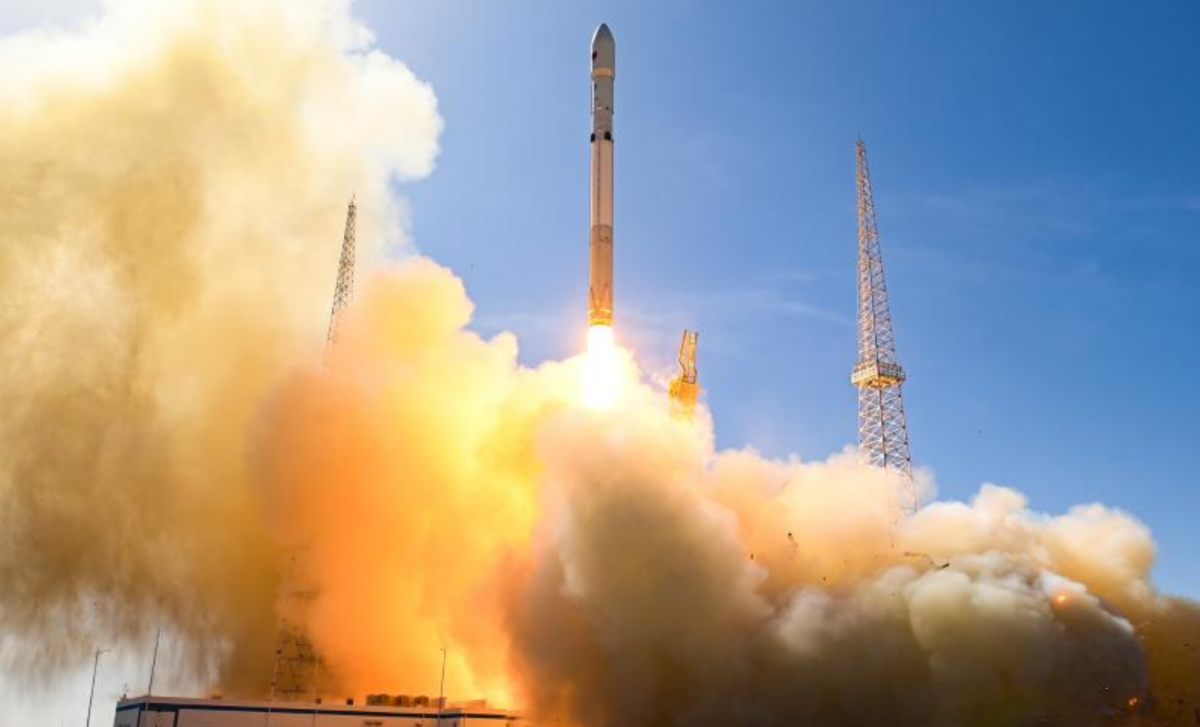
China has achieved a breakthrough by successfully sending its new Long March 12B rocket into orbit. This commercial and reusable spacecraft is designed to deploy megaconstellations of satellites, marking a key development in China's expanding space ambitions. Notably, the launch transpired without any advance airspace notifications, highlighting the nation's rising prowess in commercial spaceflight and independent orbital operations.
Long March 12B: China’s Rival to SpaceX’s Falcon 9
The Long March 12B rocket, measuring 72 meters (236 feet) in height, stands as a direct challenger to SpaceX’s Falcon 9. Engineered for commercial satellite missions, it can deploy a substantial number of satellites in a single launch, accelerating China's initiatives to build a vast satellite megaconstellation. These satellite networks are essential for delivering global internet access, enhanced communications, and advanced navigation solutions.
Launching without publicly issued airspace warnings has prompted debates regarding international standards and transparency. Although this tactic facilitates quicker deployments and operational adaptability, it also elevates safety risks for civilian air traffic and nearby communities. Analysts view this as a testament to China's confidence in its launch infrastructure and risk control, emphasizing the country’s commitment to rapidly growing its presence in space.

Strategic Importance of the Launch Location
The rocket was launched from the Dongfeng Commercial Space Innovation Test Zone in Inner Mongolia, a region emerging as a key center for China's commercial aerospace activities. This facility supports both experimental testing and active launches, benefiting from its remote location and robust technical support. Experts note that choosing sparsely inhabited areas reduces risk while enabling swift turnaround times for multiple rocket launches.
Inner Mongolia's role aligns with a larger objective to utilize regional strengths for high-tech growth, including low population density, favorable weather conditions, and logistical accessibility. Establishing a commercial launch hub in this area allows China to quicken satellite constellation rollouts and lessen reliance on conventional government spaceports, potentially reshaping Asia’s commercial launch sector.
Overnight, China successfully launched a new medium-class rocket to orbit — Long March 12B.
— Christian Keil (@pronounced_kyle) June 1, 2026
Looks like they gave no airspace notice (!), and carried suspiciously Starlink-shaped satellites to orbit… all on their first try.
China's space industry is catching up to ours, fast. pic.twitter.com/BrHWBoIrYU
Impact on the Global Space Landscape
The introduction of the Long March 12B underscores the intensifying global space competition. By delivering groundbreaking reusable commercial launch capabilities, China is positioning itself as a formidable competitor to the United States’ SpaceX and other providers worldwide. This technological achievement also grants strategic flexibility for satellite launches, military applications, and international communication services.
Although the lack of pre-launch safety warnings remains contentious, it illustrates China's growing confidence and operational expertise in managing space missions. This could drive other nations to rethink their own commercial launch regulations, potentially speeding up the race for satellite megaconstellations and orbital infrastructure. Nonetheless, transparency and safety practices will be closely monitored as orbital congestion and debris become increasingly pressing concerns.
Commercial Rockets as Drivers of China’s Space Goals
The Long March 12B exemplifies China's strategy to blend commercial innovation with strategic vision in outer space. By prioritizing reusability and efficiency, the country lowers launch costs and increases flight frequency, making large projects like satellite megaconstellations economically feasible. This trend mirrors a global shift where nations depend more on commercial technology to secure space autonomy and economic growth.
According to LiveScience, the inaugural flight deployed multiple Qianfan “Thousand Sails” satellites, initiating a program aimed at boosting China’s communications and observational infrastructure. The merging of commercial and governmental space objectives also opens possibilities for missions beyond Earth orbit, supporting lunar exploration and deeper space endeavors.
Ushering in a New Era for Mega Satellite Networks
This milestone launch positions China among the countries capable of swiftly deploying expansive satellite constellations. The Long March 12B allows large-scale satellite insertion, critical for providing worldwide internet access, real-time Earth monitoring, and secure data transmissions. As these constellations grow, China may influence global standards for technology, satellite management, and space governance.
Experts argue that the synergy of commercial efficiency, cutting-edge technology, and strategic anticipation will elevate China as a dominant force in terrestrial and orbital systems. Despite lingering concerns about openness, the Long March 12B launch exemplifies China’s readiness to pursue ambitious projects shaping the future of space exploration worldwide.
- Categories:
- News









0 comments
Sign in to Comment