
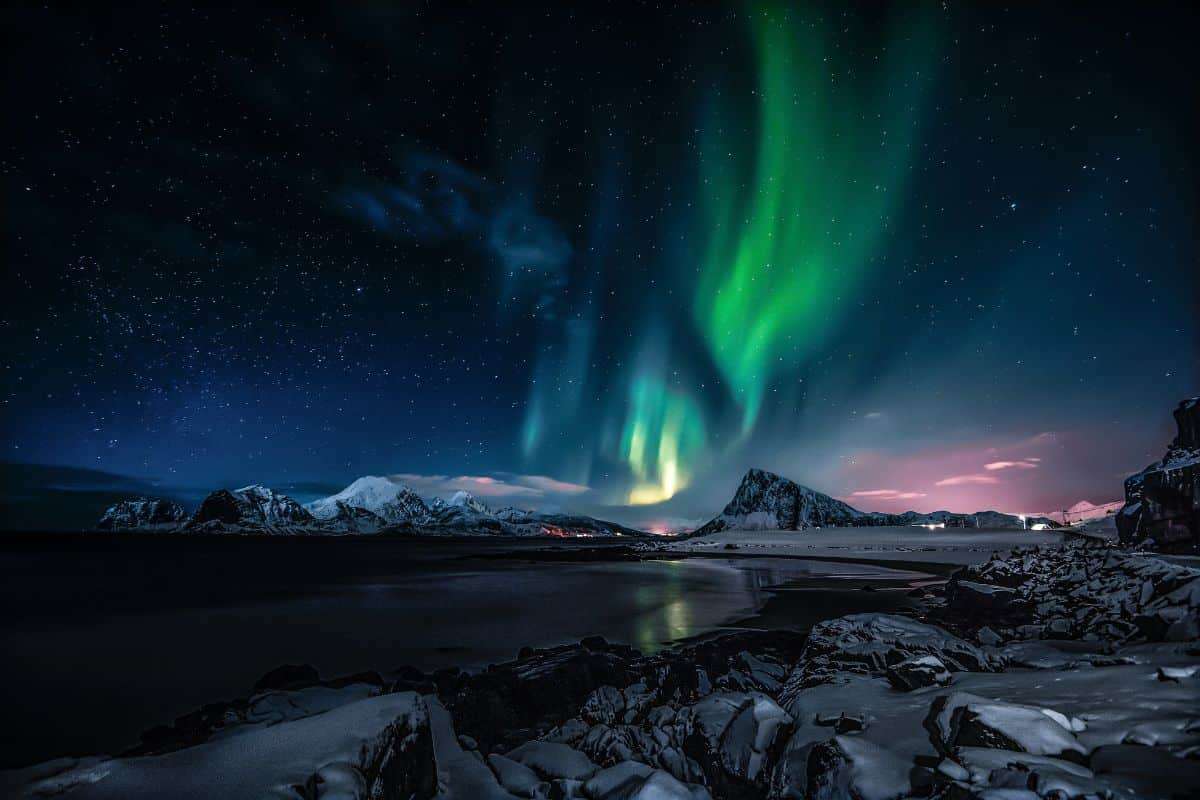
Auroras have long fascinated observers with their magical light shows in the night sky. Recently, however, these dazzling phenomena are appearing more often and in areas where they are rarely seen.
From locations across the U.S. to unexpected spots in Europe and beyond, these luminous arcs are lighting up the horizon in surprising new places. This surge is linked to heightened solar activity producing some of the most impressive auroral events in recent memory.
What’s Behind the Rise in Aurora Activity?
Central to this uptick is the Sun’s 11-year solar cycle. Currently, we are approaching the solar maximum phase—a time when solar activity peaks and intense solar eruptions become more frequent, influencing Earth's atmosphere.

The Sun emits high-energy bursts known as coronal mass ejections (CMEs), which send charged particles hurtling toward Earth. When these particles collide with Earth’s magnetic field, they produce the vivid light shows we call the aurora borealis in the Northern Hemisphere and aurora australis in the Southern Hemisphere.
During this solar maximum, these solar storms have grown stronger, resulting in more frequent, brighter auroras visible much farther from the traditional polar regions.
Aurora Sightings in Unexpected Regions
Usually confined near the Arctic and Antarctic Circles, recent solar storms have expanded the auroras' reach well beyond their usual boundaries.
In May 2024, a significant geomagnetic storm caused auroras to be spotted as far south as states like Arizona, Texas, and Florida.
This phenomenon occurs when a powerful solar storm temporarily weakens Earth’s magnetic defenses, allowing auroras to appear in places where they are typically unseen. As a result, many who have never witnessed the northern lights are now experiencing nature’s spectacular light show firsthand.
Are Solar Storms a Threat to Technology?
Although auroras themselves pose no harm, the solar storms responsible can disrupt critical technology.
Severe geomagnetic disturbances have the potential to damage satellites, hinder GPS navigation, and even cause blackouts by affecting power infrastructures. A historical example is the Carrington Event of 1859, when a massive solar storm triggered fires in telegraph systems.
Should a comparable event occur today, the consequences for communication networks, aviation, and internet services could be severe. Hence, researchers monitor solar activity vigilantly to provide early warnings of incoming storms.
Why Now Is the Ideal Time to Witness Auroras
With the solar maximum underway, 2024 and 2025 promise spectacular auroral displays unseen in decades.
Whether heading to destinations like Iceland, Alaska, northern Canada, or simply stepping outside during heightened solar activity, the sky offers a mesmerizing spectacle.
For anyone eager to catch a glimpse of the northern lights, this period offers an extraordinary opportunity. Stay alert for the next burst of colorful skies—it could happen any night.
- Categories:
- Nature










0 comments
Sign in to Comment