
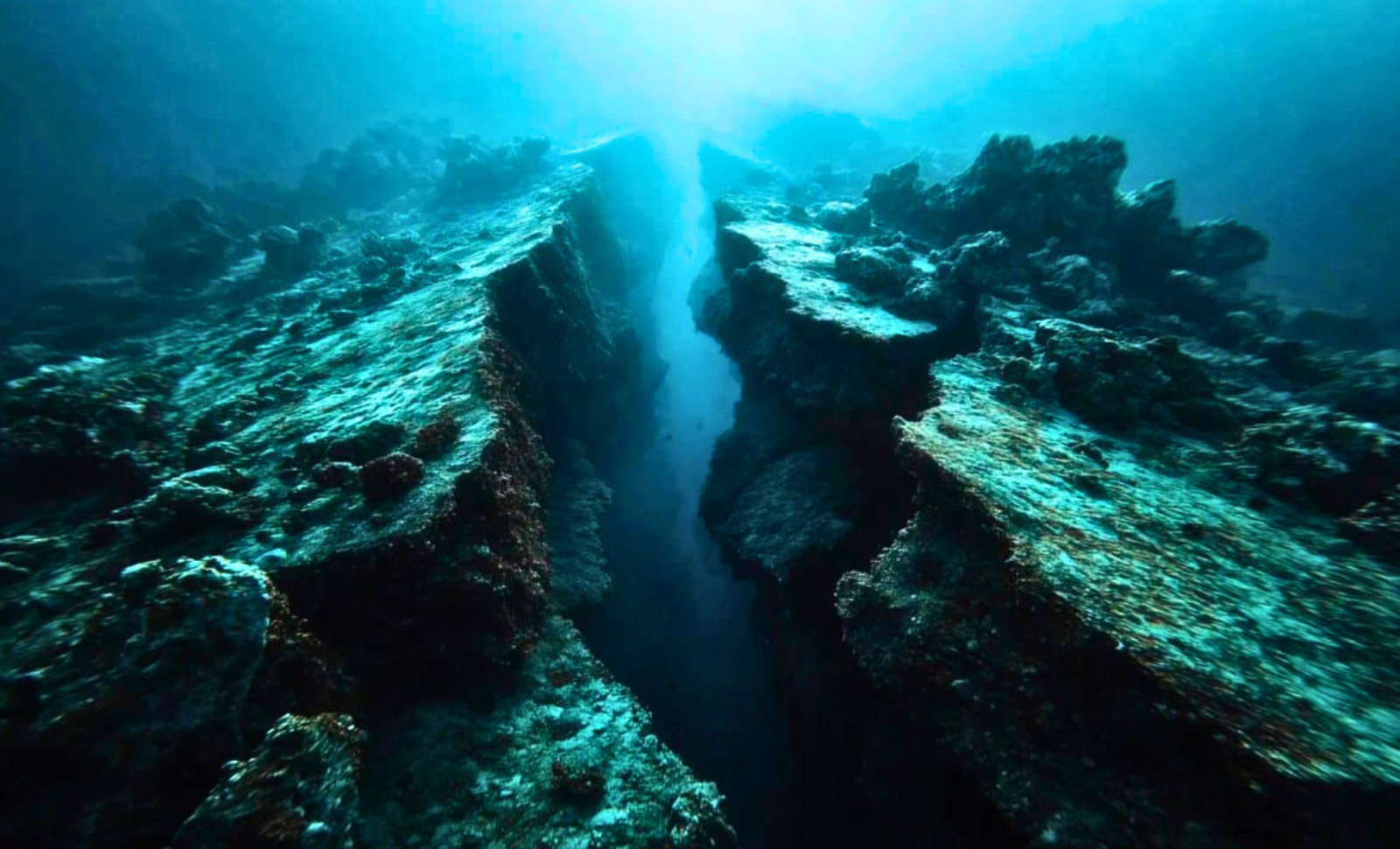
Near Vancouver Island's coast, a segment of the oceanic crust has shifted downward by approximately five kilometers along a fault that researchers believe is nearing a complete rupture. This discovery came from a team using acoustic waves to map the seafloor in the northern Cascadia subduction zone, where the Juan de Fuca and Explorer plates descend beneath the North American continent. Their results, featured in Science Advances, offer the most detailed snapshot yet of a subduction system in the midst of closure.
Subduction zones are areas where one tectonic plate slides beneath another, triggering Earth’s most powerful earthquakes and explosive volcanism, while gradually recycling lithosphere into the mantle.
Scientists have long debated how these zones eventually cease their activity, since ongoing subduction would ultimately eliminate ocean basins and merge continents. The new seismic data from Vancouver Island provides insight by showing the Juan de Fuca plate fracturing incrementally rather than failing in a single, catastrophic event.

Seismic Survey from a Research Vessel Uncovers a Five-Kilometer Fault Drop
The data originated from the 2021 Cascadia Seismic Imaging Experiment (CASIE21), conducted on the R/V Marcus G. Langseth, a vessel managed by the Lamont-Doherty Earth Observatory. Leading the mission was Lamont scientist Suzanne Carbotte, who later co-authored the publication with Anne Bécel, another Lamont researcher.
The team probed beneath the seafloor by emitting sound pulses and capturing their echoes via a 15-kilometer-long array of hydrophones. This seismic reflection method, comparable to an Earth ultrasound, delivers highly detailed images of faults and fractures submerged beneath the ocean. The dataset continues to be examined by about 20 researchers from Lamont-Doherty, Louisiana State University, Auburn University, the University of Texas at Austin, and others.
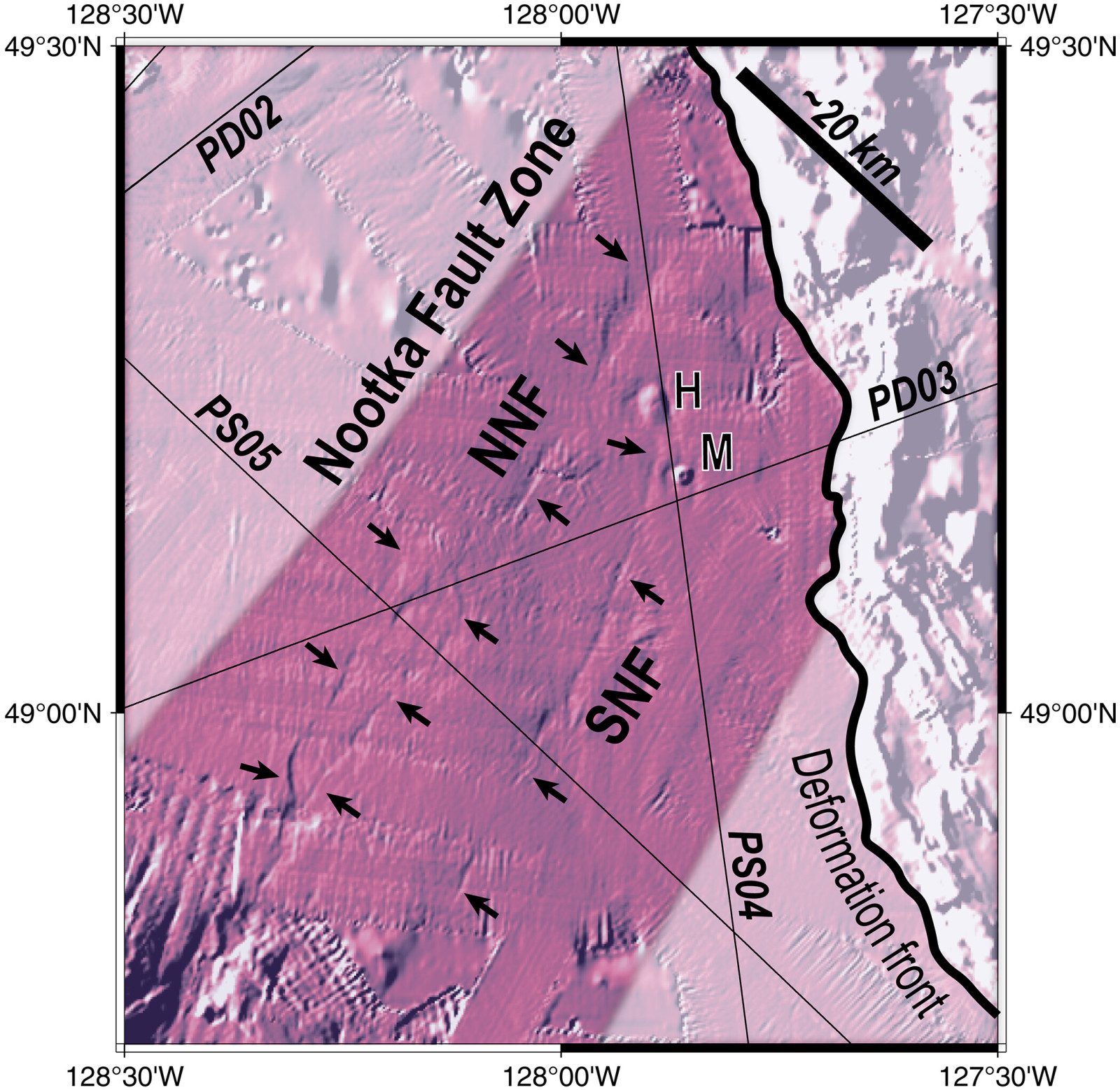
The seismic images revealed multiple fractures slicing through the descending slab, including a major fault where the crust has visibly dropped roughly five kilometers. Brandon Shuck, assistant professor at Louisiana State University, who led the research as a postdoctoral scientist at Lamont, described the finding as a unique view into a subduction zone caught in the throes of collapse.
“It's the first clear observation of a subduction zone in the process of dying,” Shuck explained. “Rather than shutting down all at once, the plate is fragmenting into smaller microplates and forming new boundaries — much like a train gradually derailing one car after another instead of a massive derailment.”
Silent Segments Along a 75-Kilometer Fault Indicate Completed Fractures
Researchers cross-validated their observations with seismic activity records along the fault’s 75-kilometer length. Certain sections continue to generate minor earthquakes, while others have gone geopolitically silent. This absence of seismic events is not due to missing data but reflects areas where the rocks have fully separated.
“Once a segment detaches completely, it no longer produces earthquakes because friction ceases between disconnected rock masses,” Shuck noted. These quiet zones suggest that some microplates have fully broken away and now drift slowly apart from the still-subducting areas.
The main fault with the five-kilometer drop is actively breaking the plate, though it has yet to detach entirely. “This large fault is close to tearing the plate apart but hasn’t completely disconnected it,” Shuck said. This sequential fracturing, termed episodic or piecewise termination, involves segments breaking off one after another instead of simultaneously.
Each fracturing episode spans millions of years, but collectively they can halt the subduction process. As sections detach, the pulling force driving subduction weakens, akin to a train losing momentum when cars fall off. Ultimately, repeated events can stall the entire plate convergence.
This Sequential Breakup Clarifies Ancient Remnants of Extinct Plates
Carbotte remarked that while it has been known that subduction ceases when more buoyant oceanic crust reaches the trench, directly witnessing the breakup is unprecedented. “These discoveries provide unprecedented insights into the lifecycle of tectonic plates shaping our planet,” she said.
The observed piecewise fragmentation off Vancouver Island helps explain geological evidence seen in other regions. For example, fossil microplates identified off Baja California represent vestiges of the Farallon plate, a former major plate subducting beneath North America before disappearing.
Scientists previously viewed these fragments as traces of a dying subduction zone, but the exact breakup process remained elusive until now. The Cascadia findings fill that gap, demonstrating that subduction zones unwind incrementally, leaving behind microplates as snapshots of their gradual demise.
Implications for Assessing Earthquake Risks Are Under Exploration
This research doesn't alter the potential magnitude of earthquakes expected in the Pacific Northwest on human timescales. The risk of significant seismic events and tsunamis in Cascadia remains confirmed by numerous prior studies.
What the new data offers is a refined view of fault structures slicing through the subducting plate. Researchers are investigating whether large ruptures could cross these fractures or if they may act as barriers preventing rupture propagation.
Enhancing our understanding of these detailed fault patterns promises to improve seismic hazard models for the region. The CASIE21 survey was funded by the National Science Foundation, and scientists continue to analyze the dataset to unravel how these internal complexities influence earthquake dynamics in the Pacific Northwest.
- Categories:
- Science


0 comments
Sign in to Comment