
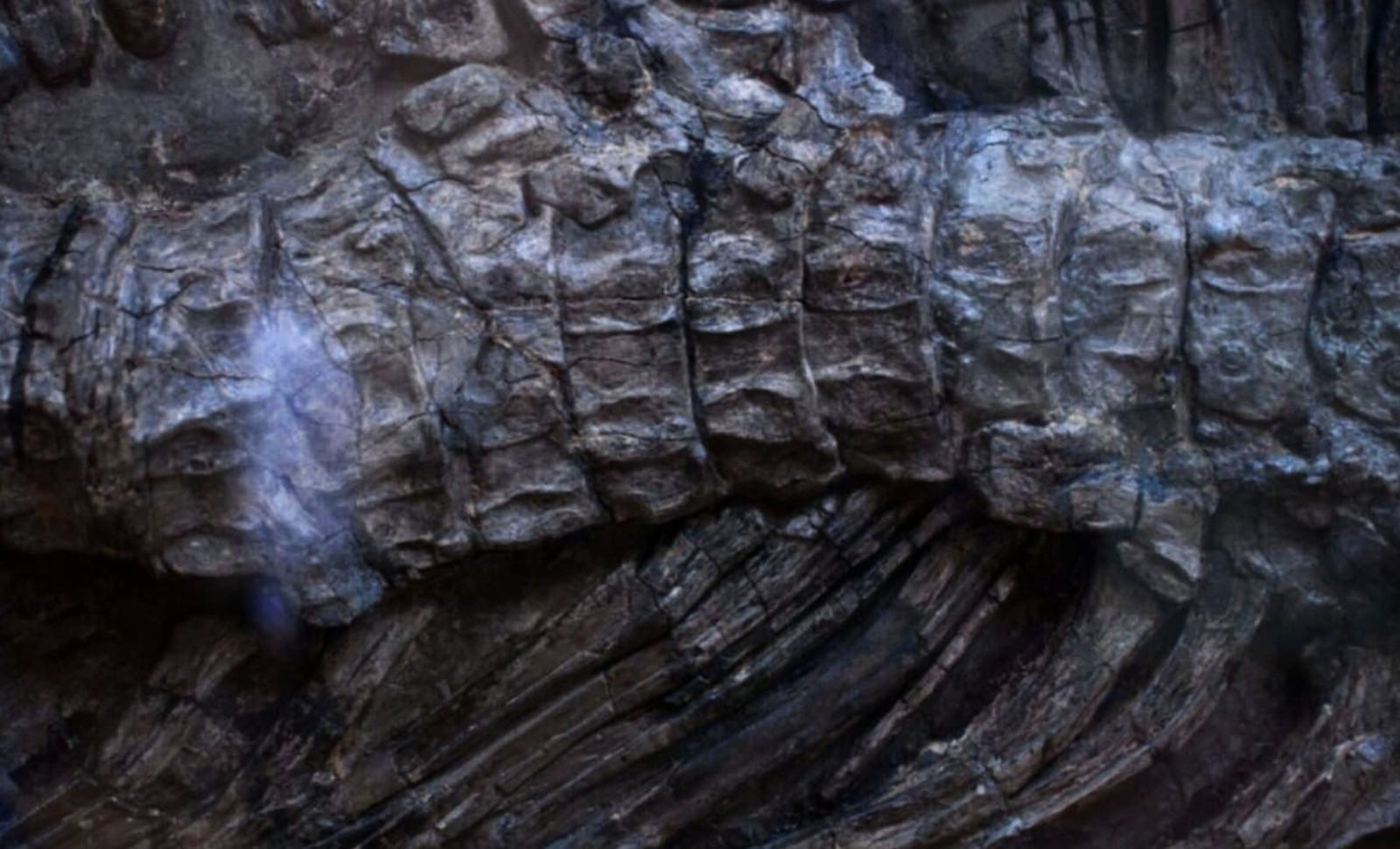
While undertaking foundation work for a new industrial complex in southwestern China’s Tongnan District, construction crews stumbled upon a remarkable find instead of the expected concrete base. Their digging machinery revealed fragments embedded deep within the vibrant purple-red strata of rock, part of the Sichuan Basin—an area notable for its intricate geological past and rich deposits of ancient sediments.
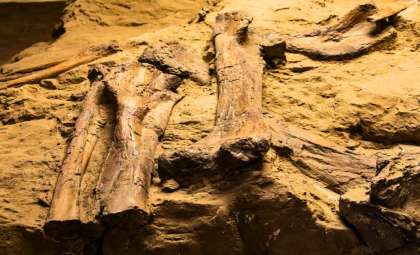
Initial excavations uncovered enormous stones that stood out starkly from the typical rock layers, showing an organized structure inconsistent with natural geologic formations. Careful examination revealed biological patterns indicative of fossilized remains. Recognizing the extraordinary size of these bones, far exceeding any familiar local fauna, the workers paused the project to notify experts.
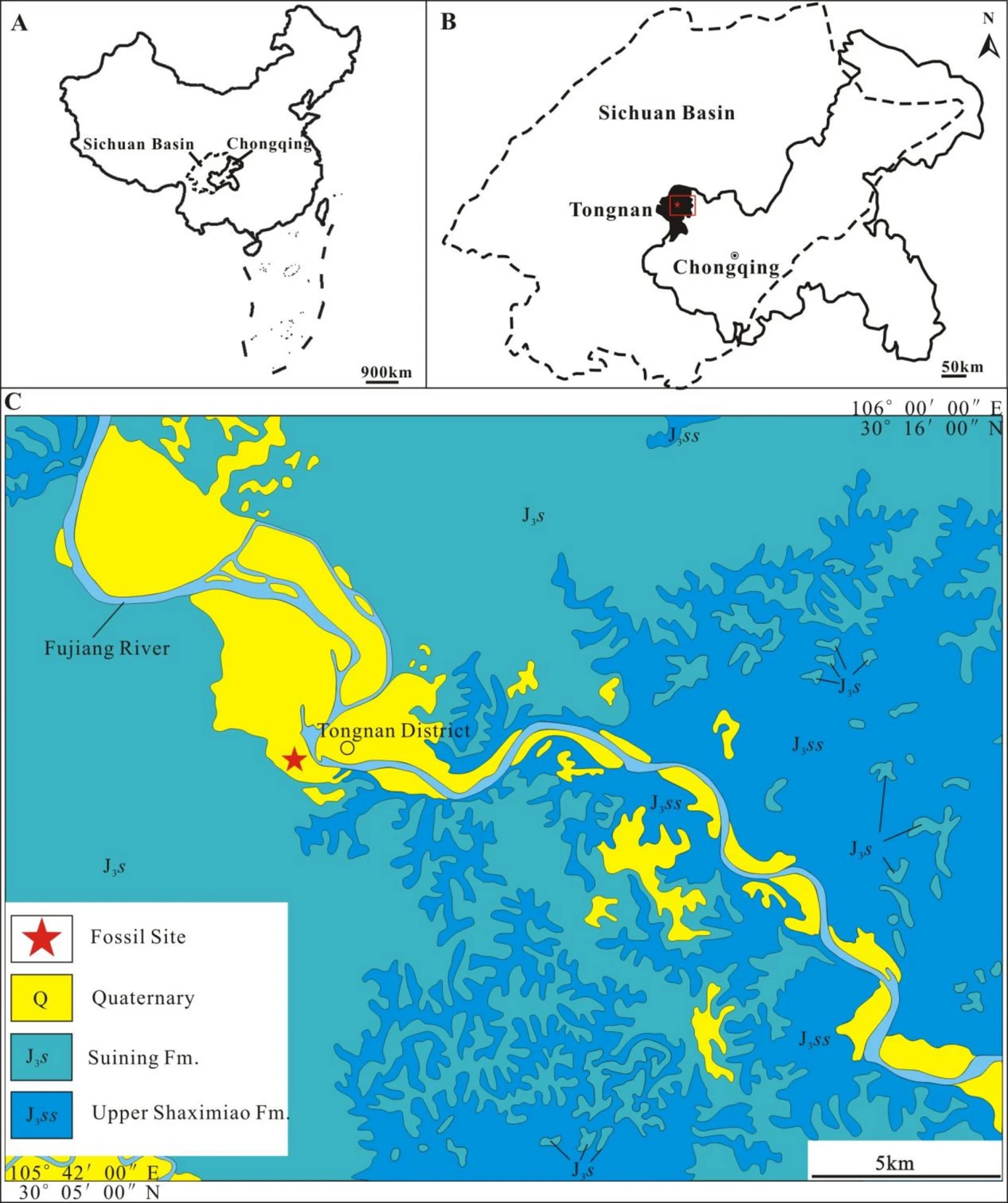
Specialists from the Chengdu Center of China Geological Survey promptly investigated the site, confirming that the excavation pierced through the Suining Formation, a layer dating back around 147 million years to the Late Jurassic. This epoch was notable for the rapid evolution and flourishing of gigantic dinosaurs.

Dinosaur Remains Preserved in Jurassic Layers
Dr. Xuefang Wei took charge of the in-depth study of these fossils, which were embedded in dense mudstone and sandstone deposits that marked an ancient landscape of seasonal wetlands and semi-arid conditions. Signs such as sediment ripples and aquatic fossils indicate periodic flooding of lakes that helped fossilize animal remains by swiftly covering them in sediment rich in silt.
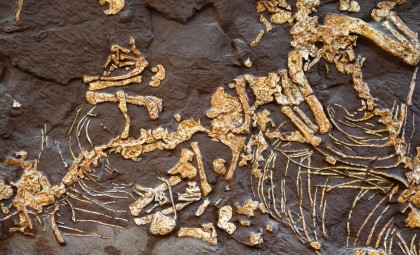
The rapid burial shielded these skeletal remains from environmental damage and scavenging, enabling their preservation through mineralization over millions of years. The unearthed partial skeleton includes three dorsal and six tail vertebrae, which remain impressively intact within the rock matrix.
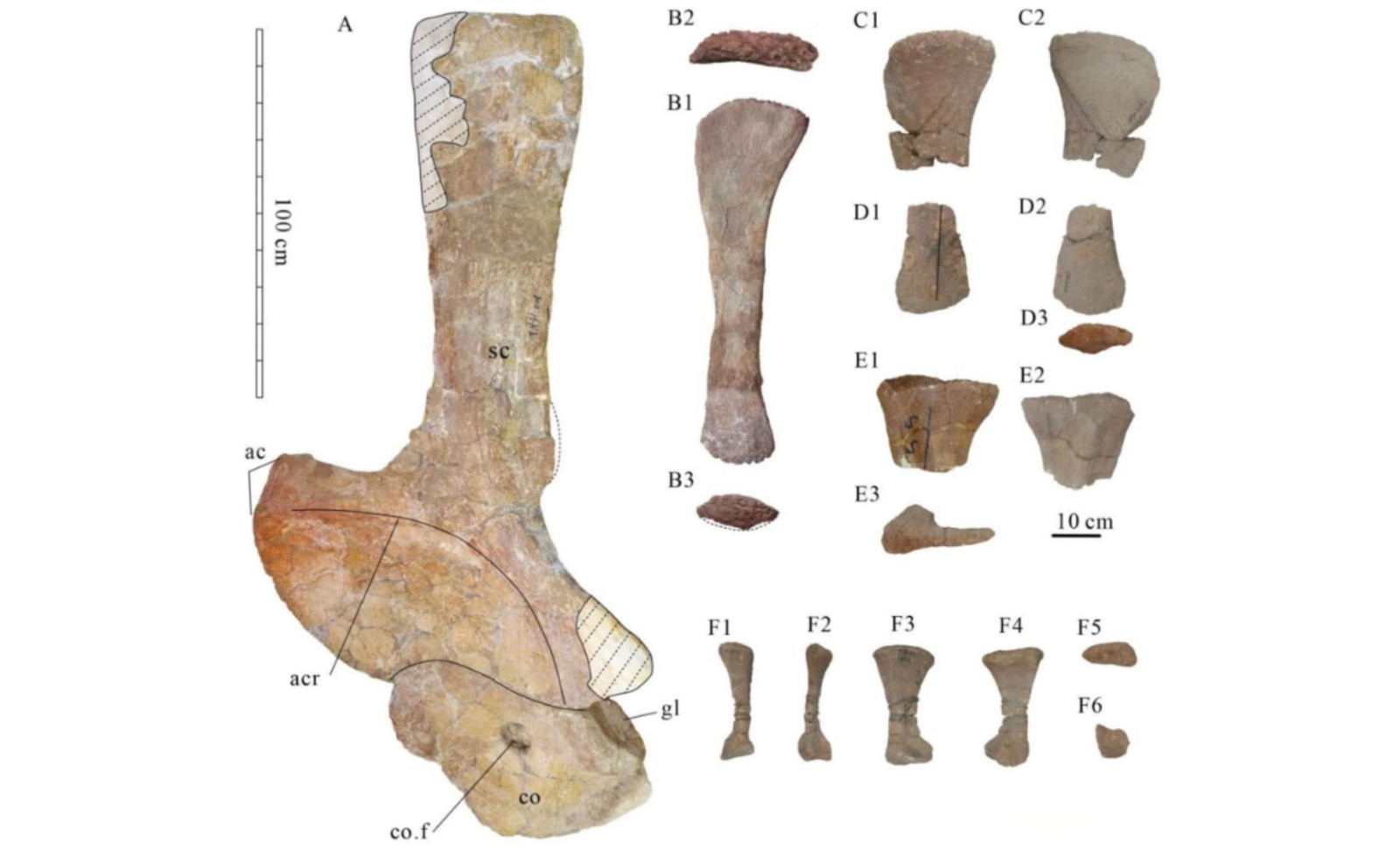
Additional recovered bones comprise parts of the shoulder girdle and several hind limb elements such as the tibia, fibula, and metatarsals. These remains helped researchers classify the creature as part of the sauropod lineage, the group of long-necked herbivorous dinosaurs known to include Earth’s largest terrestrial animals. This family reached its peak during the middle and late Jurassic periods.
Introducing Tongnanlong zhimingi: The New Jurassic Giant
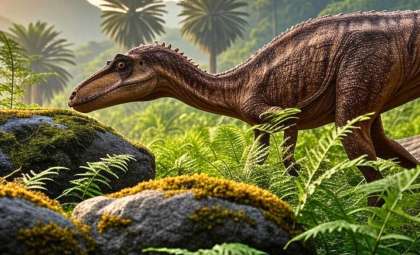
Following years of thorough analysis, the team published their findings in the journal Scientific Reports, officially naming the species Tongnanlong zhimingi after the discovery site and honoring paleontologist Dong Zhiming. This dinosaur belongs to the Mamenchisauridae family, renowned for their extraordinarily long necks that often outstretched the rest of their bodies.
Detailed anatomical studies revealed unique characteristics, including a massive scapula over 1.8 meters long, which supported robust front limbs. This shoulder blade size surpasses that of many comparable dinosaur fossils from the same geological strata.
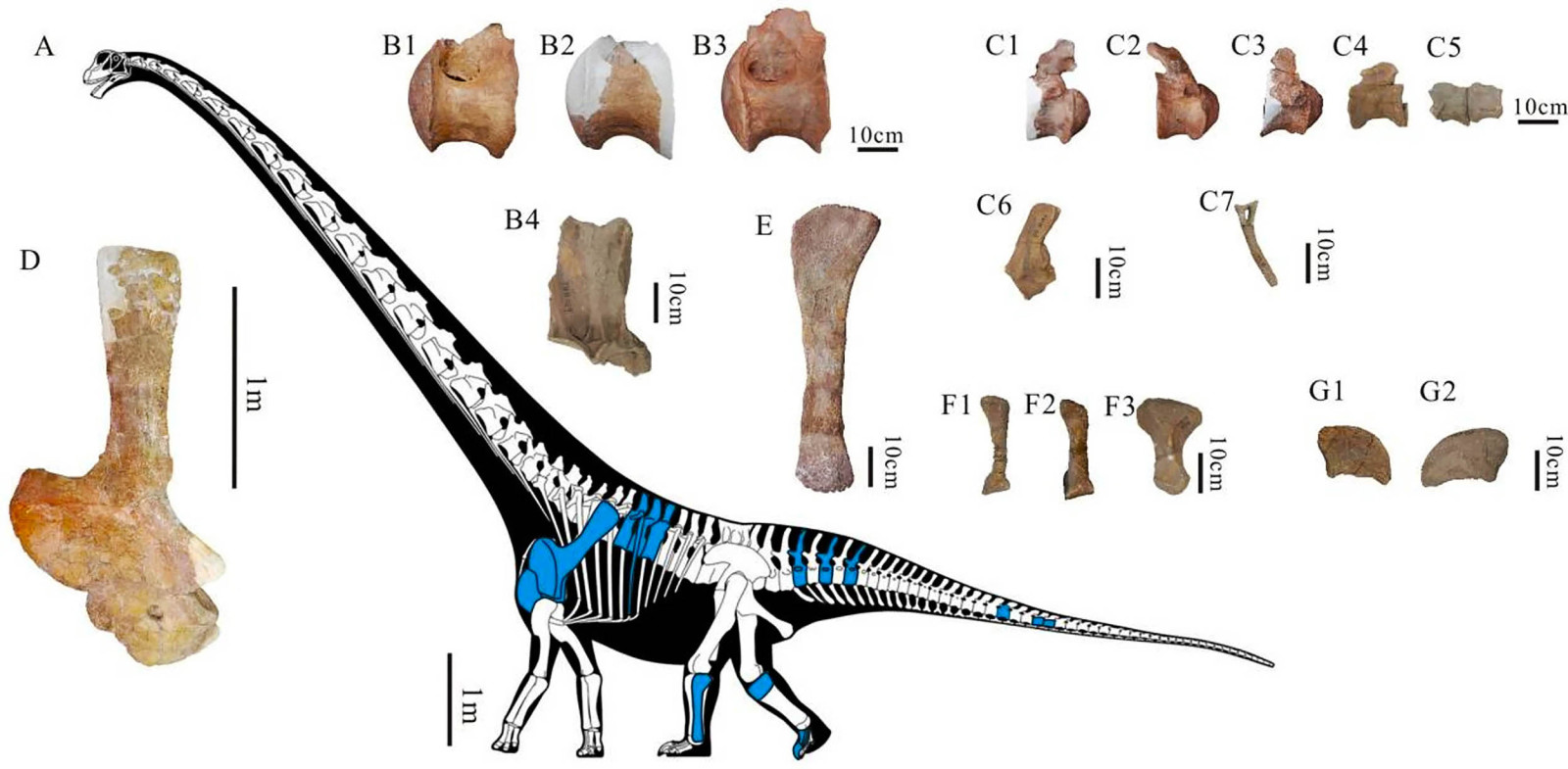
The vertebrae feature reinforced ridges and intricate internal air cavities known as pleurocoels, which lightened the skeleton while maintaining strength. This anatomical adaptation was vital for supporting a body mass possibly equal to that of ten elephants stacked together, enabling mobility in the Jurassic wetlands.
Estimating a 92-Foot Dinosaur
Using proportional scaling techniques, paleontologists extrapolated the total size of this dinosaur from its partial remains. By comparing the dimensions of shoulder and leg bones with better-known relatives, they estimated that the dinosaur spanned between 23 and 28 meters in length, marking it as an exceptionally large specimen.
At its upper estimate of 28 meters (nearly 92 feet), Tongnanlong zhimingi is one of the largest terrestrial animals ever recorded, representing the size extremes reached by the mamenchisaurids that dominated Asia’s Jurassic ecosystems. These dinosaurs fed on towering vegetation inaccessible to herbivores with shorter necks, giving them a competitive advantage.
This discovery also sheds light on the East Asian Isolation hypothesis, which proposes that ancient rising sea levels isolated the Chinese landmass, driving distinct evolutionary paths. However, anatomical similarities between this dinosaur and related species from other continents imply that intercontinental migration was likely, challenging previous assumptions.
“The anatomy of this specimen suggests that giant sauropods were more widely distributed and interconnected than previous models of Jurassic geography had indicated,” the research team stated.
These findings indicate that gigantic sauropods had a broader geographic range and more frequent exchanges between landmasses than earlier believed, facilitated by land connections or reduced sea barriers during the Jurassic. Currently, the fossil is preserved and displayed at the Chongqing Museum of Natural History where ongoing research continues to uncover insights into this Jurassic giant.
- Categories:
- Science

0 comments
Sign in to Comment