
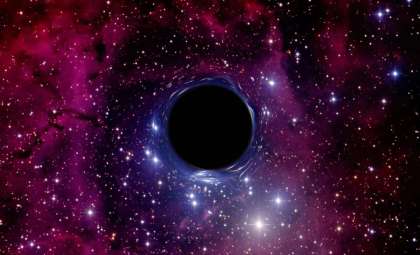
Scientists have identified a completely dark object, with a mass approximately one million times that of the Sun, detected solely through its gravitational impact, as it emits no visible light. Located within a far-off galaxy cluster, this enigmatic anomaly presents a structure unlike anything previously documented in astrophysics.
Initially detected in 2025 by observing subtle bending effects on light around it, this entity stands as the farthest mass ever found thanks to gravitational lensing alone. It resides in a complex galactic environment situated between 6.5 and 11 billion light-years away, characterized by a startling absence of emitted light and an unusual internal configuration.
An Unusually Dense Massive Body
Led by Simona Vegetti from the Max Planck Institute for Astrophysics, researchers managed to reconstruct the object's internal mass arrangement. Differing greatly from typical low-mass galaxies or stellar groups, it displays a highly concentrated central core spanning an unexpectedly large spatial region.

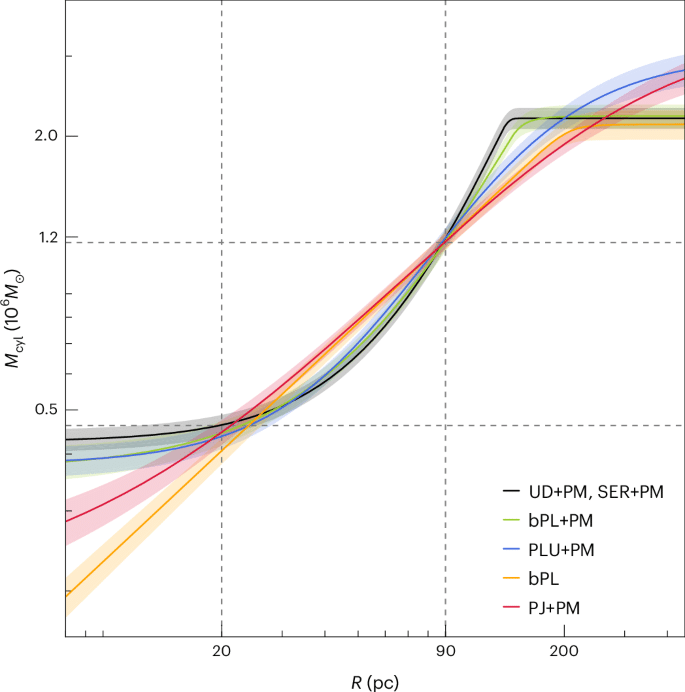
In a paper published by Nature Astronomy, Vegetti described the analytical approach as “both extremely challenging and thrilling.” The object’s uneven mass distribution further complicates interpretation. Researcher Davide Massari of Italy’s National Institute for Astrophysics remarked:
“It has a very strange profile, because it’s particularly dense at the center, but it extends enormously,” he said. “So it’s not uniformly distributed: it’s as if there were an extremely compact object at the center, but then the profile continues to extend to distances much greater than those typically observed in galaxies or star systems of comparable mass.”
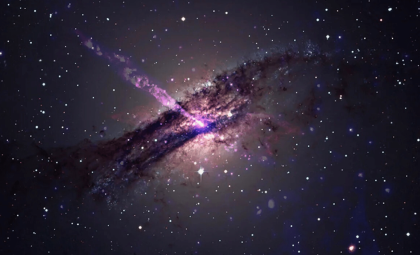
This system includes a large elliptical galaxy which forms the primary gravitational lens, yet the presence of this obscure disruptor alters the lensing pattern in ways indicating an elongated, atypical mass structure.
Dark Matter Theories Do Not Match Observations
To decode the nature of this mystery, the team compared the gravitational signatures against various dark matter hypotheses. Data collected from several radio observatories, including the Green Bank Telescope, showed none of the models corresponded to the observed gravitational effects.
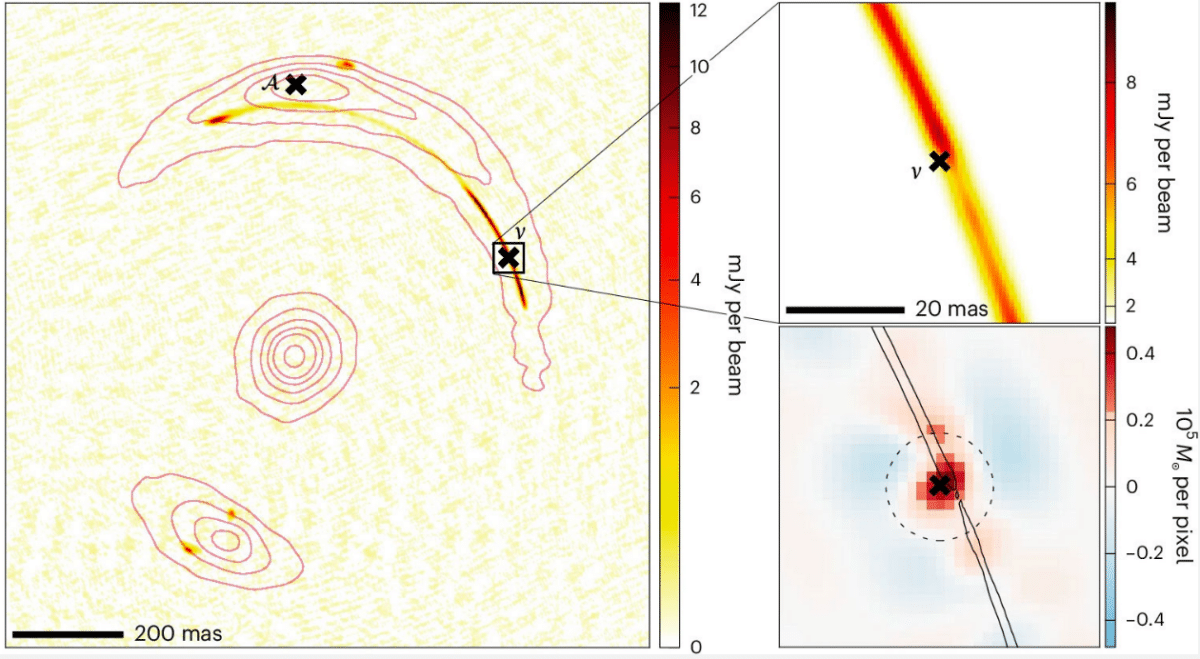
“It has a very strange profile,” noted Massari again, pointing out that the compact core contrasts starkly with an extended outer distribution, setting it apart from known entities like dwarf galaxies or standard dark matter halos.
According to Space.com, no existing low-mass object or dark matter structure model accounts for this object’s features. Its gravitational influence on the lensing arc remains the sole indication of its existence, sparking curiosity about how many such invisible masses might surround us undetected.
Infrared Observations Could Provide Clues
Since the object emits no detectable light or radio waves, astronomers are turning to alternative observation techniques. Cristiana Spingola, another member of the investigation team, suggested that infrared telescopes might reveal faint emissions at other wavelengths. For example, the James Webb Space Telescope could offer pivotal insight.
Spingola further noted that if such advanced tools fail to detect any signals, this might hint at the object representing a previously unknown type of celestial body. For now, its complete invisibility keeps its true nature a profound mystery, revealed only through gravitational effects.
- Categories:
- Space






0 comments
Sign in to Comment