
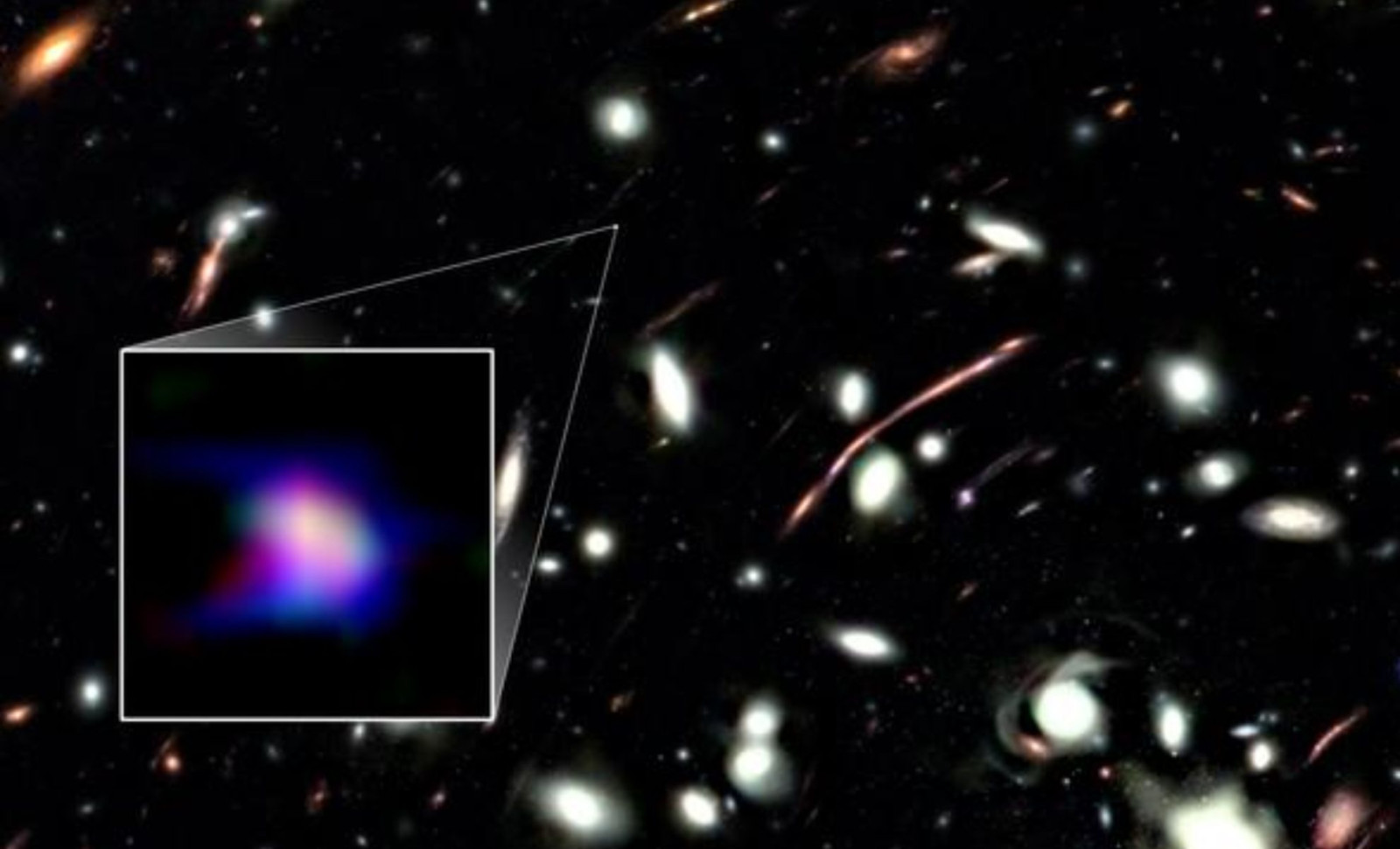
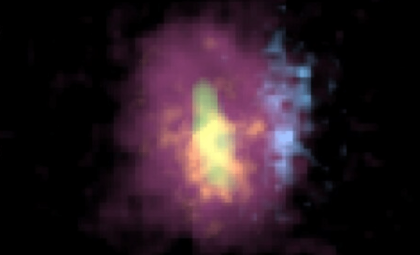
A minuscule galaxy observed from 13 billion years ago has exhibited the lowest oxygen levels detected in any galaxy of its type. Astronomers harnessed the James Webb Space Telescope (JWST) along with the powerful effect of gravitational lensing to capture the most detailed view to date of one of the cosmos’ earliest chemically primitive galaxies.
This finding offers a unique perspective on a galaxy formed soon after the initial stars began enriching the universe with heavier elements. It also reinforces the proposed connection between primordial galaxies and the ultra-faint dwarf galaxies still circling the Milky Way today.
The study, featured in the journal Nature, provides the most comprehensive analysis yet of LAP1-B, an ultra-faint galaxy examined by an international collaboration led by Kimihiko Nakajima from Kanazawa University, alongside Masami Ouchi of the National Astronomical Observatory of Japan (NAOJ) and the University of Tokyo.

An Unprecedented Chemical Profile
Immediately after the Big Bang, the cosmos was predominantly made up of hydrogen and helium. Heavier elements like oxygen and carbon emerged later within the first stars and were dispersed into space through supernova explosions.
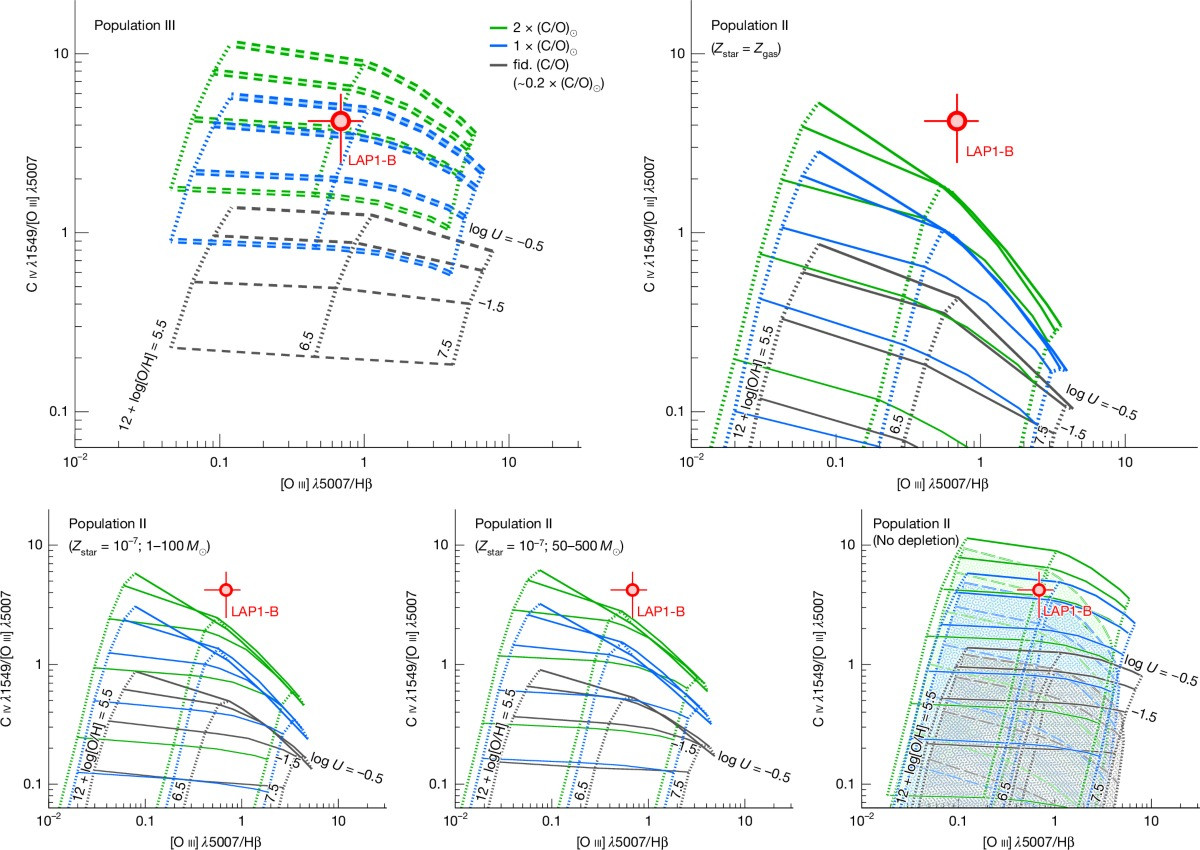
Researchers discovered that LAP1-B has an oxygen content amounting to just 1/240th that of our Sun, establishing a new benchmark for a galaxy observed so early in cosmic evolution.
“I was instantly thrilled by the extreme lack of oxygen,” said Kimihiko Nakajima. “Finding a galaxy in such a primitive state is astonishing. It’s a chemical signature that clearly indicates a primordial galaxy caught in the moments shortly after its formation.”
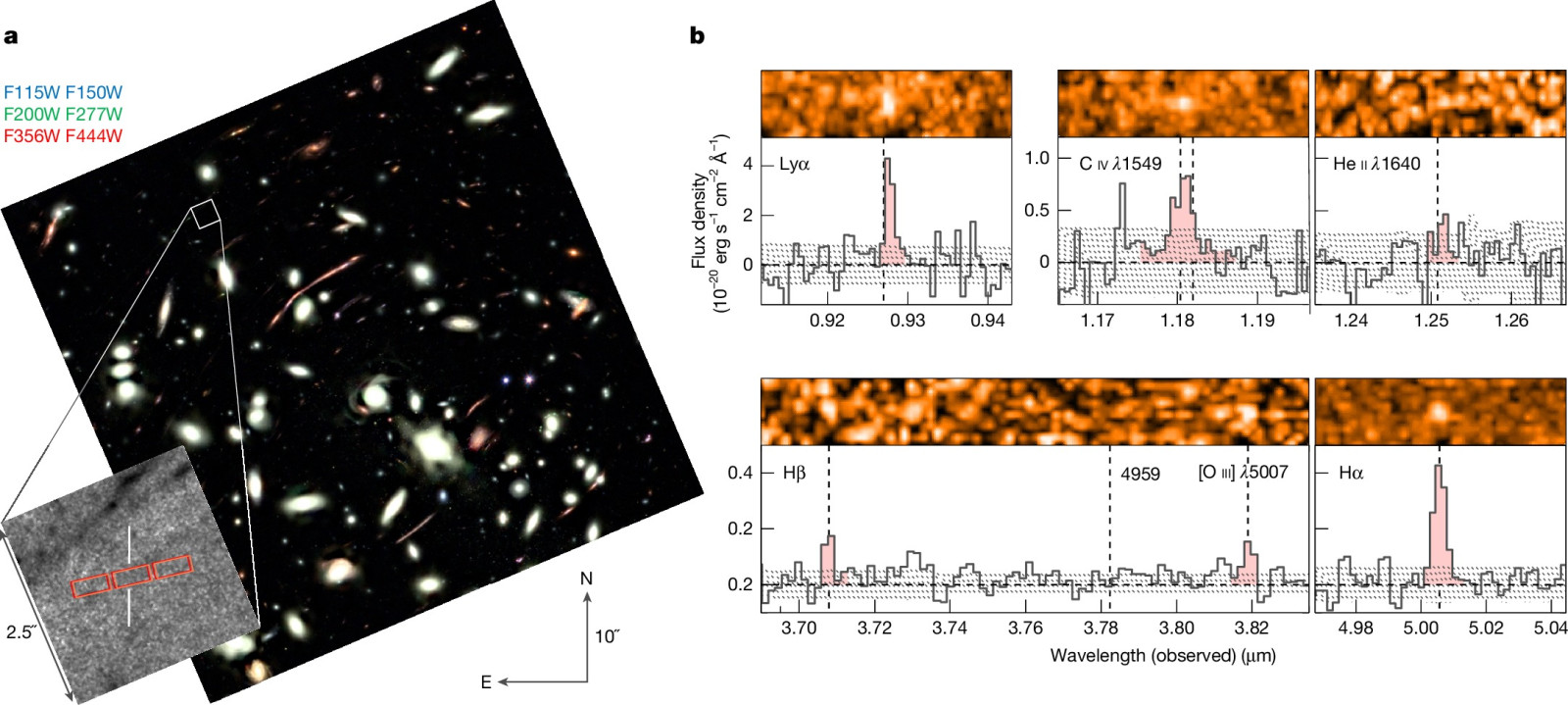
The data also showed a notably high carbon-to-oxygen ratio, closely aligning with theoretical models of material expelled by the explosions of the universe’s first-generation stars.
Harnessing the Universe’s Own Giant Lens
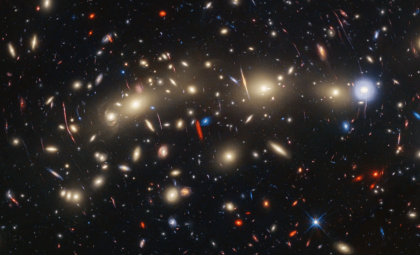
This groundbreaking advance was made possible through gravitational lensing, where the gravity of a massive galaxy cluster bends and magnifies light from a distant object behind it.
In LAP1-B’s case, its light was magnified by approximately 100 times, enabling JWST to gather sufficient data for a detailed chemical breakdown. Researchers dedicated over 30 hours to observing the galaxy, accessing information previously unattainable for such faint objects.
The combination of JWST’s extraordinary sensitivity and gravitational lensing’s magnification allowed scientists to investigate one of the tiniest, faintest galaxies known from the universe’s reionization period.
Shedding Light on the Milky Way’s Ancient Origins
The analysis revealed that LAP1-B weighs less than 3,300 solar masses, suggesting that most of its mass is an unseen dark matter halo.
Its small stellar population and unique chemical makeup strongly resemble those found in ultra-faint dwarf galaxies (UFDs) orbiting near the Milky Way. These galaxies are dim, star-poor, and host stars dating back over 12 billion years.
Masami Ouchi mentioned that astronomers have suspected these systems to be remnants of the earliest galaxies due to their low heavy-element content, yet lacked a direct observational connection until now.
“UFDs are not only the faintest galaxies; they are composed of ancient stars over 12 billion years old and are often described as ‘fossils of the universe,” he said.
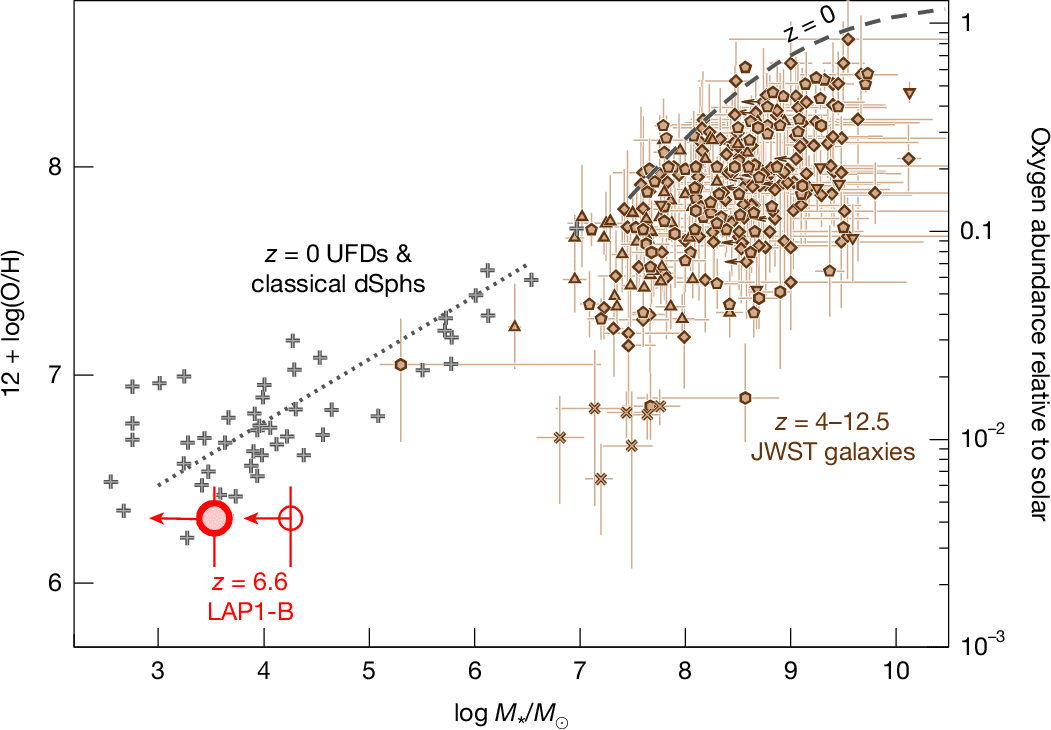
He emphasized that the discovery of LAP1-B bridges the long-suspected gap linking these ancient, chemically simple systems to the universe’s earliest galaxies.
“It is a profound surprise to find that LAP1-B looks exactly like the ‘ancestor’ we had only imagined in theories. This helps us solve the mystery of why these cosmic fossils have survived in their current form to the present day.”
- Categories:
- Astronomy




0 comments
Sign in to Comment