
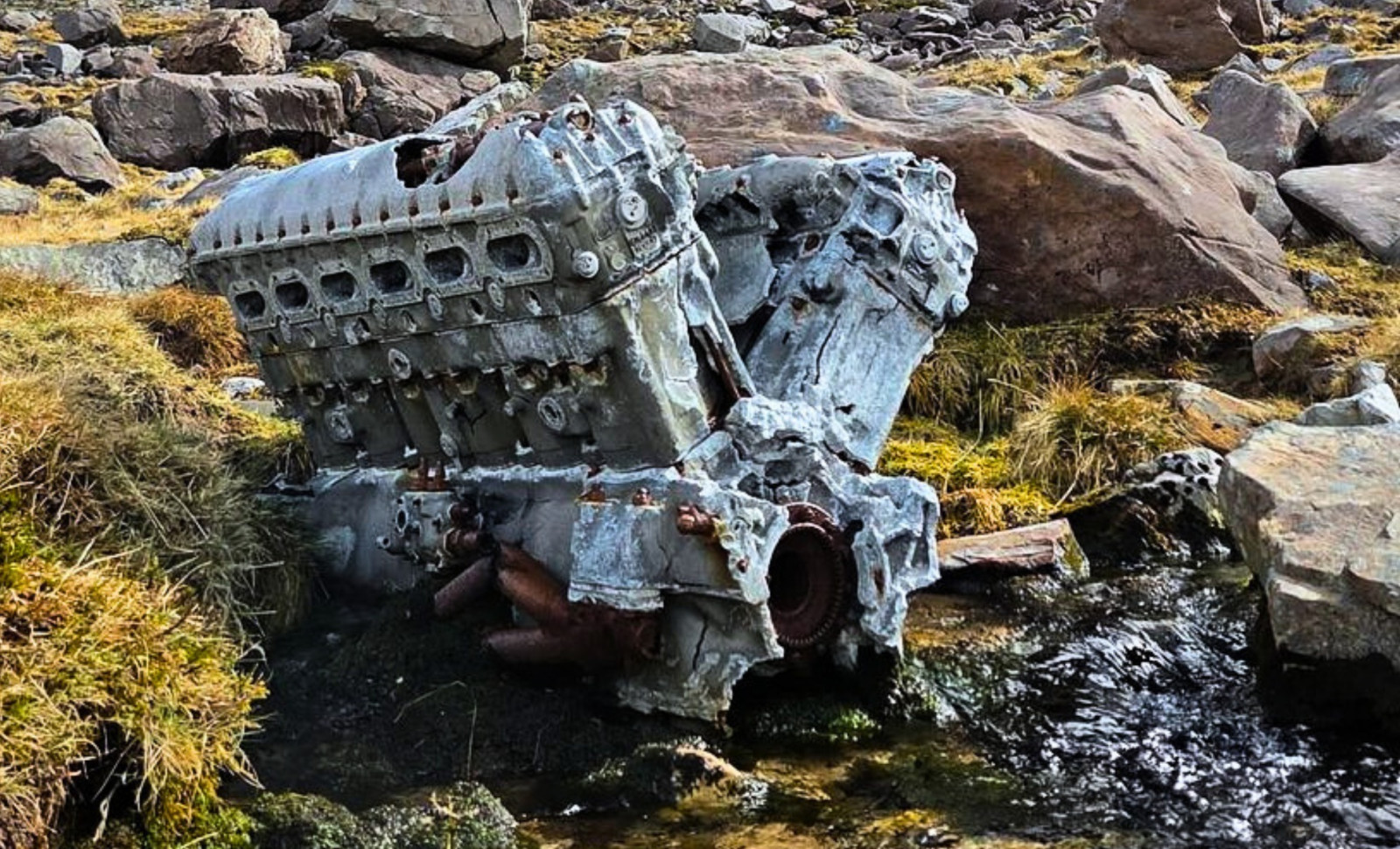
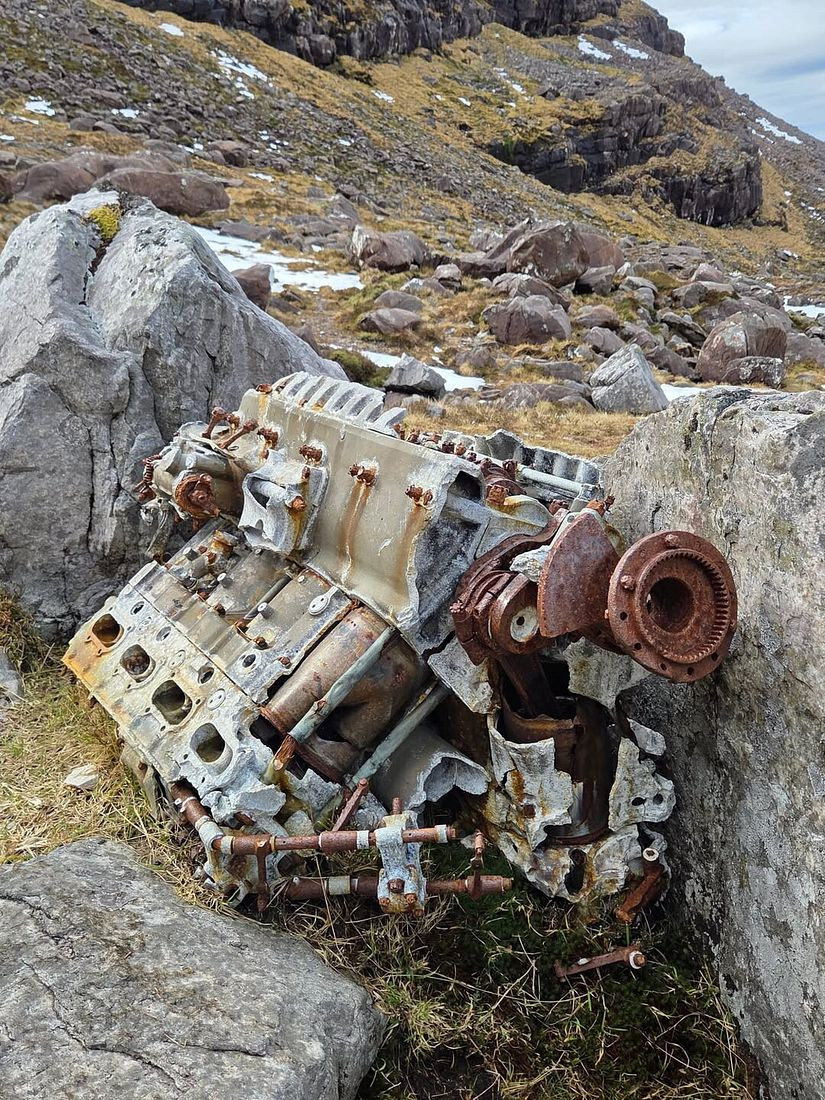
During a hike in the isolated northwest Scottish Highlands, Mike Fernie encountered an unexpected sight: a large, remarkably well-preserved V12 engine block resting among the rocks and heather at approximately 900 meters elevation. This was no ordinary relic; it was a Rolls-Royce Merlin engine, a piece of wartime aviation history that had remained on Beinn Eighe for 75 years.
Renowned for powering iconic World War II aircraft such as the Supermarine Spitfire and the North American P-51 Mustang, the engine Fernie found did not come from a fighter plane. Instead, it belonged to an Avro Lancaster G.R. Mk.3, a specialized maritime patrol and search-and-rescue variant of the heavy bomber used by No. 120 Squadron RAF.
The aircraft with registration TX264 departed from RAF Kinloss on Scotland’s Moray coast on the evening of March 13, 1951. Onboard were eight crew members undertaking a night navigation training mission. Around six and a half hours later, the crew transmitted their position roughly 60 miles north of Cape Wrath. That would be their final radio contact, as detailed by the Peak District Air Crashes archive.

Crash Into the Mountain Before Daybreak
The events in the early morning hours of March 14, 1951, remain partially shrouded in mystery. Evidence scattered across the mountain’s slopes suggests a sudden impact. The Lancaster collided with the Triple Buttress, a sheer cliff face on Beinn Eighe’s northern side.
The crash, followed by a severe fire, obliterated the bomber and claimed the lives of all eight onboard. No distress call was ever received, and initial reports from the ground failed to note the incident. For several days, the aircraft was officially missing.
On March 17, a witness reported seeing a red flash in the Torridon region close to the disappearance time. Search operations redirected toward the Torridon mountains soon uncovered scorched debris high on Beinn Eighe. The lost Lancaster had been located.
Recovery Hampered by Harsh Conditions and Terrain
While the crash site was identified from the air, physically reaching it proved far more challenging. The RAF Mountain Rescue Team based in Kinloss attempted to access the location but were thwarted by deep snow, severe weather, and insufficient gear for such extreme conditions. The exposed and steep landscape of Beinn Eighe made every step perilous and slow.
The rescue teams did not arrive at the wreckage until late March. Recovering the deceased crew members required months of strenuous effort, with the final airman’s remains uncovered only in August 1951, as the snow thawed.
The arduous recovery mission highlighted deficiencies in the rescue units’ equipment. Post-World War II downsizing had left many teams underprepared for peacetime emergencies. As documented by the Peak District Air Crashes archive, the Beinn Eighe disaster prompted a reassessment and significant improvements in mountain rescue operations.
The Crew Who Lost Their Lives
All eight crew members perished, their ages ranging from 19 to 29. Detailed documentation of each individual’s role aboard TX264 can be found on the Aviation Safety Network.
- Flight Lieutenant Harry Smith Reid DFC, pilot, 29 years old
- Sergeant Ralph Clucas, co-pilot, 23
- Flight Lieutenant Robert Strong, navigator, 27
- Flight Sergeant George Farquhar, flight engineer, 29
- Flight Lieutenant Peter Tennison, signaller, 26
- Flight Sergeant James Naismith, signaller, 28
- Sergeant Wilfred Davie Beck, signaller, 19
- Sergeant James Warren Bell, signaller, 25
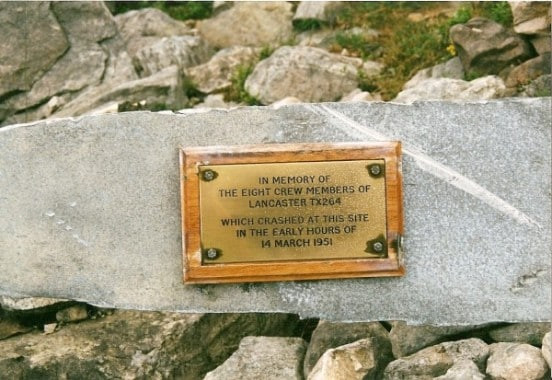
Five of the crew were laid to rest at Kinloss Abbey in Moray, while others are interred in Aberdeen, Birmingham, and Buckie cemeteries. Two individuals involved in the challenging recovery—Flight Lieutenant Peter Dawes and Senior Aircraftsman Malcolm Brown—were honored for their bravery, receiving the MBE and BEM awards respectively.
Remnants of the Crash Still Scar the Mountain
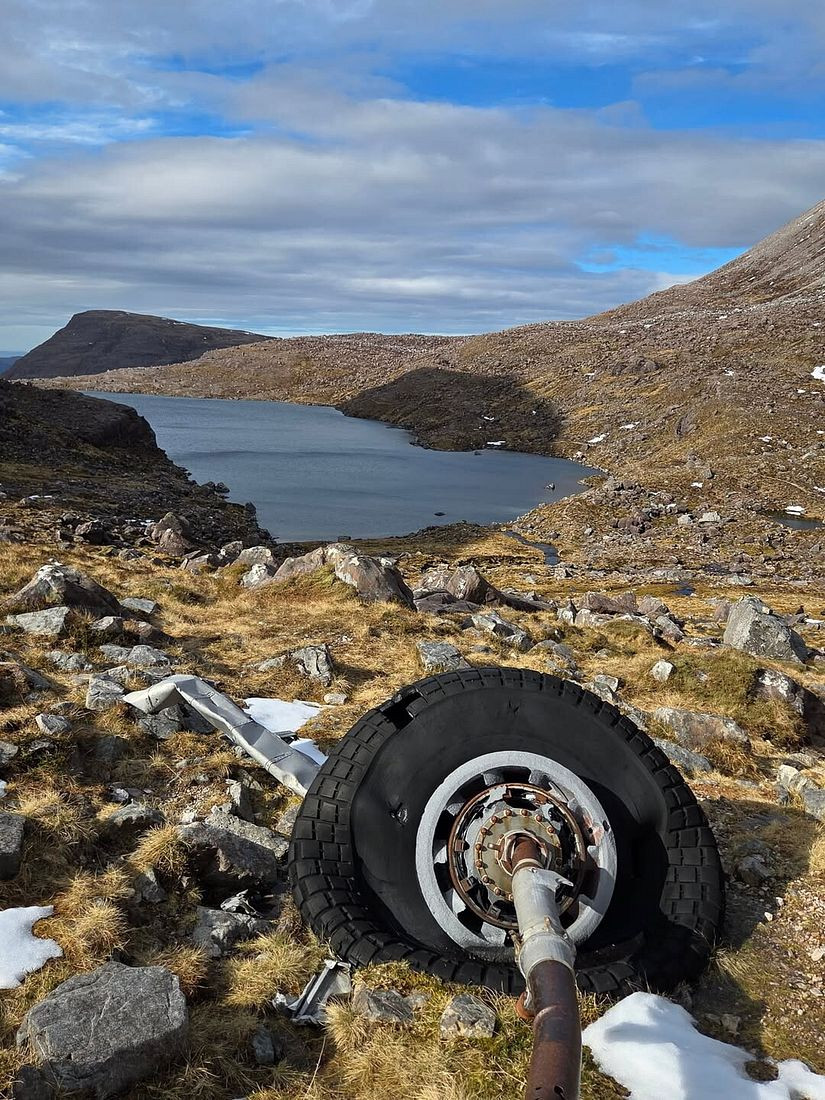
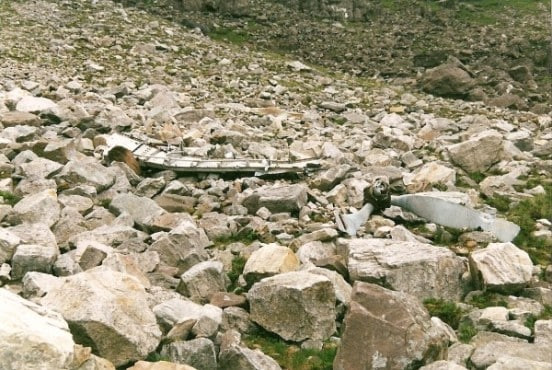
Due to the extreme terrain and remote setting, a full-site cleanup was never undertaken. Wreckage is scattered from the impact zone around 3,000 feet up, descending into Coire Mhic Fhearchair, the glacial basin below the cliffs. Among the debris are two engines, landing gear parts, and numerous smaller fragments.
The Rolls-Royce Merlin engine discovered by Fernie is part of this extensive field of remnants. The harsh but cool Highland environment preserved it for over 70 years. The crash site lies within one of Scotland’s most rugged National Nature Reserves and is not developed as a tourist destination. Reaching the spot requires a demanding trek through remote wilderness.
What remains on Beinn Eighe stands as an unintentional tribute. The preserved engine block Fernie discovered is one of the largest surviving components from a nocturnal training flight that tragically ended on a Scottish mountain, claiming the lives of eight airmen forever resting where they fell.
- Categories:
- News






0 comments
Sign in to Comment