
Among the remarkable discoveries this year are a unique deep-sea fish related to sharks, a sponge equipped with tiny hooks to trap prey, and a shrimp residing within a cave off the coast of France. These represent part of the 1,121 new marine species documented recently, as detailed by the Ocean Census, a project initiated by The Nippon Foundation in partnership with Nekton to accelerate marine life discovery and documentation.
Researchers emphasize the urgency of this mission given that some species may vanish before encountering scientific records.
Throughout the past year, expeditions—totaling 13 ventures—spanned from Mediterranean underwater caves to regions deeper than 6,575 meters (21,500 feet). This initiative has heightened the global discovery rate of marine species by 54 percent, while experts estimate that up to 90 percent of ocean species remain unidentified.

Unveiling the Ocean’s Hidden Depths
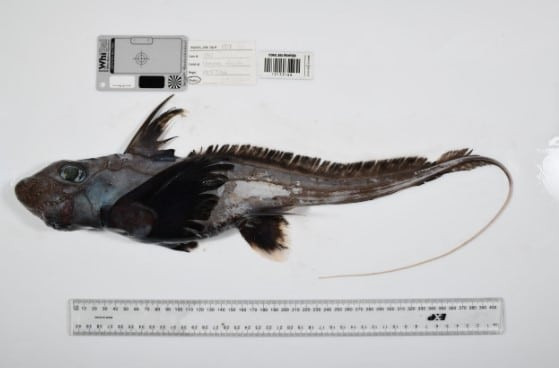
Notably, some of the most fascinating finds hail from the deep ocean, where unexpected creatures continue to emerge. One such example is a newly identified chimaera, often termed a “ghost shark,” discovered within Australia’s Coral Sea Marine Park.
According to data from the Ocean Census, chimaeras diverged from sharks and rays nearly 400 million years ago, placing them among some of the ocean’s oldest fish lineages.
In Japanese volcanic seamounts, a new species of bristle worm was found living within the fragile silica frame of a glass sponge at depths close to 800 meters (2,624 feet). Another extraordinary discovery near the South Sandwich Islands revealed a carnivorous sponge dwelling over 3,600 meters (11,800 feet) beneath the surface.
In contrast to most sponges that filter feed, this sponge captures small crustaceans using minute hooks, earning it the nickname “death ball.”
Unexpected Life in Accessible Waters
Discoveries weren’t restricted to remote depths; new species were also found closer to shore.
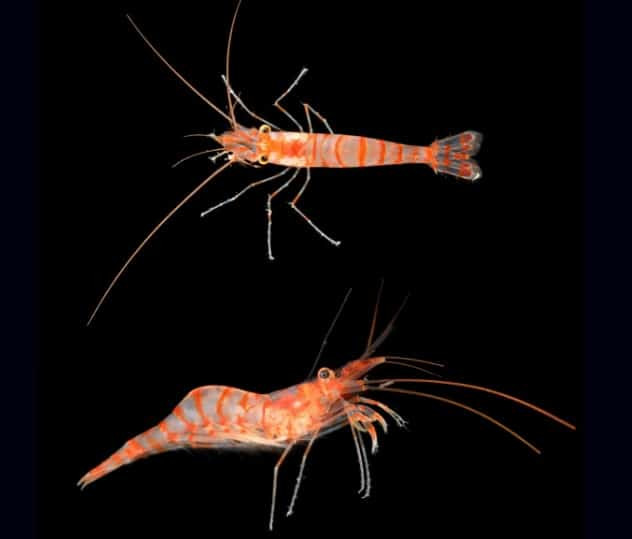
For example, an orange-striped shrimp was located within a cave near Marseille, France, living between 15 and 35 meters (50 to 115 feet) below the water’s surface. This highlights that even well-studied coastal areas can shelter undiscovered marine life.
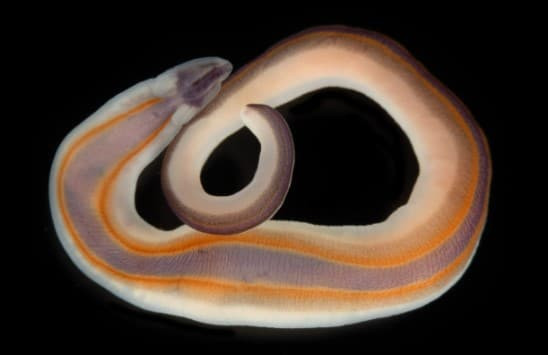
Additionally, brightly colored ribbon worms measuring less than 3 centimeters were identified in Timor-Leste.
“Beyond their ecological role as predators, these worms may have biomedical significance; some of their unique toxins have been investigated as potential treatments for Alzheimer’s and schizophrenia,” the organization noted.
Accelerating the Discovery Process
Identifying new species is just the beginning; formally describing and classifying them often takes over a decade. The Ocean Census reports an average lag of approximately 13.5 years between specimen collection and official publication. This delay hampers efforts to understand species that may already face threats.
“With many species at risk of disappearing before they are even documented, we are in a race against time to understand and protect ocean life,” said Michelle Taylor, head of science at the Ocean Census.
To reduce delays, the initiative unveiled NOVA, an open-access digital platform that allows rapid sharing of new species data, often within days or weeks. This program now incorporates over 1,400 scientists from 85 nations. Mitsuyuki Unno, Executive Director of The Nippon Foundation, remarked:
“This year, the Ocean Census has shown what is possible when ambition, partnership, and science come together…More than a thousand new marine species discovered in a single year is not just a scientific achievement — it is a reminder of how much there still is to know.”
Even though the ocean covers over 70 percent of Earth's surface, significant portions remain unexplored.
- Categories:
- Science





0 comments
Sign in to Comment