
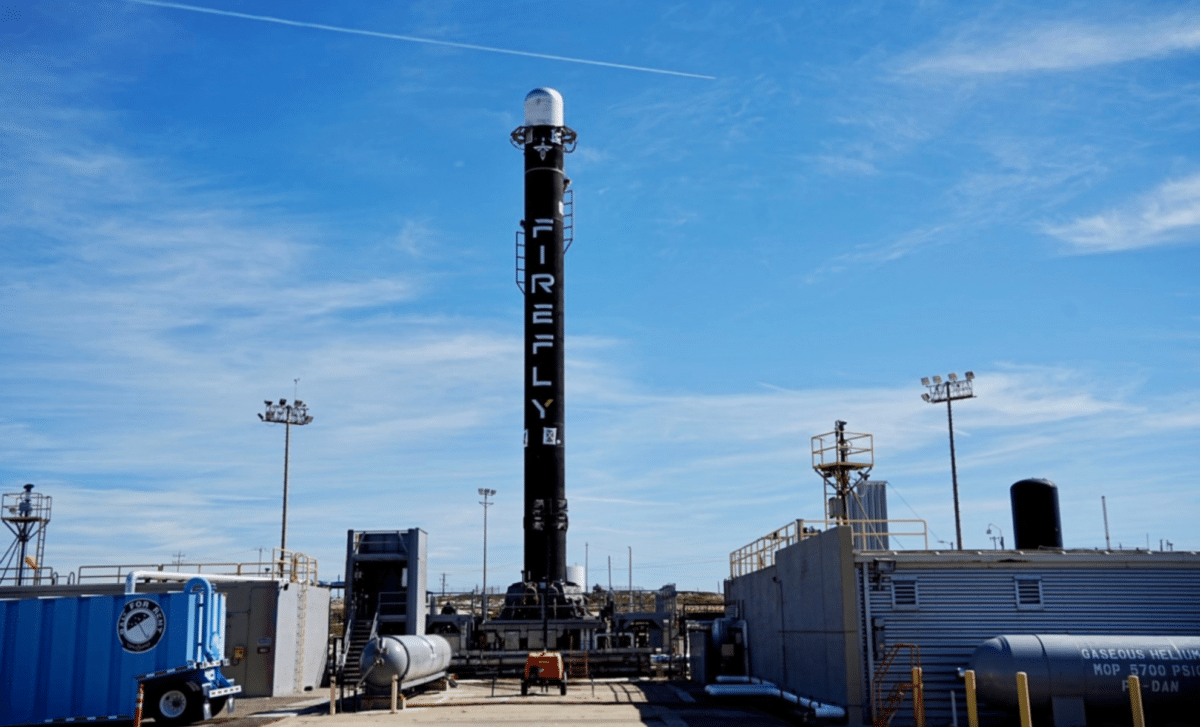
Firefly Aerospace’s Alpha vehicle, a cornerstone of the company’s bold space ambitions, was scheduled for a comeback flight on March 1, 2026, under the mission name "Stairway to Seven." Unfortunately, gusty winds forced a postponement of this eagerly awaited launch. This demonstration flight, which carries no active payloads, aims to evaluate key Alpha rocket systems and pave the way for upcoming design enhancements.
Why "Stairway to Seven" Is a Critical Step for Firefly Aerospace
The "Stairway to Seven" initiative plays a pivotal role for Firefly Aerospace, a firm dedicated to increasing space accessibility via dependable, cost-effective launchers. As outlined in the company’s mission overview, this flight won’t transport any operational cargo. Instead, it will serve purely as a test mission focusing on confirming normal first and second stage rocket performance. This sets it apart from typical payload missions by concentrating on validating the fundamental rocket systems. Though no satellites or scientific instruments are aboard, the mission will provide critical validation of Alpha’s capabilities, marking an important milestone in Firefly’s development roadmap.
Firefly Aerospace has encountered multiple setbacks during the Alpha rocket’s development phase. The previous attempt, called "Message in a Booster," ended prematurely when a failure occurred shortly after the first stage separated, destroying the payload. Following this, Firefly collaborated closely with the Federal Aviation Administration (FAA), which approved the Alpha’s return to operational status in August 2025. The "Stairway to Seven" flight represents a vital chance to monitor and improve the rocket’s performance under actual flight conditions, offering engineers invaluable insights to troubleshoot before future missions carrying payloads.

Alpha’s Block I Versus Block II: The Next Generation
Firefly Aerospace’s launch strategy evolves with each successive test. For this mission, Alpha will fly with its Block I setup, which will later be superseded by the advanced Block II version in upcoming launches. "Flight 7 will evaluate and certify essential systems ahead of Firefly’s Block II upgrade scheduled for Flight 8," the company states, emphasizing enhancements aimed to boost vehicle reliability and simplify manufacturing. These improvements promise not only superior flight performance but also increased production efficiency and scalability.
The upgrade from Block I to Block II marks a major advancement for Firefly Aerospace. Block II introduces numerous enhancements, including a 7-foot extension to the rocket’s length, increasing fuel capacity and optimizing aerodynamic efficiency. Moreover, it features integrated batteries and avionics developed internally, improving electrical systems and reducing dependency on outside suppliers. A more robust thermal protection system is also part of the design, enabling the rocket to better withstand the intense heat during launch and descent. Additionally, the refined structure uses stronger carbon composite materials fabricated with automated equipment, resulting in a more durable and cost-effective vehicle.
- Categories:
- Space








0 comments
Sign in to Comment