
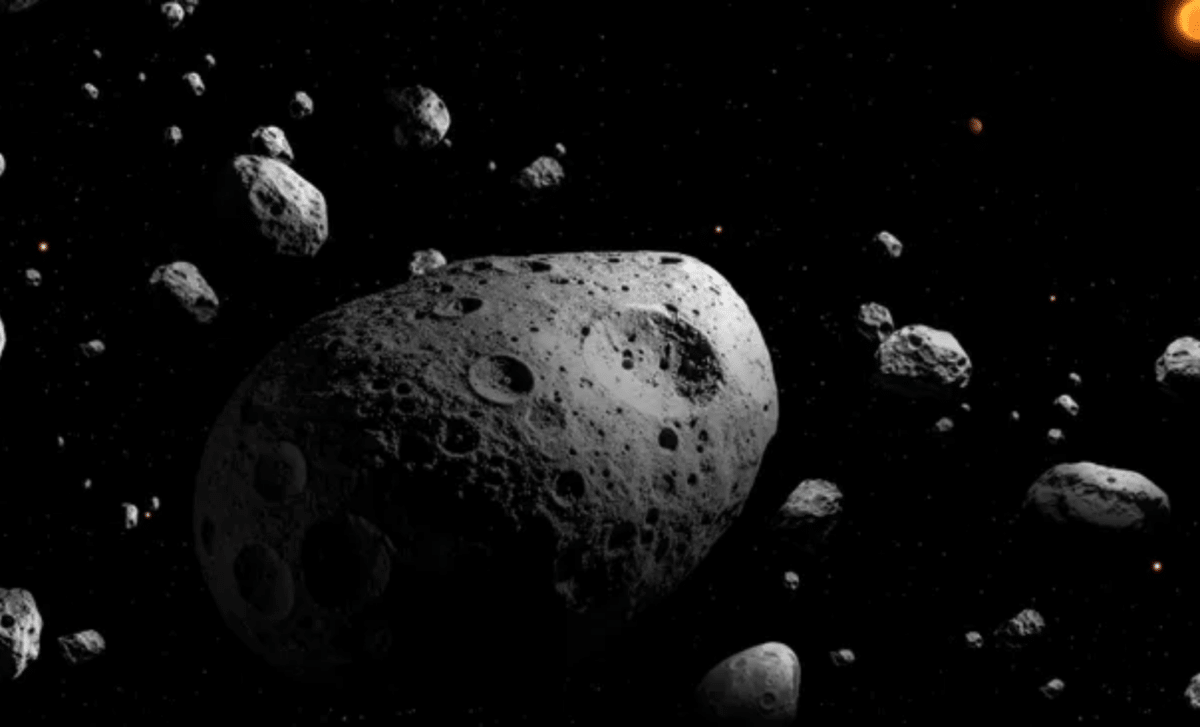
Researchers have uncovered a colossal asteroid spinning at an extraordinary speed that defies previous understanding. Measuring approximately 710 meters in diameter, this space rock completes a rotation in just 1.9 minutes, a rate far beyond the accepted physical limits for an object of its size. This startling revelation, published in The Astrophysical Journal Letters, has prompted scientists to rethink theories about asteroid spin rates and their material makeup. The discovery not only extends the frontiers of planetary science but also motivates fresh investigations into asteroid properties and behavior within our solar system.
Unveiling the Phenomenon: A Huge Asteroid Breaking Rotation Records
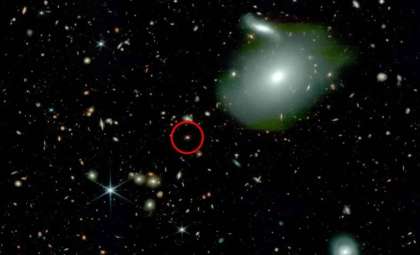
During observations conducted in late April and early May 2025, astronomers utilized the Vera C. Rubin Observatory in Chile to monitor the rapid rotation of asteroid 2025 MN45, spanning 710 meters across. Its spin rate surpassed all prior expectations for such a large celestial body. Generally, the rotation period for sizeable asteroids is measured in hours, with a commonly accepted stability limit near 2.2 hours. In contrast, this asteroid completes a full spin in under two minutes, setting a new benchmark that challenges established asteroid physics.
“The rotation speed we recorded was nearly unbelievable,” shared Dmitrii Vavilov from the University of Washington, Seattle, while presenting at the Lunar and Planetary Science Conference. “We were convinced asteroids couldn’t spin any faster than that,” he added, highlighting how this discovery overturns previous assumptions about rotation constraints.

This remarkable observation lays groundwork for further research into asteroid formation, internal structure, and the gravitational and physical forces affecting massive space objects.
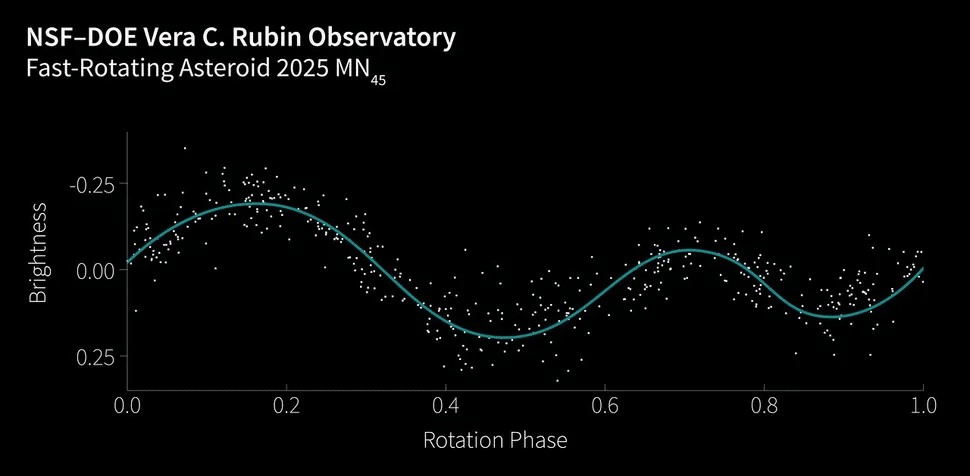
Understanding The Physics: What Enables This Asteroid's Exceptional Spin?
To grasp the importance of this discovery, it’s crucial to consider the dynamics of asteroid rotation. The balance between gravitational binding, the object's mass, and shape generally caps its maximum spin rate before disintegration occurs. For an asteroid of 2025 MN45’s size, these factors should limit its rotation considerably.
However, this asteroid’s rotation far exceeds the anticipated threshold. “The expected spin limit is about 2.2 hours for an asteroid of this scale, yet it’s rotating in under 2 minutes,” Vavilov explained. This discrepancy challenges previous beliefs regarding asteroid structural capabilities and suggests the need to revisit assumptions about their composition.
It is probable that 2025 MN45 is not a loose collection of rubble or a weakly bound aggregate, as once thought for many asteroids. Instead, Vavilov and colleagues propose that it consists of solid rock or possibly metal. “Even materials as cohesive as clay wouldn’t sustain this rapid spin,” he noted, implying that the asteroid’s core might be denser and stronger than previously estimated. This insight redefines current understanding of asteroid material strength and internal architecture.
A Groundbreaking Study That Upends Traditional Views
The research, featured in The Astrophysical Journal Letters, provides a comprehensive examination of data from the Vera C. Rubin Observatory, offering fresh perspectives on the dynamics of swiftly rotating asteroids. Beyond documenting the extraordinary spin rate, the paper explores the implications of this finding on models addressing asteroid structural resilience throughout the solar system.
For years, scientists have been intrigued by asteroid spin mechanics. Earlier work suggested rotation speed limits depended mainly on asteroid composition. This new discovery contradicts those expectations, indicating that the relationships between size, composition, and rotation are more complex than previously believed. This could lead to revised theories about the makeup and internal structure of asteroids, particularly those rotating at high speeds.
- Categories:
- Astronomy










0 comments
Sign in to Comment