
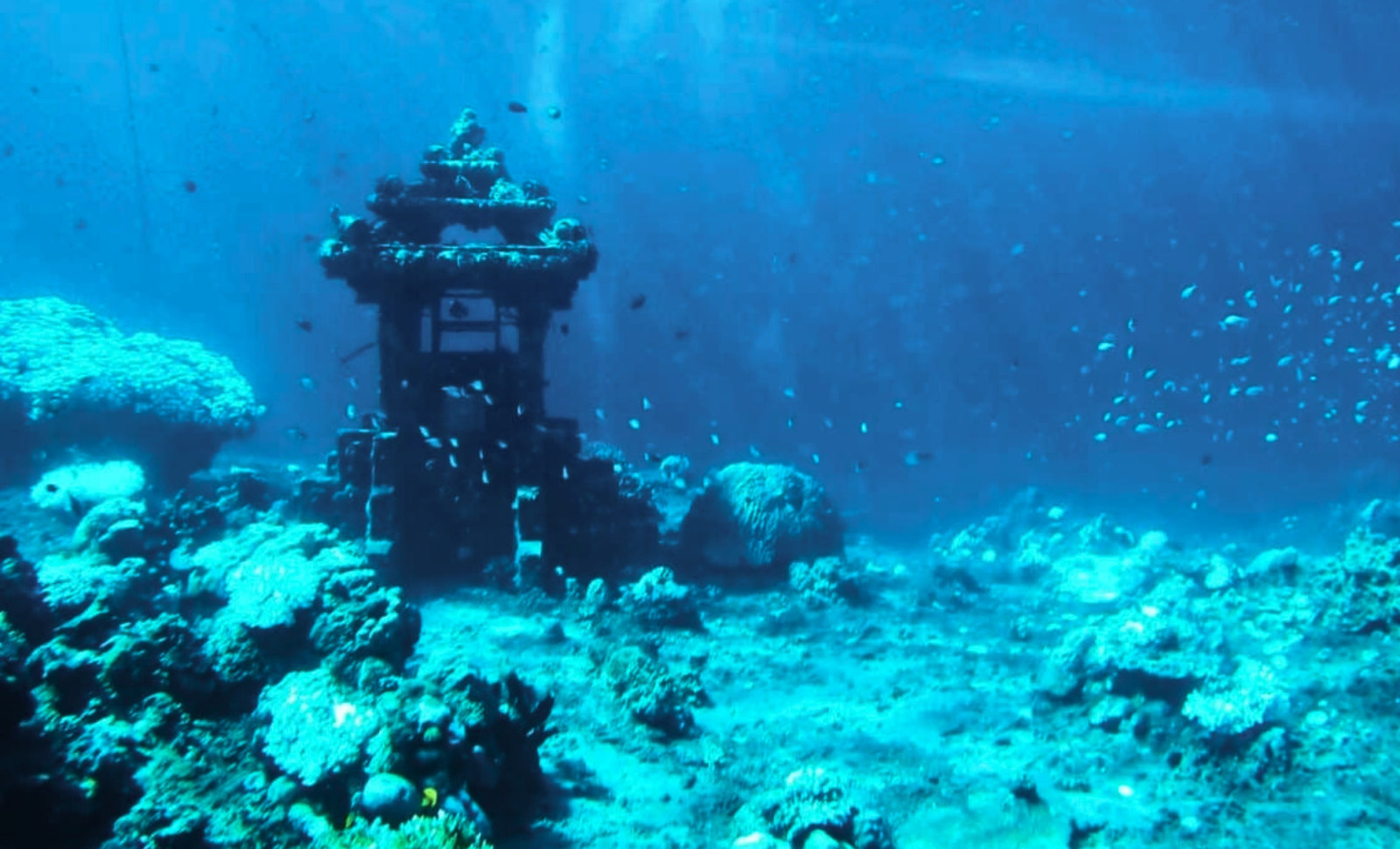
For a long time, the Java Sea appeared to represent a gap in the human fossil record. Although some of the most significant Homo erectus fossils were uncovered nearby, the shallow waters between islands showed little evidence to explain how these ancient humans migrated across the region.
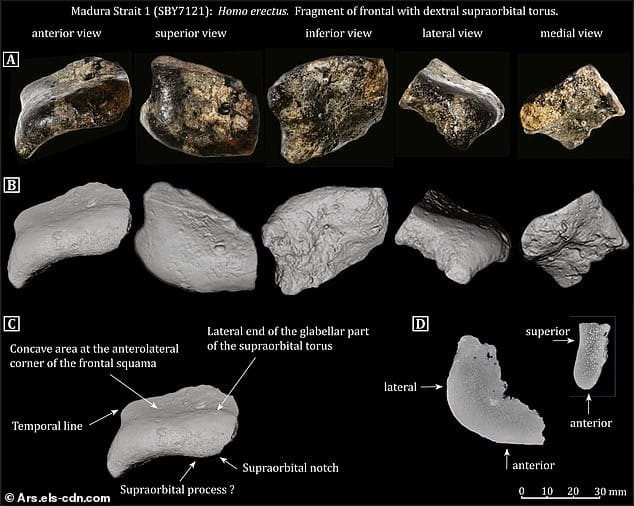
This scenario shifted with discoveries in the Madura Strait, where dredging operations off Indonesia’s coast unearthed ancient animal bones and two skull fragments. These remains, excavated from land that was once exposed, led scientists to a submerged terrain now hidden beneath rising sea levels.
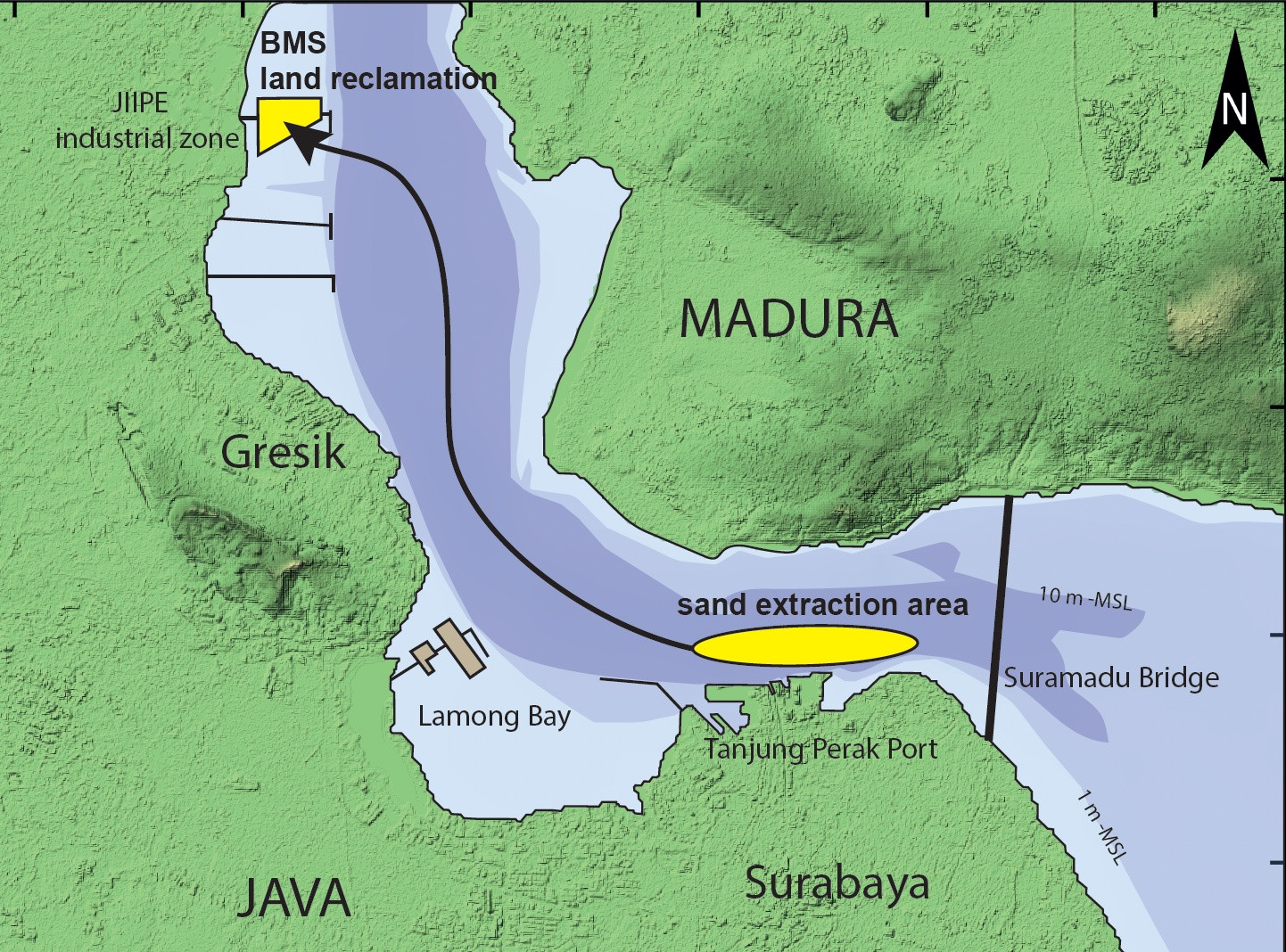
These findings situate Homo erectus within Sundaland, an extensive lowland that once connected Java to mainland Asia during periods when sea levels were lower. The remains are linked to a submerged river valley associated with the Solo River, offering archaeologists direct insights into a vanished landscape absent from today’s maps.

Submerged Site Rewrites Southeast Asian Prehistory
Key evidence comes from a 2025 publication in Quaternary Environments and Humans, which reported two hominin cranial fragments recovered from the submerged Sunda Shelf. The study explains the specimens originated from “the sandy fill of a late Middle Pleistocene submerged valley of the Solo River,” noting their resemblance to late Java fossils of Homo erectus, especially from Sambungmacan.
Leiden University highlighted that the broader fossil record features remains from 36 vertebrate species, marking the first vertebrate fossil evidence from submerged Sundaland. Another paper on ScienceDirect notes the retrieval of over 6,000 fossils during dredging, transforming the seemingly isolated hominin finds into a rich archive of prehistoric Indonesian life.
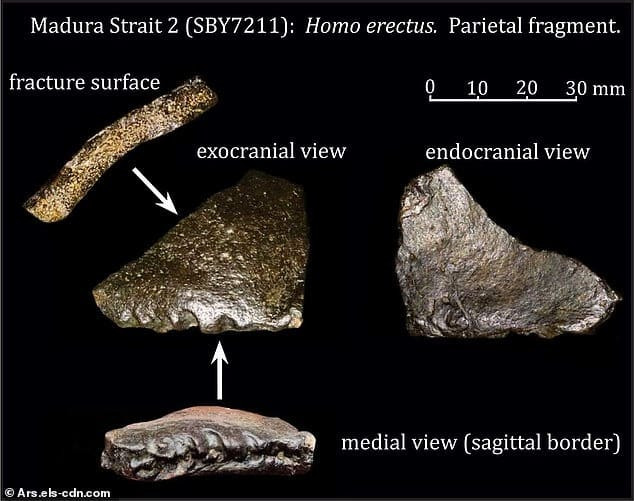
This volume of fossils lends considerable importance to the site. Instead of isolated skull remnants, researchers now possess a submerged fossil deposit preserving early human bones, animal remains, and ecological data from the same submerged environment.
Insights into Homo erectus Lifestyle on Sundaland
Harold Berghuis, an archaeologist at Leiden, noted the discovery challenges the old notion of isolated Javanese Homo erectus. “They had access to water, shellfish, fish, edible plants, seeds, and fruit year-round,” he explained. Berghuis also remarked, “We previously knew they gathered river shells. Among our new evidence are cut marks on turtle bones and widespread fractured bovid bones, indicating hunting and marrow extraction.”
These findings are crucial because they link the hominin fossils to daily activities. The data imply that ancient migrants likely moved along river routes rich in fresh water and megafauna. A separate taphonomy analysis of the Madura Strait fossils reveals signs of selective hunting and marrow processing by hominins during the late Middle Pleistocene.
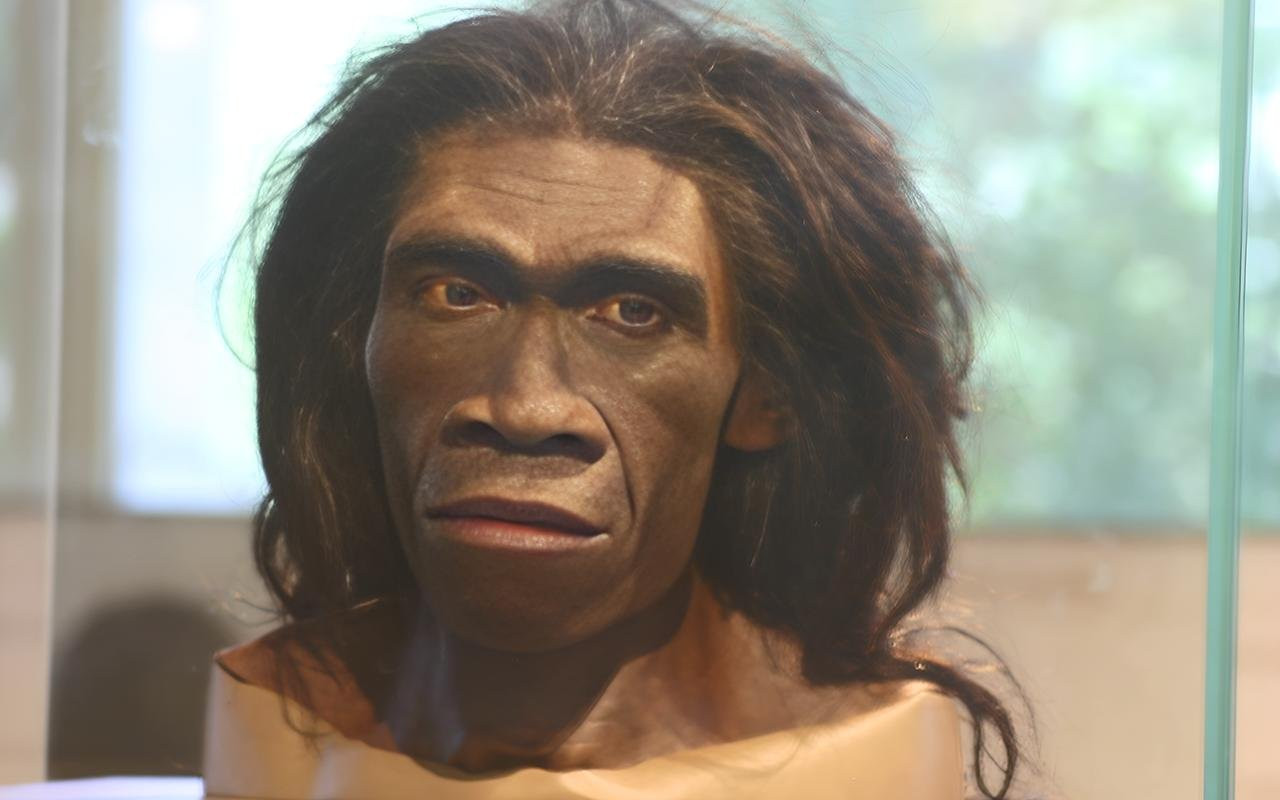
Berghuis also proposed a cautious hypothesis regarding potential interactions with other hominin groups. “We did not find such patterns in earlier Java Homo erectus populations, but similar behaviors are known from later human species on the Asian mainland. It’s possible that Homo erectus adopted practices from those groups, hinting at contact or even genetic exchange.” Though preliminary, this interpretation derives directly from the archaeological team’s study.
Java Sea’s Past as a Linked Continental Plain
The environment here is as revealing as the fossils. One ScienceDirect article identifies the site as the first hominin location from submerged Sundaland, dating the fluvial valley fill to Marine Isotope Stage 6 (MIS6) with Optically Stimulated Luminescence (OSL) ages of about 160,000 to 120,000 years ago. Additional estimates place the fossil-bearing sediments between 146,000 and 131,000 years ago, aligning with the roughly 140,000-year timeline emphasized by Leiden University.
Berghuis described the area as Sundaland, explaining, “Homo erectus could migrate from Asia’s mainland to Java.” The fossils emerged from a drowned river valley dated to around 140,000 years ago, when global sea level was approximately 100 meters lower than present.
This context changes how the ocean floor site is interpreted: what is now marine water separating islands was once an extensive plain with major rivers. In this landscape, the passage between mainland Southeast Asia and Java was a traversable route rather than a watery barrier.
Submerged Biodiversity of an Ancient Landscape
The broader fossil assemblage demonstrates this corridor was far from barren. Leiden University states that ancient Sundaland resembled a mixed environment featuring dry grasslands, riverine forests, and fauna such as elephants, bovines, rhinos, and crocodiles. Komodo dragons and river sharks were also part of this ancient ecosystem.
Berghuis emphasized the team’s goal of presenting the site as an entire ecosystem rather than focusing solely on the hominin remains. “Usually, only the most spectacular finds like hominin fossils are published. Instead, we are unveiling four comprehensive, richly detailed studies that open an extraordinary view into Sundaland as it was 140,000 years ago.”
This holistic approach is essential to grasp the full significance of the Homo erectus find. While the skull fragments are critical, the comprehensive discovery paints a vivid picture of a vanished world submerged beneath the ocean floor, where early humans flourished along river networks in Southeast Asia before rising seas erased this land bridge.
- Categories:
- Science





0 comments
Sign in to Comment