
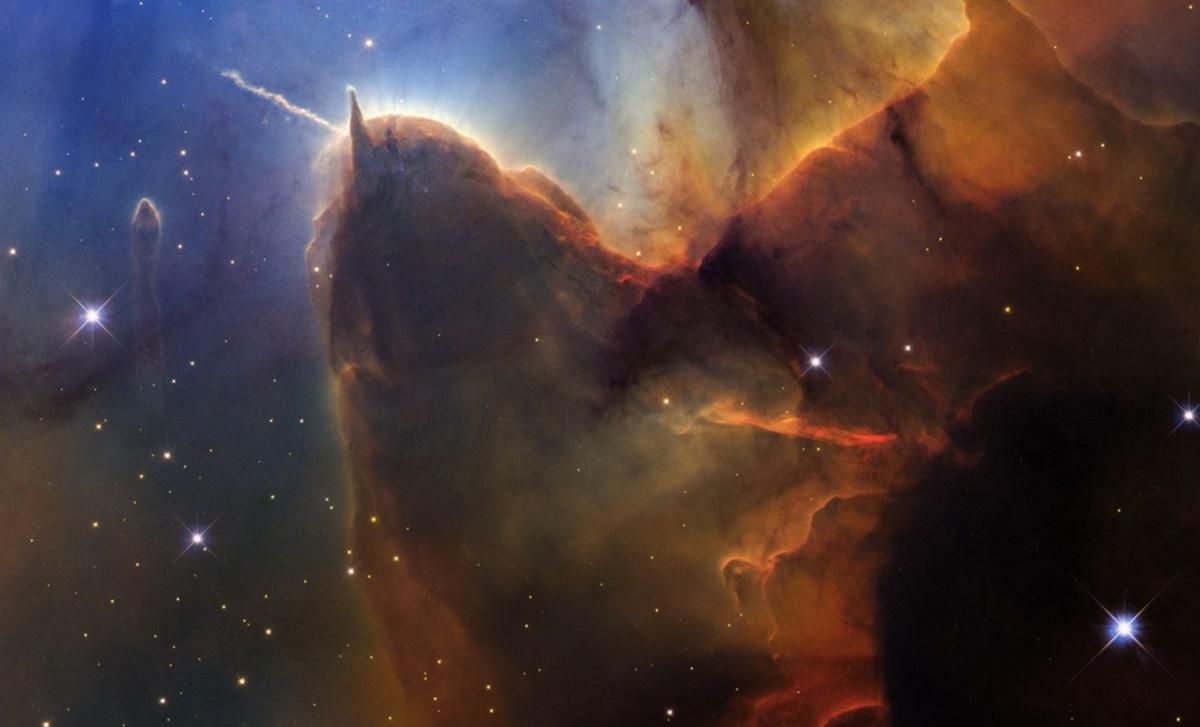
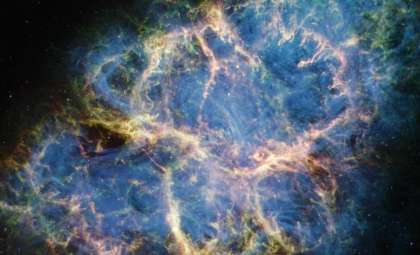
Commemorating 36 years since its launch, NASA’s Hubble Space Telescope has delivered a spectacular new image of the Trifid Nebula, a vibrant stellar nursery bustling with newborn stars. This latest snapshot reveals extraordinary detail in the interplay of cosmic gases, dust clouds, and burgeoning massive stars, shedding fresh light on the complex mechanisms driving star formation and offering valuable insights into the lifecycle of these regions throughout the cosmos.
A Closer Look at the Trifid Nebula Through Hubble’s Lens
Situated roughly 5,000 light-years away from Earth, the Trifid Nebula has long captivated astronomers with its vivid star-forming activity. Hubble’s newest image enhances this fascination by unveiling fine structural details previously hidden. The nebula’s swirling bands of gas and dust resemble an otherworldly seascape, where these features narrate the dynamic processes behind stellar birth and their interactions with the surrounding environment.
This image was captured by Hubble’s upgraded camera, which offers a broader perspective and increased sensitivity compared to earlier versions. These enhancements, the product of years of maintenance and upgrades, have enabled the telescope to capture the nebula’s glowing bubble, sculpted by intense ultraviolet radiation emitted by nearby massive stars, with impressive clarity.

Ultraviolet Radiation's Role in Star Formation
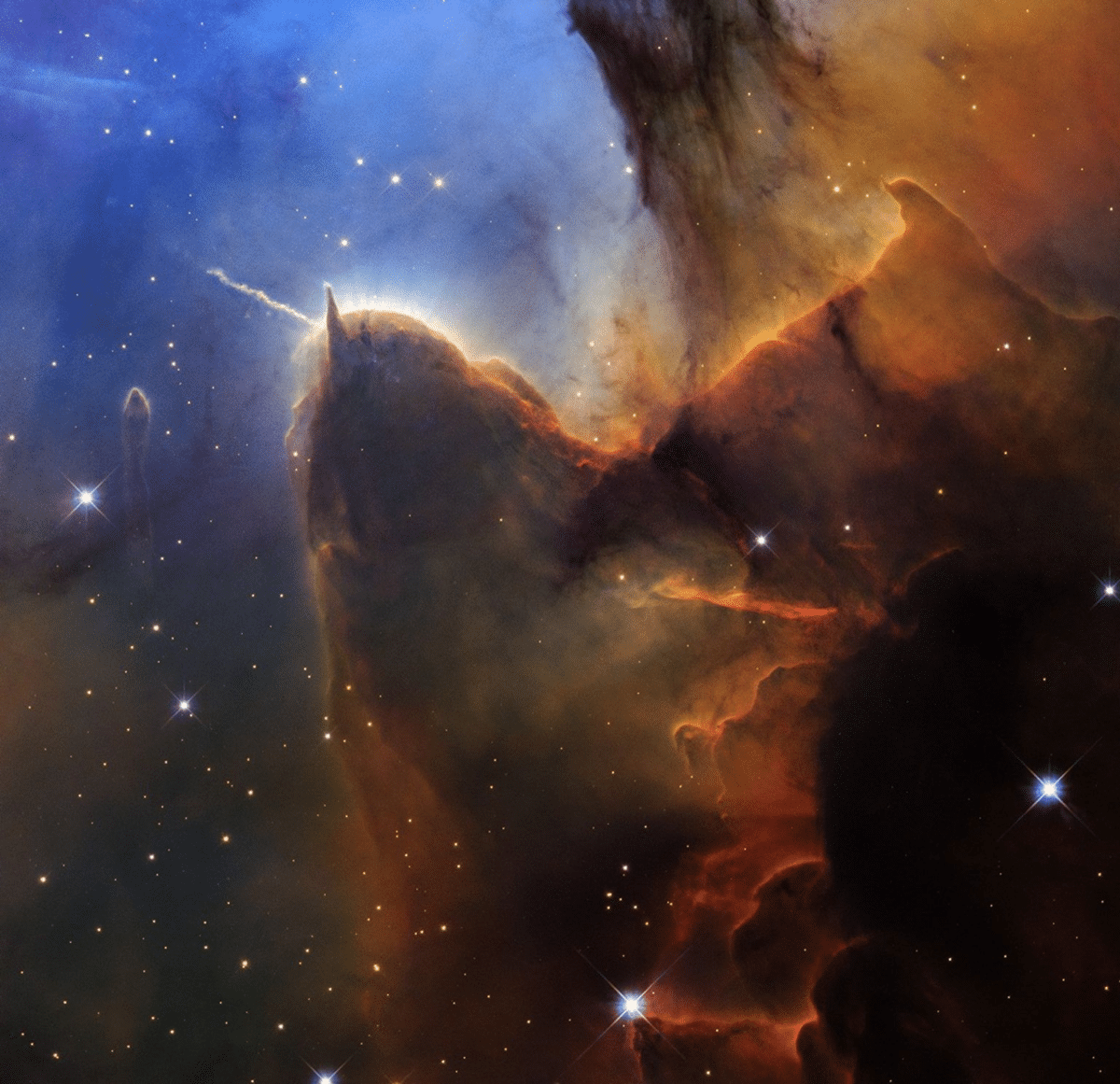
Central to the nebula’s breathtaking appearance is the powerful process of star creation. Massive stars residing just beyond the current observation frame have been affecting this region for at least 300,000 years. Their ultraviolet radiation ionizes the surrounding gas, setting off a chain reaction that initiates the formation of new stars. As these infant stars grow, their strong stellar winds clear away the encasing dust, carving out glowing cavities within the nebula.
These phenomena offer astronomers a direct window into how nascent stars reshape their surroundings. Analyzing such interactions gives scientists vital information about the phases of star development, which could unlock deeper understanding about the universe’s formative epochs and the emergence of stellar systems.
Honoring Hubble’s 36 Years of Astronomical Excellence
This recent revelation of the Trifid Nebula marks a significant chapter in Hubble’s remarkable 36-year journey of scientific discovery. Since its deployment on April 24, 1990, the telescope has transformed astronomy with over 1.7 million observations, contributing foundational data to more than 29,000 peer-reviewed studies. Continued technological improvements have kept Hubble at the forefront of space exploration, making it one of the most enduring and productive observatories ever launched.
Hubble’s capacity to detect light across a broad spectrum, from ultraviolet to near-infrared, has been crucial for observing celestial objects at different stages of their evolution, enabling a holistic view of cosmic change over time.
Synergy with James Webb and Future Space Observatories
Hubble’s legacy continues to grow alongside newer missions like the James Webb Space Telescope. By integrating observations from both instruments, astronomers gain a richer, multi-wavelength perspective of star-forming regions such as the Trifid Nebula. Webb’s focus on near-infrared light complements Hubble’s visible spectrum work, deepening our understanding of the cosmos.
Looking forward, NASA's upcoming missions promise even greater leaps in exploring the universe. For example, the Nancy Grace Roman Space Telescope will soon commence broad-sky surveys, enhancing our knowledge of the Trifid Nebula and similar star-forming sites on an unprecedented scale. These next-generation observatories will build on Hubble’s pioneering efforts, enabling future scientists to delve further into the mysteries of space.
Insights into Protostar Activity
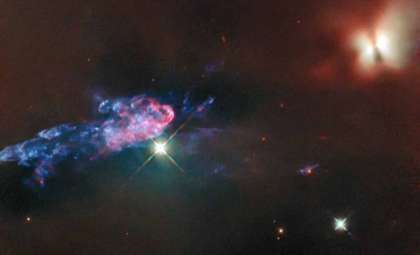
Hubble’s latest observations expose compelling signs of protostellar activity within the Trifid Nebula. Protostars, which are embryonic stars in their earliest phases, are prominent in this cosmic scene. The imagery reveals plasma jets, known as Herbig-Haro objects, being expelled from these young stars nestled within dense gas and dust clouds — clear evidence of ongoing star formation.
These jets play a vital role in sculpting the nebula’s surroundings. As they interact with the ambient material, they help disperse gas and dust, potentially sparking the creation of additional stars. Investigating these outflows provides essential clues on how young stars affect their neighborhood and mature into established stellar entities.
The Trifid Nebula: A Window into Stellar Evolution
The Trifid Nebula stands as a key celestial laboratory for astronomers studying how stars take shape and evolve. The mixture of massive stars, budding protostars, and thick gas clouds makes it an invaluable site for examining the early phases of the stellar lifecycle.
This fresh perspective from Hubble enriches our understanding of star birth, developmental processes, and eventual demise. The data collected here will further illuminate not only the life cycle of individual stars but also the larger cosmic patterns that govern the formation of galaxies and other celestial structures.
- Categories:
- Nasa






0 comments
Sign in to Comment