
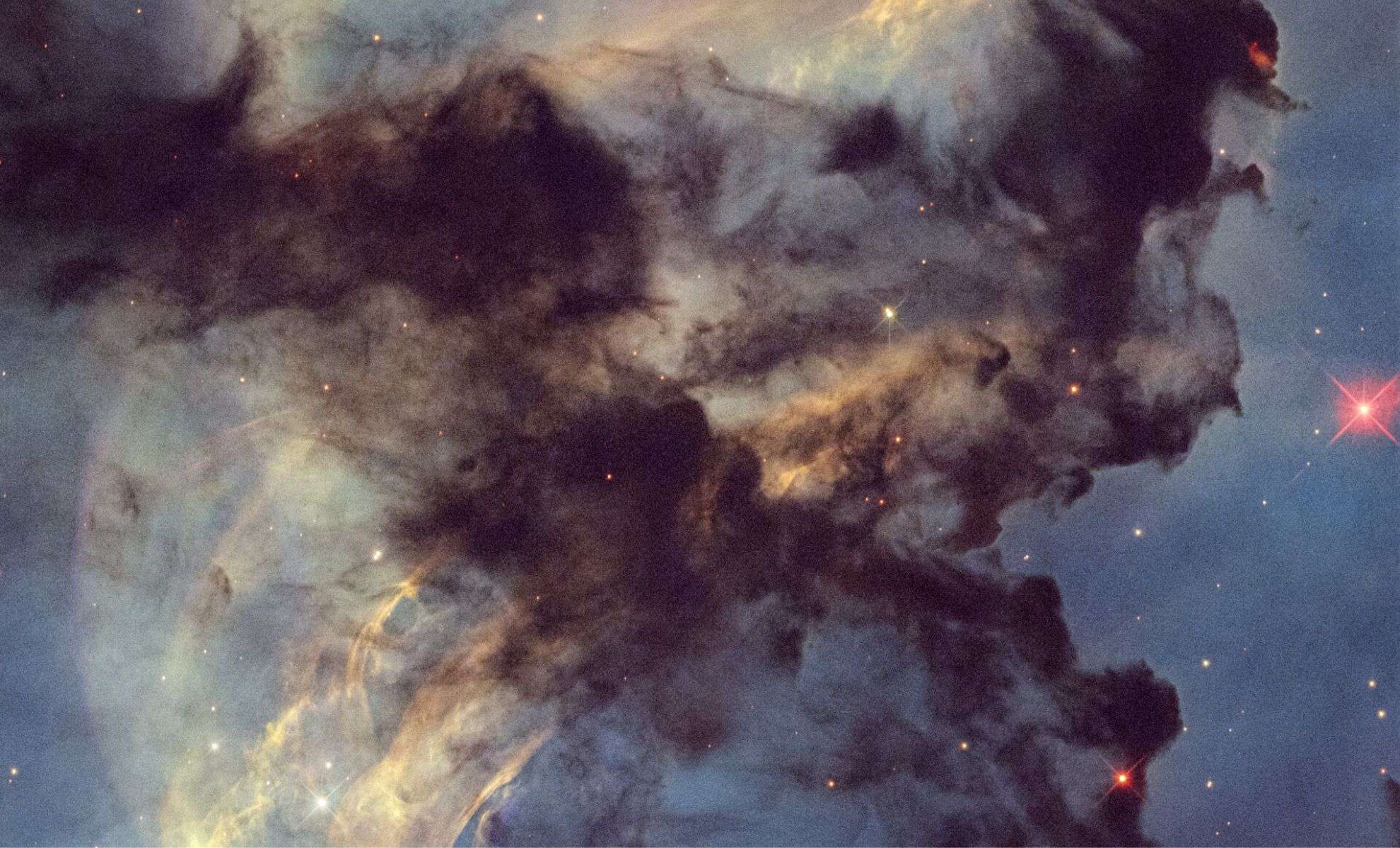
NASA and the European Space Agency (ESA) have recently shared an extraordinary new image captured by the Hubble Space Telescope, offering a spectacular glimpse into the Rosette Nebula. Situated roughly 5,200 light-years away within our Milky Way, this immense star-forming cloud spans about 100 light-years. The fresh image zeroes in on a compact region approximately 4 light-years across, revealing the turbulent and energetic environment where stars take shape.
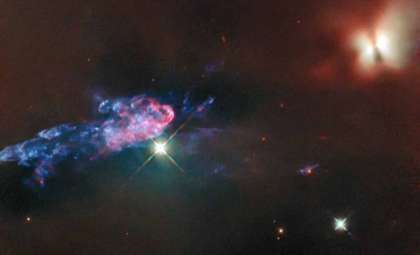
The Rosette Nebula exemplifies a vibrant stellar nursery, as dense pockets of gas and dust collapse to ignite new stars. Hubble’s detailed view highlights these ongoing events, with radiation from a powerful cluster of massive stars at the nebula’s heart sculpting and dispersing the surrounding gas clouds. The ESA explains, “The clouds are being eroded and shaped by the seething radiation from the cluster of larger stars in the center of the nebula (NGC 2440),” and “An embedded star seen at the tip of a dark cloud in the upper right portion of the image is launching jets of plasma that are crashing into the cold cloud around it.”
A Haunting Portrait of Cosmic Turbulence
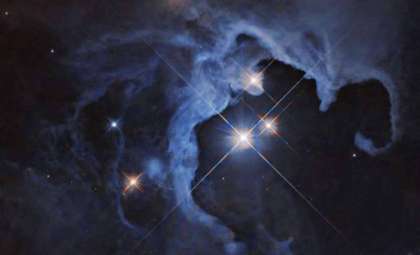
A captivating aspect of the image is the dark, V-shaped formations in the foreground, composed of hydrogen gas clouds silhouetted against the brighter nebular glow. These clouds interact violently with intense stellar radiation, triggering shockwaves that illuminate the surrounding gas and create otherworldly patterns.

These gas formations mimic thick, swirling smoke, denser along a diagonal from the upper left to the lower right and thinning toward the image’s top-right corner. A striking red glow emanates from this area, caused by a young star emitting jets of hot gas that collide with cooler nearby clouds, sparking shockwaves.
Behind this dramatic scene, vast expanses of glowing gas shine in yellow and orange hues, illustrating the nebula’s intricate and vibrant structure. The interplay between dark clouds and brightly lit gas crafts a vivid and eerie depiction of stellar nursery activity. See more about the nebula’s intricate nature here.
A Crucial Zone for Stellar and Planetary Birth
The Rosette Nebula hosts approximately 2,500 stars, many currently in formation stages. These nascent stars will eventually develop planetary systems, highlighting the nebula’s vital role within the larger cosmic ecosystem. Such nebulae are key players in galactic development, acting as stellar and planetary birthing grounds.
Hubble’s sharp imaging is crucial for detailed studies of areas like this. Since its launch, this orbiting observatory has scanned over 1.6 million objects across more than three decades, delivering crystal-clear observations free from atmospheric distortion. This capability has revolutionized our view of distant galaxies, nebulae, and various cosmic phenomena.
An Instrument of Astronomical Breakthroughs
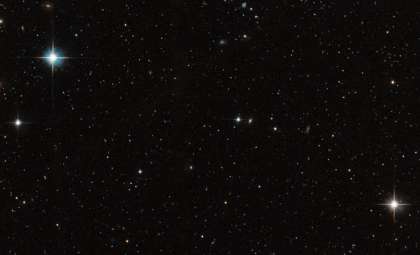
Hubble’s impact on astronomy is monumental. Its iconic Hubble Deep Field image unveiled a staggering abundance of galaxies, vastly enhancing our cosmic comprehension. Equipped with a nearly 8-foot-wide mirror, it can resolve images with clarity 1,000 times greater than the unaided eye. This unmatched precision has made Hubble instrumental in unraveling the universe’s mysteries.
Discoveries of star-forming zones such as the Rosette Nebula deepen our insight into the birth of stars and planets, while also revealing the violent and dynamic processes that govern the ever-evolving cosmos.
- Categories:
- News


0 comments
Sign in to Comment