
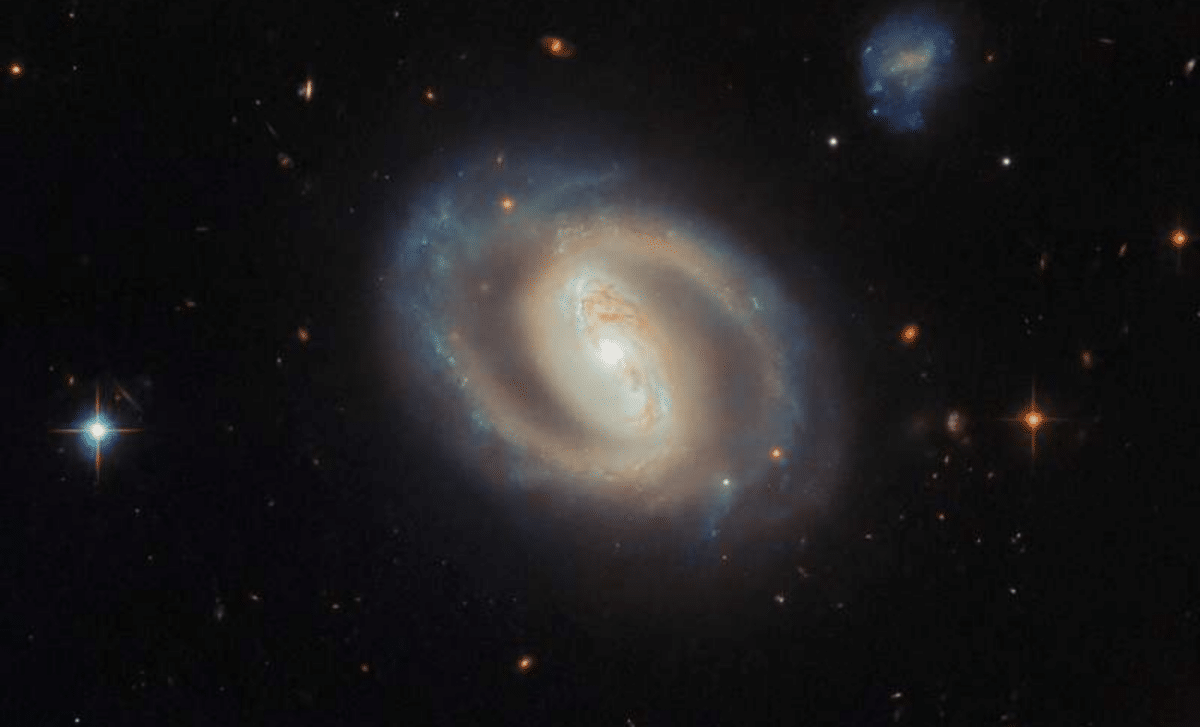
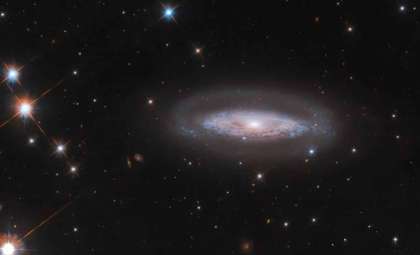
The remarkable new imagery from the Hubble Space Telescope shines a light on IC 486, a barred spiral galaxy located approximately 380 million light-years away. This image reveals the dynamic processes behind star birth and the dominant influence of a supermassive black hole within the galaxy's core. This achievement, part of an extensive European Space Agency (ESA) investigation, sheds new light on how galaxies evolve alongside their central black holes.
A Closer View of a Spiral Colossus
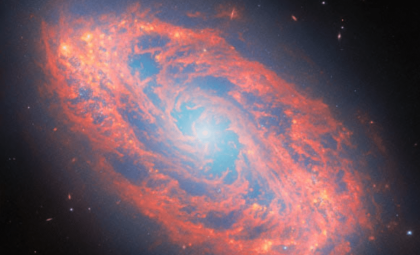
Captured by Hubble’s advanced optics, the image portrays IC 486 with stunning detail, revealing a bright central bar from which elegant spiral arms extend outward. While visually captivating, the galaxy is also a laboratory for examining the interactions of star formation and black hole activity. In this barred spiral, light from stars, formation of new celestial bodies, and energetic phenomena from the supermassive black hole all intersect.
Situated in the Gemini constellation at a distance of about 380 million light-years, IC 486 exemplifies the typical barred spiral structure. This configuration, in which a linear band of stars links the spiral formations, offers astronomers a valuable framework to study galactic dynamics. Its ongoing evolution is driven by forces ranging from stellar nurseries to the energetic core surrounding a massive black hole.

Revealing Stellar Births and the Galaxy’s Luminous Core
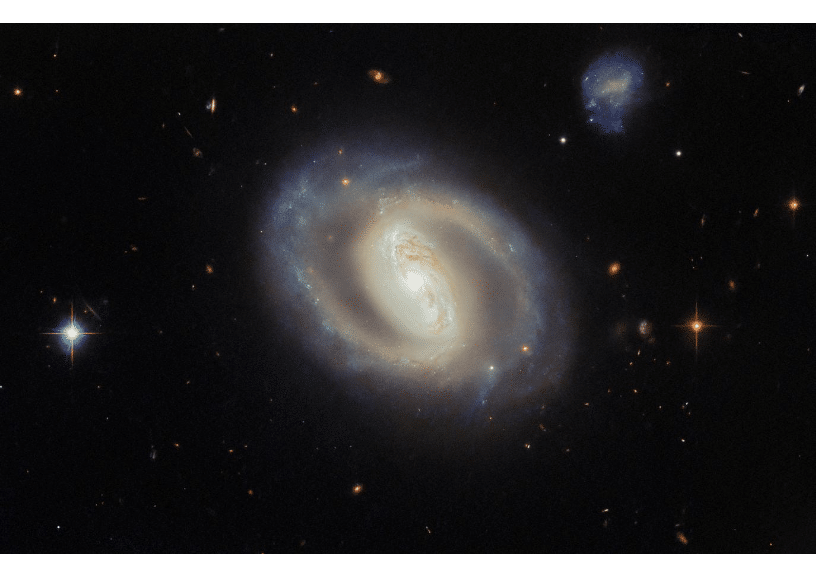
The Hubble observations distinctly display areas of old stars contrasted with zones of recent star formation. The galaxy’s nucleus glows with the softer light of mature yellow stars. In contrast, the spiral arms feature subtle blue tones, signaling regions dense with molecular clouds from which stars emerge.
This blend of aging and newborn stars underscores the continuous stellar lifecycle within IC 486. Fine filaments of cosmic dust trace through the galaxy, marking likely sites of future star formation. Such areas are fundamental to comprehending how galaxies like IC 486 grow and change over cosmic time.
Most notably, the galaxy’s center is dominated by an active galactic nucleus (AGN), producing an intense white radiance. This brilliance arises not from stars, but from a supermassive black hole. Weighing over 100 million solar masses, this black hole consumes surrounding matter, forming an accretion disk that emits powerful energy across the spectrum, including bright X-rays that can surpass the galaxy’s own luminosity.
The Dominant Supermassive Black Hole of IC 486
At the core of IC 486 lies a supermassive black hole that profoundly influences the galaxy’s behavior. While many large galaxies contain such black holes, the one in IC 486 is unusually active. Its immense gravity draws in gas and dust, which spirals into an intense accretion disk. The heated material emits energy ranging from visible light to high-energy X-rays, highlighting some of the most powerful cosmic radiation known.
This accretion process, often called black hole feeding, can significantly affect the galaxy’s core environment. In IC 486, the AGN’s radiative output can shape star formation patterns and alter surrounding galactic regions. The overwhelming force of this black hole illustrates the extraordinary hidden powers shaping galaxies beyond visible observation.
Citizen Science: A Vital Role in Galactic Research
The captivating image of IC 486 also demonstrates the impact of citizen science. ESA’s IC 486 investigation enlisted not only professional astronomers but also the public through the Galaxy Zoo initiative. Volunteers classify galaxies, helping scientists curate extensive data sets that elucidate how galaxies form and evolve.
Led by M. J. Koss and A. J. Barth, the research team studies how large-scale features like bars and spirals connect with activity in galactic centers. The combination of Hubble’s sharp imagery with citizen science findings advances knowledge about the intricate mechanisms directing galaxy evolution.
- Categories:
- Astronomy



0 comments
Sign in to Comment