
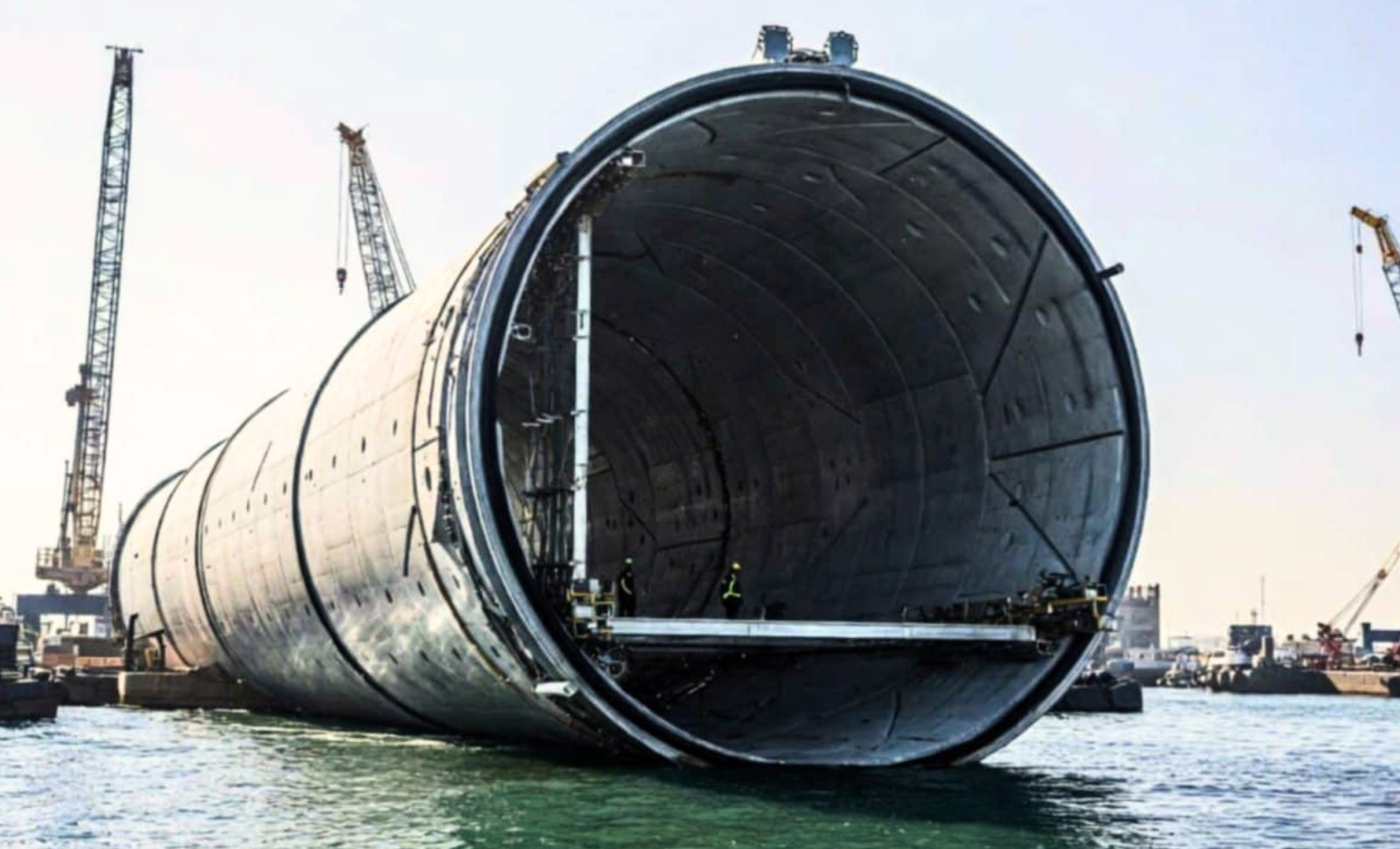
Rubber seals embedded within the joints of submerged tunnels were engineered to prevent seawater infiltration for up to 100 years. However, new research from Shijiazhuang Tiedao University reveals that these seals lose their waterproof integrity more rapidly than previous predictions suggested, due to an overlooked factor affecting the gaskets throughout their service life.
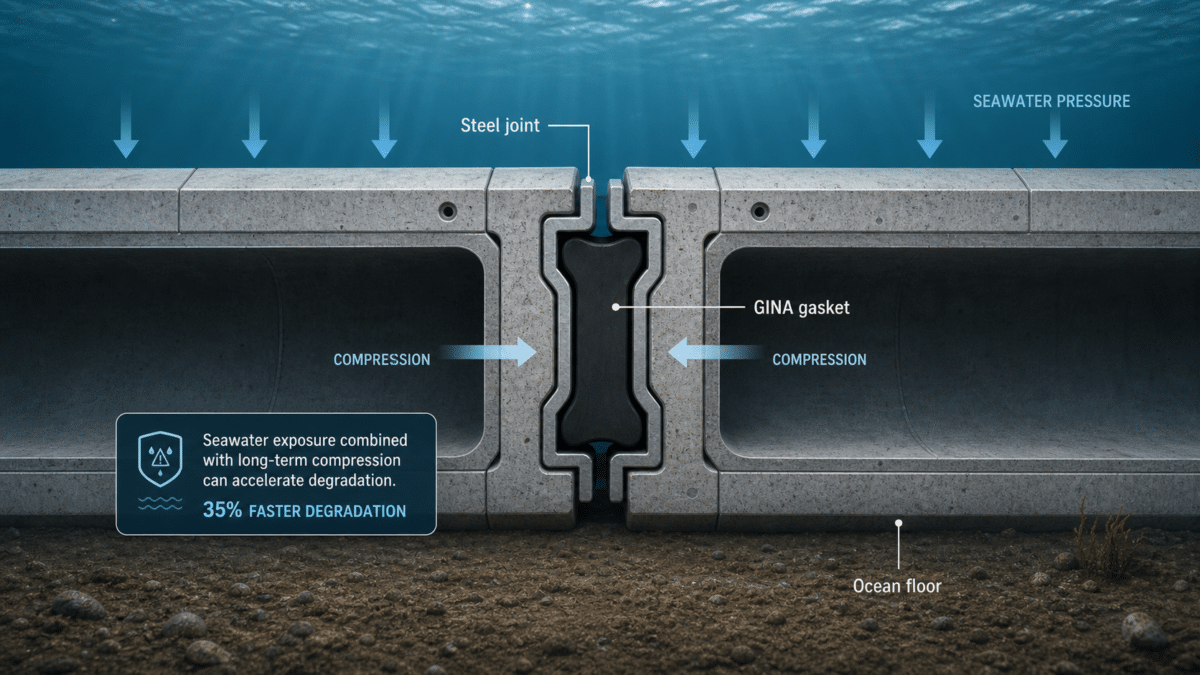
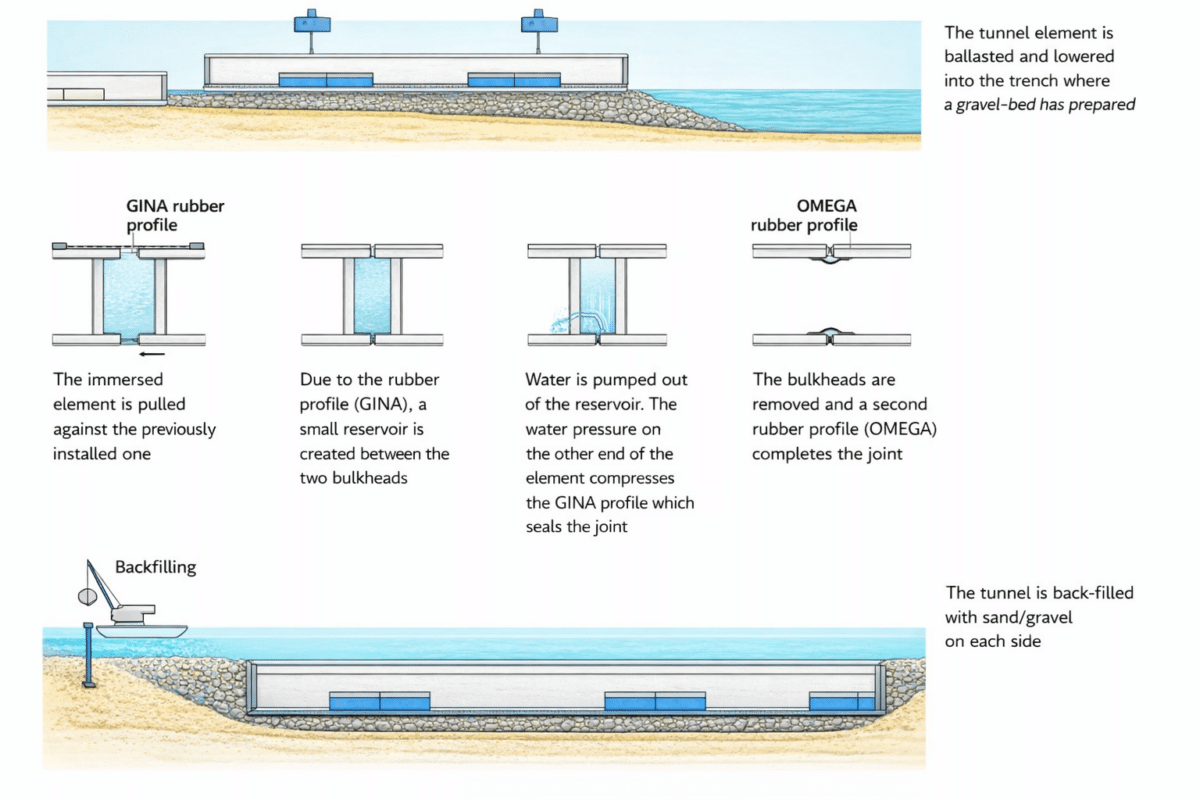
Known as the GINA gasket, this dense rubber strip is squeezed between steel end shells where prefabricated underwater tunnel segments connect. Its primary function is to maintain sufficient outward pressure, creating a waterproof barrier at the joint. This continuous compression is critical to the seal’s effectiveness; without it, water can penetrate.
Because immersed tunnels are constructed by floating and sinking prefabricated concrete sections into seabed trenches, each joint relies on a GINA gasket compressed underwater, sustaining contact pressure from the outset of tunnel assembly.

The study, featured in Tunnelling and Underground Space Technology, involved testing gasket samples extracted from China’s operational Yuliangzhou tunnel using a custom apparatus that applied simultaneous prolonged compression and seawater exposure.
Combining Mechanical Load and Seawater Effects Reveals Faster Deterioration
Previous evaluations focused solely on the impact of seawater aging, neglecting the influence of mechanical compression. Researchers demonstrated that the synergy of mechanical stress and seawater accelerates gasket degradation much more than if each factor were examined separately. This led to a markedly different projection of the seal’s lifespan.
While older models estimated that the gasket would sustain about 2.32 megapascals of sealing pressure after a century, the updated model reducing for combined effects estimates a remaining pressure of just 1.51 megapascals — a 35% decrease. Over the entire service lifespan, the seal loses around 67.66 percent of its initial sealing force.
This issue is particularly significant as immersed tunnel construction grows worldwide. Since all such seals follow similar design principles, this underestimation of long-term wear poses a widespread concern.
The critical contact pressure to avoid leaks is 0.61 megapascals, and the revised prediction of 1.51 megapascals after 100 years still exceeds this threshold. However, the reduced safety margin leaves limited room to accommodate factors like seabed movement, construction imperfections, and shifting joint alignments.
Increased Hardness Masks Internal Damage
Results from testing might be deceptive in routine inspection scenarios. Over time, the GINA gasket’s surface hardness rose by 14.18%, and its density increased by 5.88%. Field inspections relying on hardness measurements or visual checks could mistakenly assume the seal remains robust, whereas at a microscopic level, the polymer matrix responsible for elasticity was fragmenting.
“The aging essence of GINA gasket is material degradation caused by structural degradation,” the study authors noted. The rubber’s stiffening temperature climbed by nearly 5.8°F, meaning loss of sealing ability occurred even as surface hardness increased. Hence, hardness alone is an unreliable indicator of a seal’s true waterproof performance.
The gasket’s deterioration proceeded in three phases: an initial rapid decline, followed by a more gradual wear down, and finally a plateau of slower degradation. Accelerated aging assessments detected structural alterations within just 90 days, highlighting that significant performance loss can occur early in the seal’s service life.
These insights expose a critical gap in monitoring. Even as the seal appears denser and harder to inspectors, it may still be losing the elasticity essential for effective waterproofing. Conventional inspection methods are not designed to diagnose this subtle but crucial internal damage.
Lowest Edge of the Seal Bears Highest Risk
Not all regions of the gasket endure equal stress. The GINA seal’s lower edge is subject to lower contact pressure, making it the most susceptible to wear. Investigations of the Yuliangzhou tunnel revealed that when the separation between tunnel sections exceeds about 1.85 inches, waterproofing integrity begins to fail.
Moreover, any rotation or misalignment of tunnel segments worsens the problem by altering the seal’s position and further decreasing pressure at the vulnerable edge. This explains why chemical aging alone cannot fully predict leakage risk; seal joint geometry dictates where failures originate.
The Yuliangzhou tunnel’s current condition conforms to the study’s safety metrics, but the model cannot anticipate how real-world variables accumulating over decades might affect durability. The contracted safety margin means tolerance for unexpected impacts is reduced.
This suggests tunnel inspections should prioritize assessing contact pressure at the seal’s lower edge first, rather than relying on generalized surface hardness measurements. That localized pressure provides earlier warning signs of potential breaches.
Recommendations to Improve Monitoring and Design
The study advises operators to shift from hardness testing to direct monitoring of joint contact stress to detect degradation sooner. Special emphasis should be placed on the lower edge, where the combination of geometry and material aging is most critical.
For upcoming tunnel projects, researchers recommend adjusting rubber compound formulations and the initial compression parameters based on data that includes mechanical load combined with seawater exposure. Existing design standards relying purely on chemical aging effects risk underestimating seal deterioration before tunnel completion.
Additionally, the 100-year design benchmark should be reframed not as a pass/fail milestone but as the beginning of a planned maintenance regime. Maintenance scheduling should depend on the unique geometry and stress distribution of each joint rather than average seal conditions.
- Categories:
- News








0 comments
Sign in to Comment