
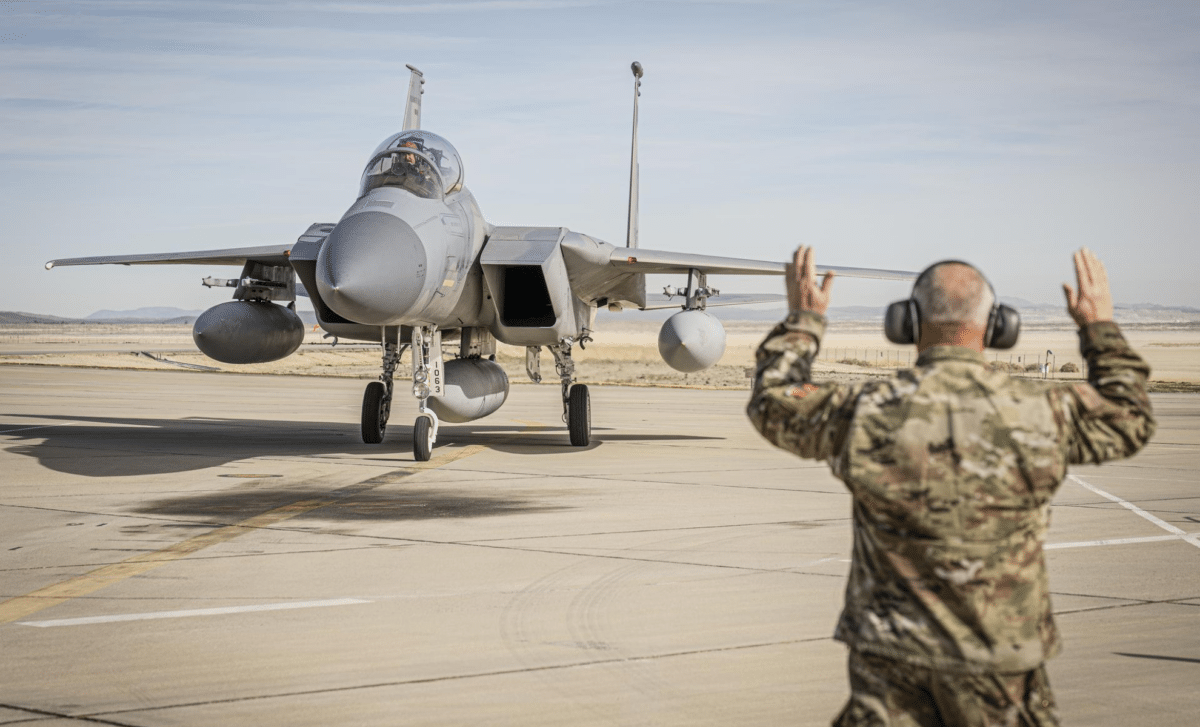
In a major advancement toward achieving quieter supersonic travel, NASA has incorporated two F-15 fighter jets into its flight research fleet, as reported by Space.com and supported by NASA's official imagery and documentation. This addition bolsters the development of the X-59 quiet supersonic aircraft, a project aiming to transform the future of high-speed flights by minimizing disruptive sonic booms. Leveraging established military aircraft for cutting-edge research, NASA seeks precise data to prove that supersonic speeds can be attained with reduced noise impact.
NASA Armstrong Welcomes F-15s for Advanced Flight Testing
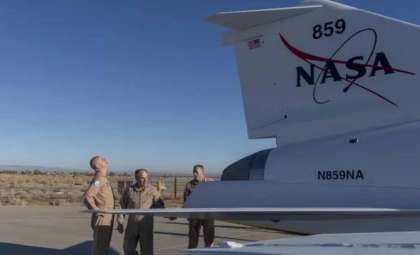
The recently acquired F-15 fighter jets have been stationed at the NASA Armstrong Flight Research Center in California, where they will play a pivotal role in supporting supersonic flight experiments. Rather than engaging in combat or routine training, these jets are dedicated to specialized research missions requiring exceptional speed, height, and maneuverability. Working closely with the X-59, the F-15s serve as chase planes, observation platforms, and mobile sensor carriers during supersonic trials.
“These two aircraft will enable successful data collection and chase plane capabilities for the X-59 through the life of the Low Boom Flight Demonstrator project,” said Troy Asher, director for flight operations at NASA Armstrong. “They will also enable us to resume operations with various external partners, including the Department of War and commercial aviation companies.”
Add Cosmo Herald as a Preferred Source

Equipped with advanced imaging and sensor systems, the F-15 jets can capture detailed information about shockwave formation and atmospheric influences during flight. Their broad performance capabilities allow them to maintain altitudes and speeds closely aligned with the X-59, capabilities that are rare among aircraft.
Backing the Low Boom Flight Demonstrator Initiative
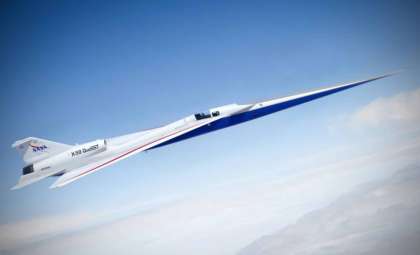
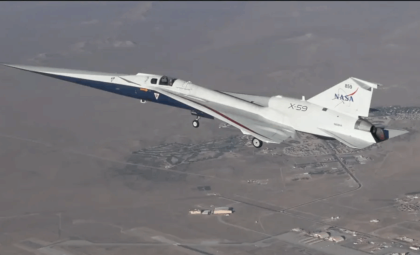
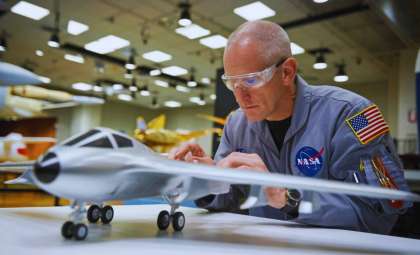
The Low Boom Flight Demonstrator aims to demonstrate that sonic booms can be modified into softer, more acceptable noise levels suitable for flying over populated regions. The X-59, created in collaboration with Lockheed Martin, cruises at about 55,000 feet altitude featuring a streamlined nose and cutting-edge aerodynamic design to diffuse shockwaves. The accompanying F-15s monitor the characteristics of these shockwaves as the X-59 travels at supersonic speeds.
NASA states that one F-15 will be fully outfitted for research tasks, while the other supports ongoing operational readiness. This dual approach ensures continuous reliability while managing expenses. The flight data will inform regulatory agencies, manufacturers, and policymakers on the viability and environmental impact of quiet supersonic flights.
Integrating Aeronautics and Broader Scientific Research
Though primarily focused on aeronautics, NASA’s research benefits from interconnected scientific disciplines. Advances in atmospheric sensing, data analytics, and modeling techniques are shared with space science initiatives. This synergy is evident in astrophysics, where new observatories are vastly expanding our understanding of the universe.
“To figure out what is going on in the early universe, we really need more information —more detailed observations with Webb, and more galaxies to see where the common features are, which Roman will be able to provide,” said Yijia Li, a graduate student at the Pennsylvania State University and a member of the research team. “It’s an incredibly exciting time, with Webb revealing the early universe like never before and showing us how much there still is to discover.”
This data-driven approach mirrors NASA’s aeronautical efforts, where multiple platforms work together to fully capture complex phenomena.
The Significance of Adding F-15s for Future Supersonic Aviation
Bringing the F-15 jets into a primary research capacity underscores NASA’s trust in combining proven technology with modern research tools. The information gathered from these jets will help evaluate whether quiet supersonic aircraft might eventually operate above land, potentially transforming domestic air travel by drastically cutting coast-to-coast flight durations. Commercial airlines are attentive, as regulatory developments prompted by NASA’s results could open a new market segment.
Simultaneously, this initiative exemplifies NASA’s strategy of merging traditional aircraft with next-generation experimental designs. The F-15s, backed by decades of operational history, are now essential contributors to shaping the future landscape of high-speed civil flight. As testing for the X-59 progresses, these jets will be central in resolving aviation’s long-standing question: can supersonic travel become a common and community-friendly mode of transportation?
- Categories:
- Aircraft




0 comments
Sign in to Comment