
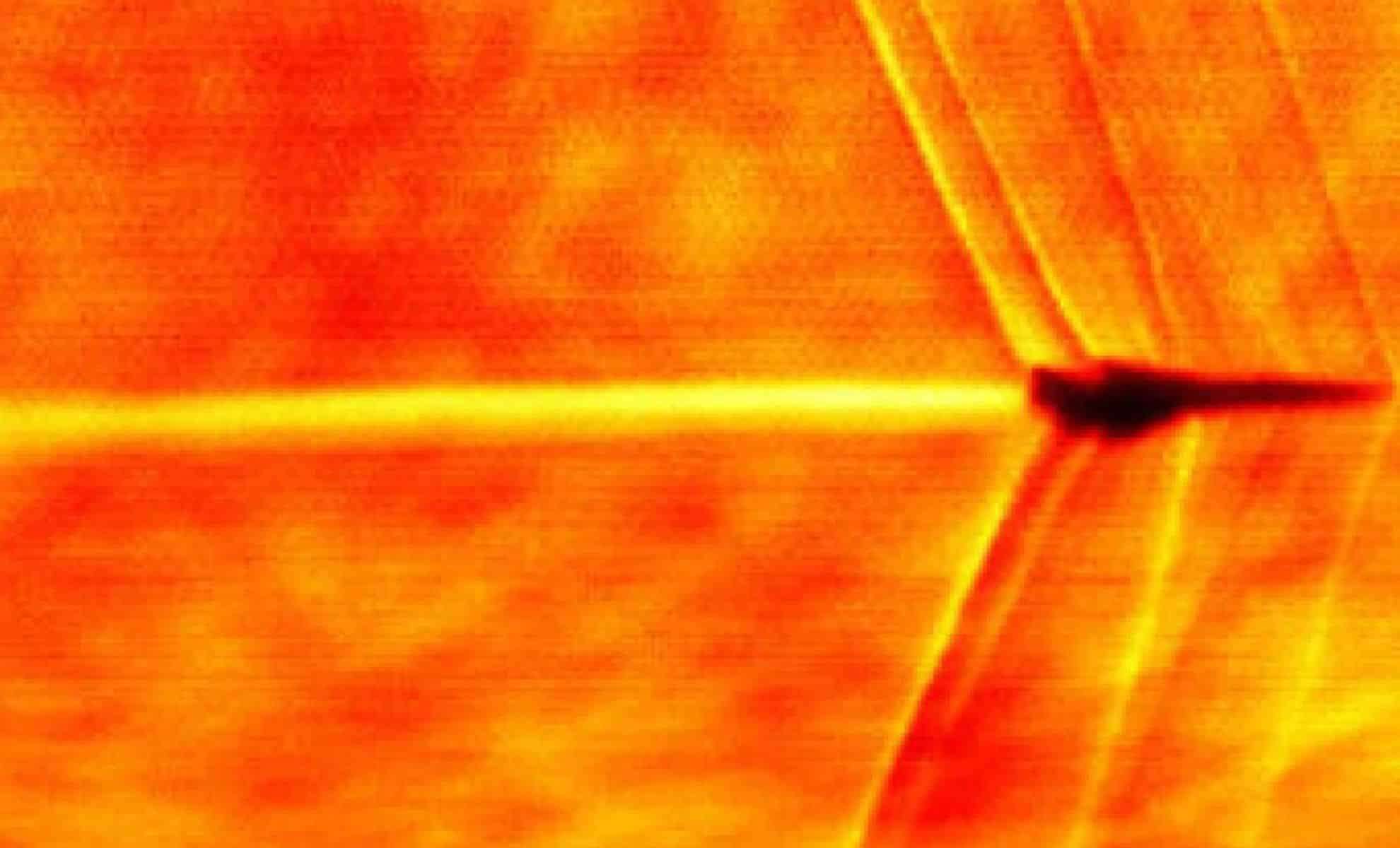
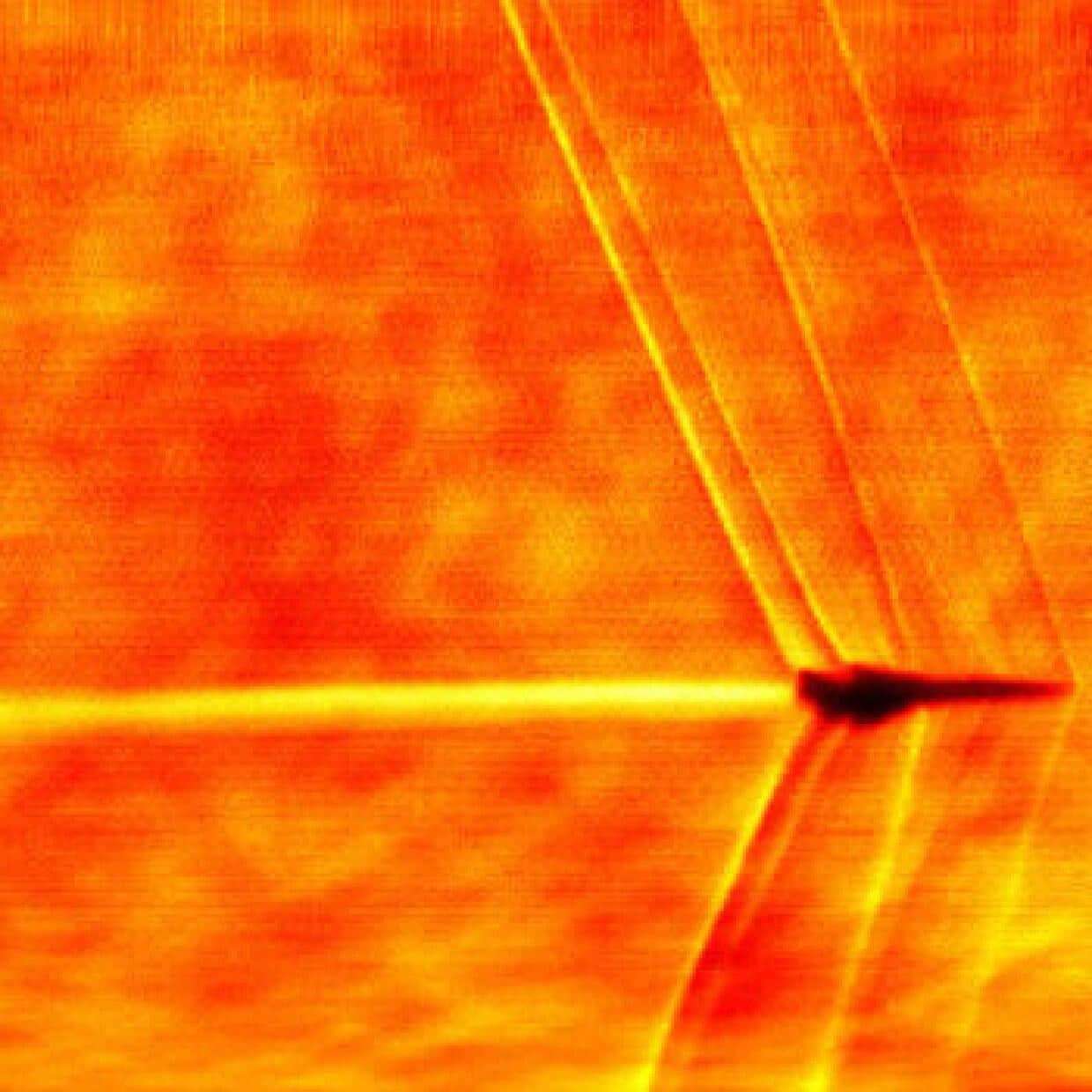
NASA and Boom Supersonic have unveiled an extraordinary photograph that freezes the instant the XB-1 demonstrator aircraft crosses the sound barrier, making the once invisible shock waves plainly visible.
Captured on February 10 above the Mojave Desert, this image marks a crucial step forward in rekindling supersonic commercial flights without the disruptive sonic booms that sidelined previous endeavors.
An advance in supersonic aviation
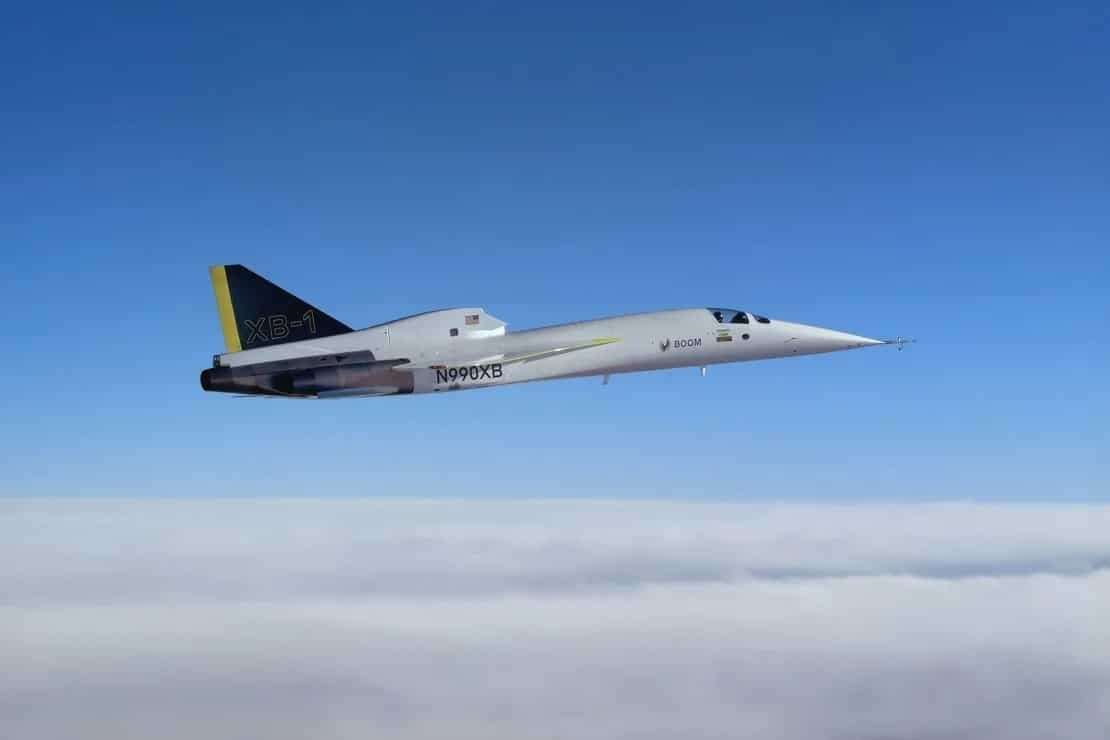
Known as “Baby Boom,” the XB-1 is America’s first civilian supersonic airplane since the iconic Concorde. During its 13th test flight, the aircraft reached speeds of Mach 1.18 (about 772 mph), pushing the limits of current aviation technology.

By employing Schlieren photography—a method that visualizes air density changes—NASA’s telescopes on the ground captured the striking shock waves enveloping the jet at supersonic speed.
Boom Supersonic’s CEO Blake Scholl expressed the importance of the image: “This image makes the invisible visible.” It unveils the complex shock wave patterns generated as the plane surpasses Mach 1, providing crucial insights for engineers working on next-generation fast aircraft.
Reviving supersonic passenger flights
For many years, supersonic aviation has faced significant hurdles such as excessive fuel consumption, environmental impact, and especially the loud sonic booms.
Flight data from the XB-1 indicates that its sonic boom bends in the planet’s upper atmosphere in a way that stops the noise from reaching ground level under certain conditions.
This discovery could be pivotal in allowing supersonic commercial jets to fly over inhabited areas—something previously banned due to noise restrictions.
Boom Supersonic aims to introduce Overture, a commercial supersonic airliner designed to cruise at Mach 1.7, roughly twice the speed of today’s jets.
Several major carriers, including American Airlines, United Airlines, and Japan Airlines, have collectively placed 130 orders and pre-orders for the aircraft.
Drawing lessons from Concorde and looking ahead
The Concorde was an engineering triumph but suffered from costly operation, limited routes, and the disruptive sonic boom.
The XB-1 and its planned successor, Overture, seek to address these issues by using advanced aerodynamic modeling, lightweight carbon composite materials, and sustainable aviation fuels (SAF).
Unlike Concorde’s distinctive nose design that lowered during landings for better pilot visibility, Boom Supersonic plans to use an augmented reality vision system to assist pilots, blending cutting-edge technology with supersonic travel.
Scholl envisions a future where intercontinental flights take just a few hours and tickets are accessible at around $100 each.
The competitive race for supersonic innovation
Boom Supersonic isn’t the only player pursuing supersonic air travel; NASA’s X-59 and aerospace leaders like Lockheed Martin are also dedicated to pioneering low-noise supersonic craft. The pressing question is no longer if supersonic travel will return but when and who will dominate the market.
With the Overture Superfactory operational in North Carolina, Boom Supersonic is preparing to bring commercial supersonic air travel into the mainstream by decade’s end.
The age of ultra-rapid transcontinental flights has moved from science fiction to reality, and NASA’s latest photo offers a remarkable glimpse of what’s to come.










0 comments
Sign in to Comment