
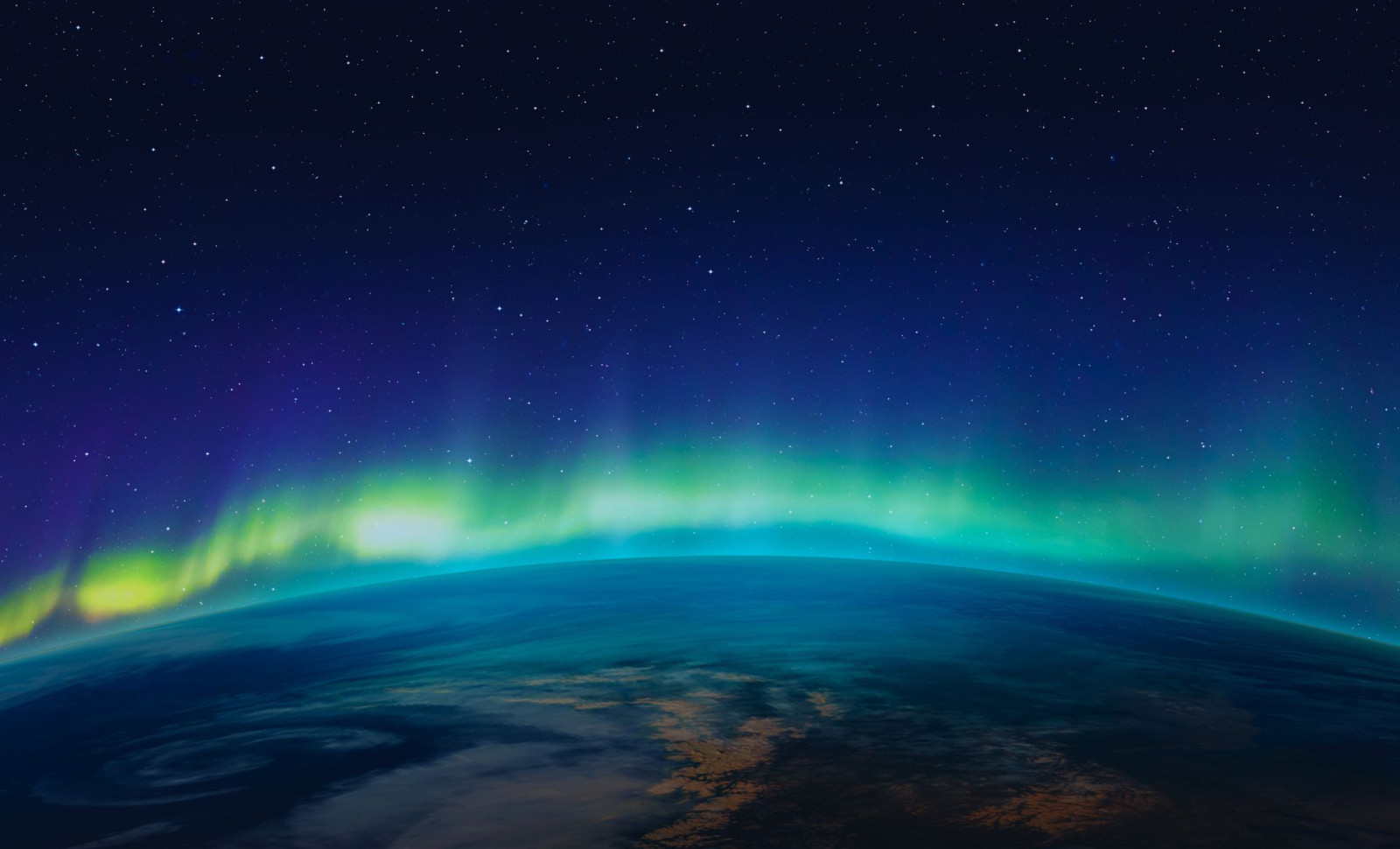
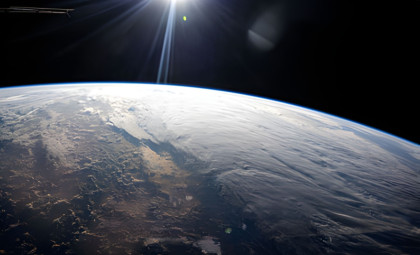
An incredible auroral display lit up the European skies on January 19, 2026, as photographed from aboard the International Space Station (ISS). The dazzling natural light show featured vibrant red and green hues while the ISS orbited roughly 262 miles above the Mediterranean Sea.
Snapped at around 10:02 p.m. local time, the photograph reveals the Earth’s horizon aglow with a shimmering curtain of aurora. The view looks northward from Italy towards Germany, capturing both the glowing atmosphere and the sparkling city lights below.
This captivating scene exemplifies a powerful atmospheric phenomenon driven by space weather—a term describing the complex interactions between solar emissions and Earth’s magnetic environment.

Astronaut's Nighttime Snapshot from Low Earth Orbit
This particular image was taken during a nighttime pass as the ISS traveled over Europe. At an altitude of roughly 262 miles above the Mediterranean, the crew had a clear northern vantage point over Europe. Prominent streaks of red and green auroral light dominate the sky, extending across the horizon and curving along Earth’s atmospheric layers.
NASA astronaut Chris Williams captured the image, now preserved in NASA’s public photo collections. The clear conditions during this passage—darkness underneath, a wide view over Central Europe, and active auroral activity—made it an ideal moment to document the display for the U.S. space agency.
Understanding Auroral Light Emissions
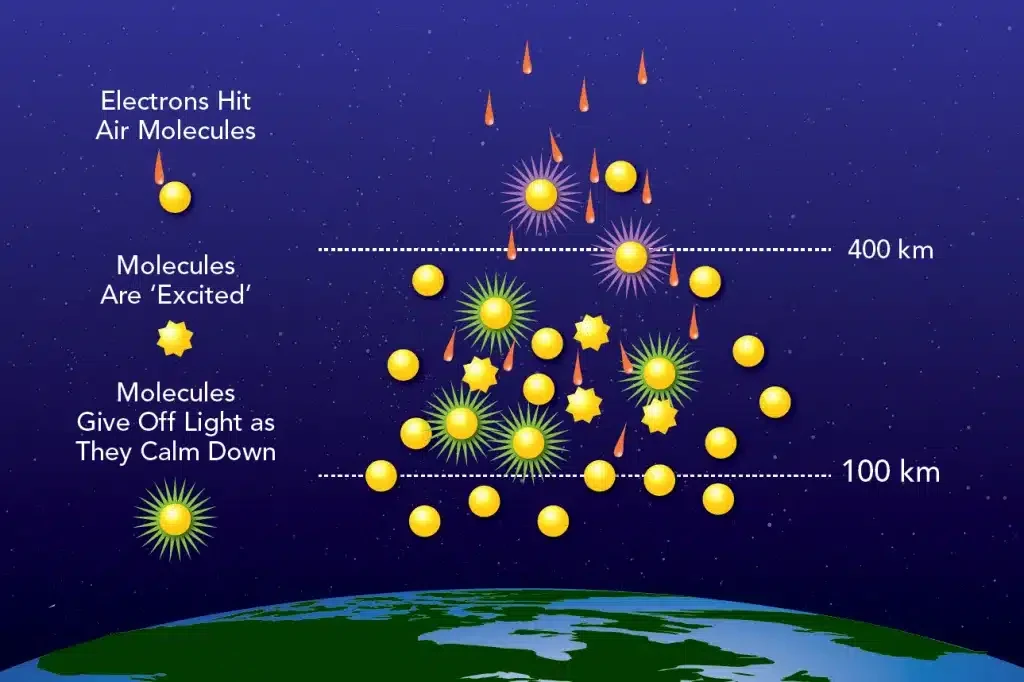
NASA explains that auroras occur when charged particles from the solar wind collide with molecules in Earth's atmosphere, producing glowing light in a spectrum of colors. Known as aurora borealis in the Northern Hemisphere and aurora australis in the Southern Hemisphere, these luminous patterns signal increased solar activity impacting our planet.
The radiant green hues usually arise from oxygen molecules at lower altitudes, while red coloring appears higher in the atmosphere where the air is thinner. This phenomenon forms part of the wider category of space weather—the solar forces that influence Earth’s magnetic environment.
The Invisible Power Behind the Aurora
Though auroras delight the eye, they represent a vast unseen process. Solar activity ejects charged particles streaming toward Earth, where they become trapped in its magnetosphere. These particles then follow Earth’s magnetic field lines toward the poles, ultimately colliding with atmospheric atoms and molecules to produce the glowing light displays.
- Categories:
- Space






0 comments
Sign in to Comment