
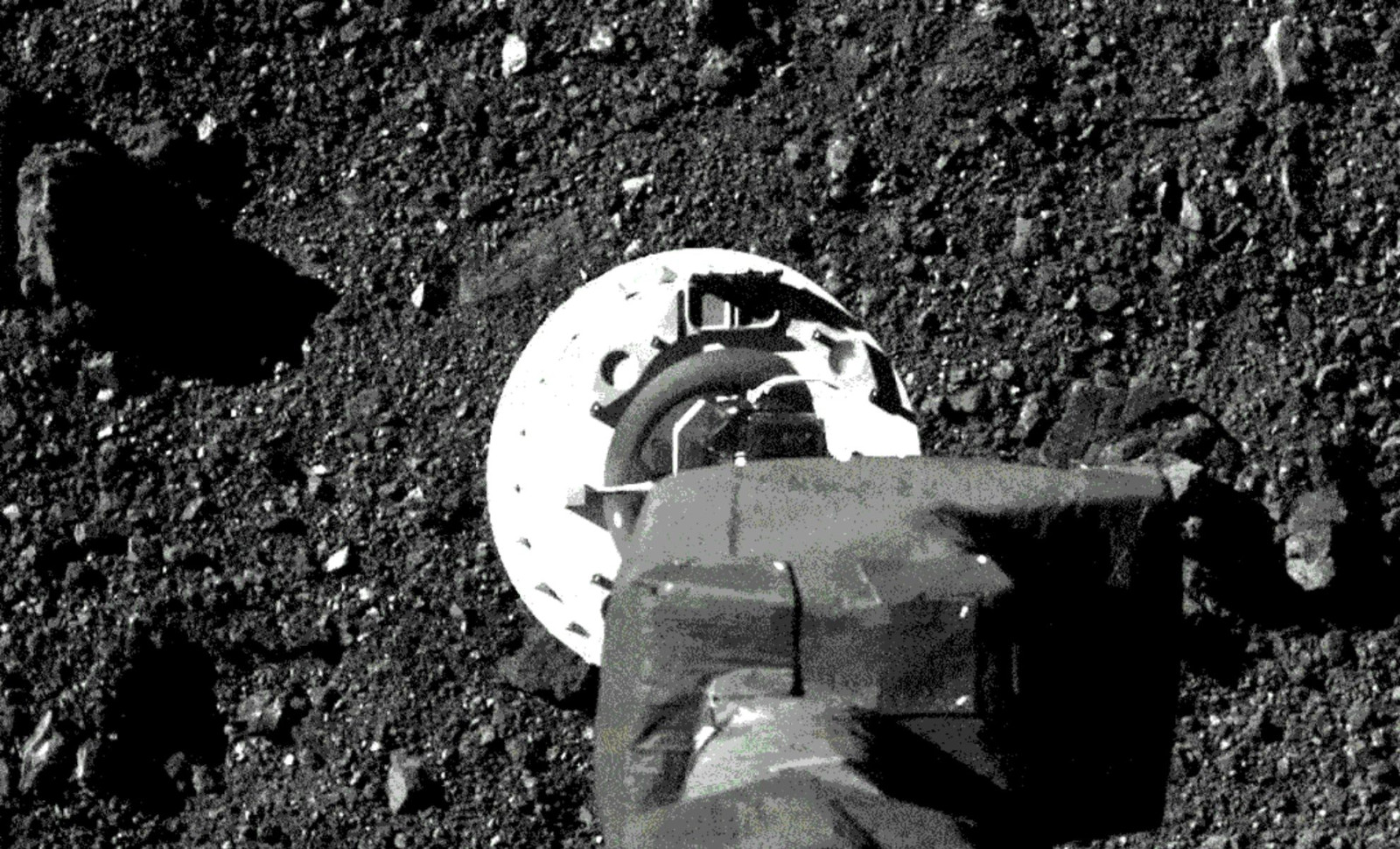
Researchers examining material returned from asteroid Bennu through NASA's OSIRIS-REx mission have discovered a surprisingly intricate arrangement of chemicals. Bennu, noted for its carbon-rich composition, exhibits a complex distribution of organic molecules and minerals, shedding light on how water — a vital ingredient for life — interacted with the surface of this primordial asteroid.
The value of Bennu's samples lies in their untouched state, preserved from Earth's atmospheric and environmental influence. Unlike meteorites that experience alteration when entering Earth's atmosphere, these specimens stayed in their original form. This untouched state offers scientists a unique window into how water, minerals, and organic substances intertwined in space billions of years ago, acting as a cosmic record of conditions influencing not just Bennu but potentially other early Solar System objects.
Guided by Mehmet Yesiltas, the research team concentrated on the sample designated OREX-800066-3, collected during OSIRIS-REx's expedition and delivered to Earth in September 2023. They employed cutting-edge methods, such as nanoscale infrared and Raman spectroscopy, to examine chemical differences at a minuscule scale of about 20 nanometers. The findings were striking.

A Mosaic of Chemical Zones
Rather than a homogeneous blend, the Bennu sample exhibited three chemically distinct sectors. One area primarily contained aliphatic organic compounds—simple carbon-based molecules. Another was abundant in carbonate minerals formed via interaction with water. The third region housed nitrogen-enriched organic compounds.

These zones were not uniformly blended. The organic substances and minerals arranged themselves in a patchy distribution, indicating that water alteration across the OSIRIS-REx sample was uneven. Certain areas experienced more intense modification, creating a chemically complex landscape. As stated by the researchers:
“Their fine-scale heterogeneity shows that water did not alter Bennu uniformly. Instead, fluids flowed through restricted pathways, preserving nitrogen-rich organic compounds while precipitating diverse carbonates and organosulfur species.”
Water’s Uneven Influence on Bennu
The newly published study in the Proceedings of the National Academy of Sciences reveals that the existence of these three separate chemical domains offers strong proof that liquid water once had a significant, yet heterogeneous, impact on Bennu’s chemistry. This challenges prior assumptions about water’s uniform behavior on small celestial bodies. The persistence of fragile organic molecules amid water interactions is noteworthy, suggesting asteroid-organic materials might withstand aqueous alteration better than anticipated.
“These results demonstrate that fragile organic molecules can survive aqueous alteration on small bodies and that different alteration pathways operated on Bennu,” wrote the study team.
Preserving a Window into Early Solar System Processes
Investigating how water, mineral deposits, and organic compounds interacted on Bennu helps scientists develop a broader understanding of such processes across other asteroids and planetary bodies.
“These findings improve our understanding of how water, minerals, and organic matter interacted on primitive asteroids,” concluded the authors.
Ongoing studies of these meticulously conserved samples are expected to reveal further details about Bennu's chemical evolution, offering valuable insights into how water and organic materials collectively influenced the early formation of our Solar System.
- Categories:
- Science







0 comments
Sign in to Comment