
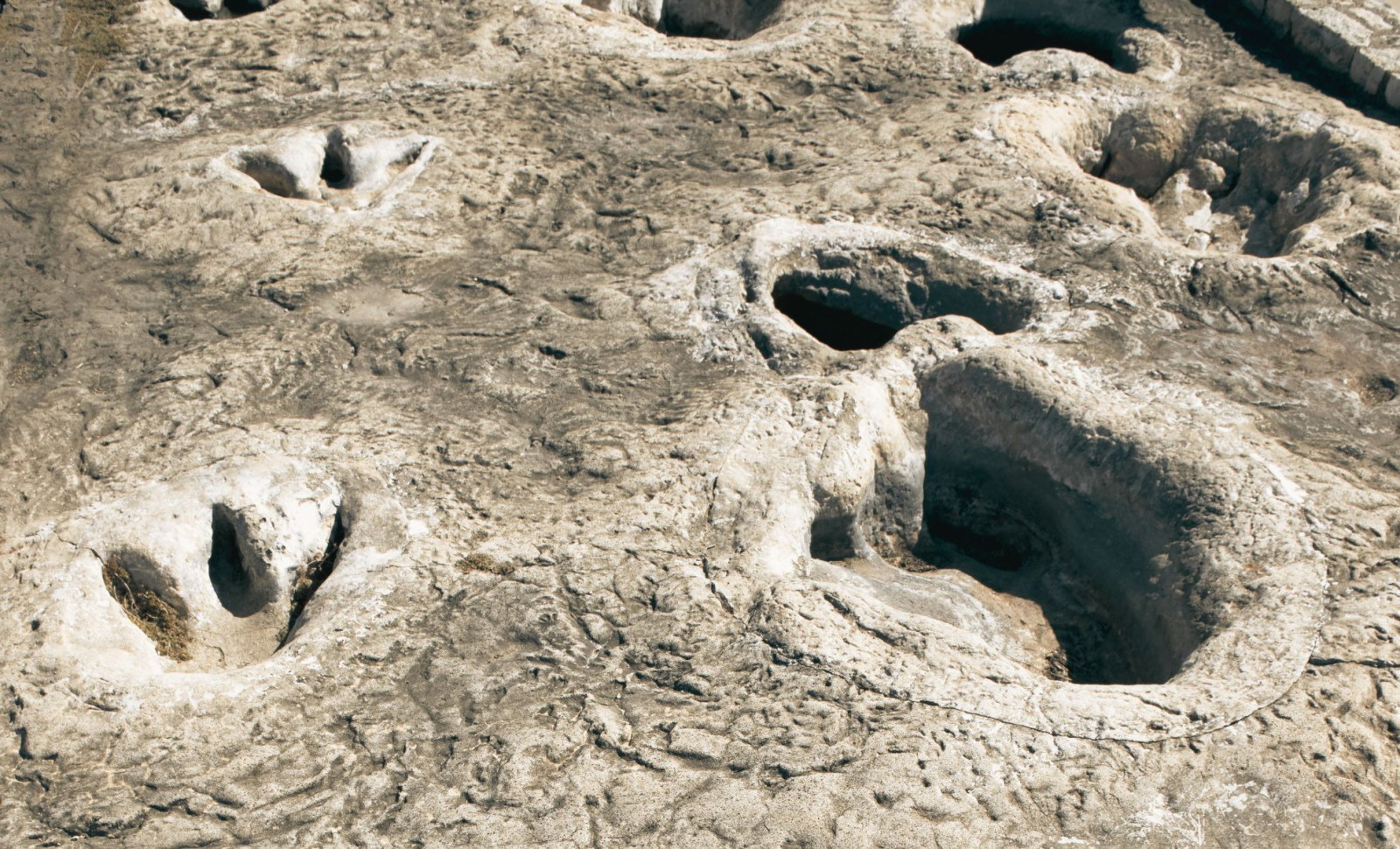
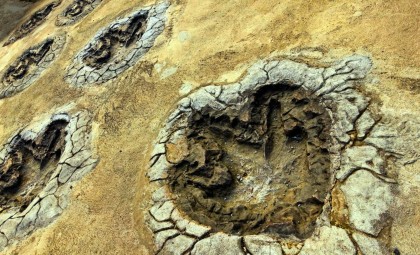
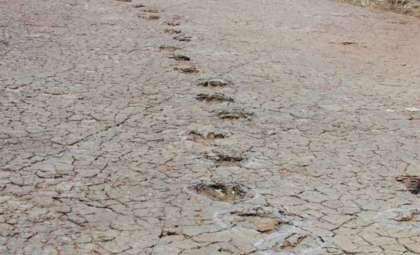
Unearthed in South Korea, a collection of pterosaur footprints preserved in rock dating back 106 million years is shedding light on how these creatures might have moved on land. These tracks hint at a fleeting encounter with a smaller animal, capturing a unique moment in prehistoric life.
Pterosaurs are traditionally pictured as creatures of the skies, soaring above ancient shorelines throughout the Mesozoic era. This popular image has dominated for years, emphasizing their aerial lifestyle rather than their activity on the ground. However, paleontologists have long debated this assumption.
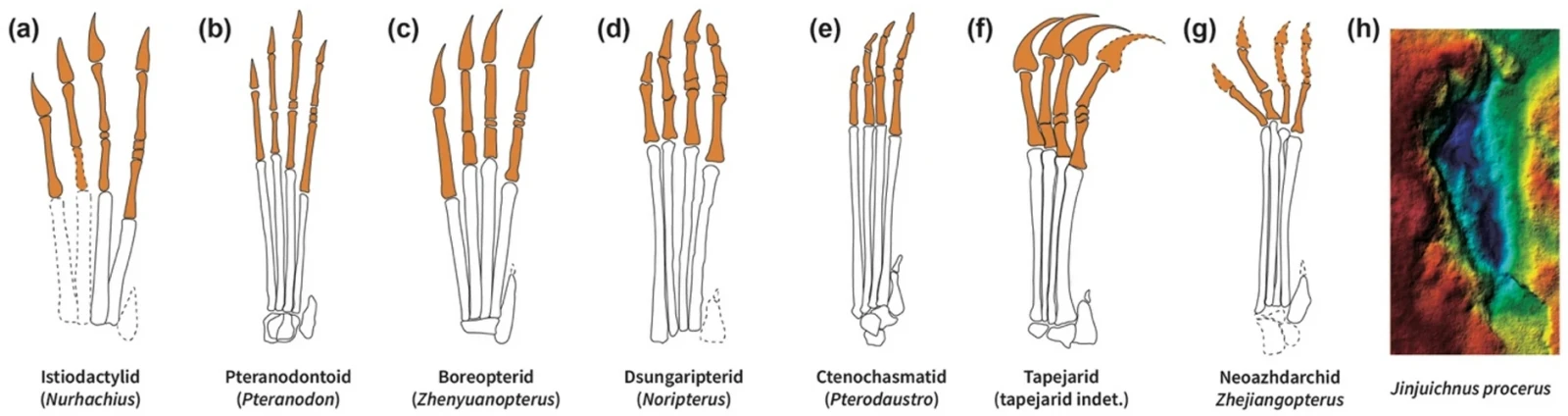
Certain subgroups, particularly within Neoazhdarchia, exhibit physical traits that suggest they spent considerable time on land. Their elongated limbs and body structure bear resemblance to modern-day wading birds that forage in shallow waters by walking.

A recent study featured in Scientific Reports underscores the rarity of finding unequivocal fossil evidence for such ground-based behaviors. The newly described footprints from the Jinju Formation are exceptional in this regard, providing valuable insight into this long-standing scientific question.
Introducing a Unique New Ichnospecies
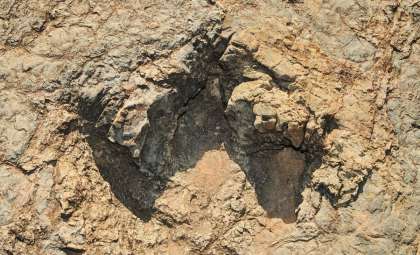
The footprints have been classified as a new ichnogenus and species named Jinjuichnus procerus. These impressions are notably large and uneven, featuring elongated toes clearly impressed in the sediment.
“Pterosaurs were key components of Mesozoic ecosystems, thriving from the Late Triassic to the end of the Cretaceous,” said Dr. Jongyun Jung, affiliated with the University of Texas at Austin and the Korea Dinosaur Research Center. “They occupied a wide range of ecological niches and exhibited diverse dietary adaptations.”
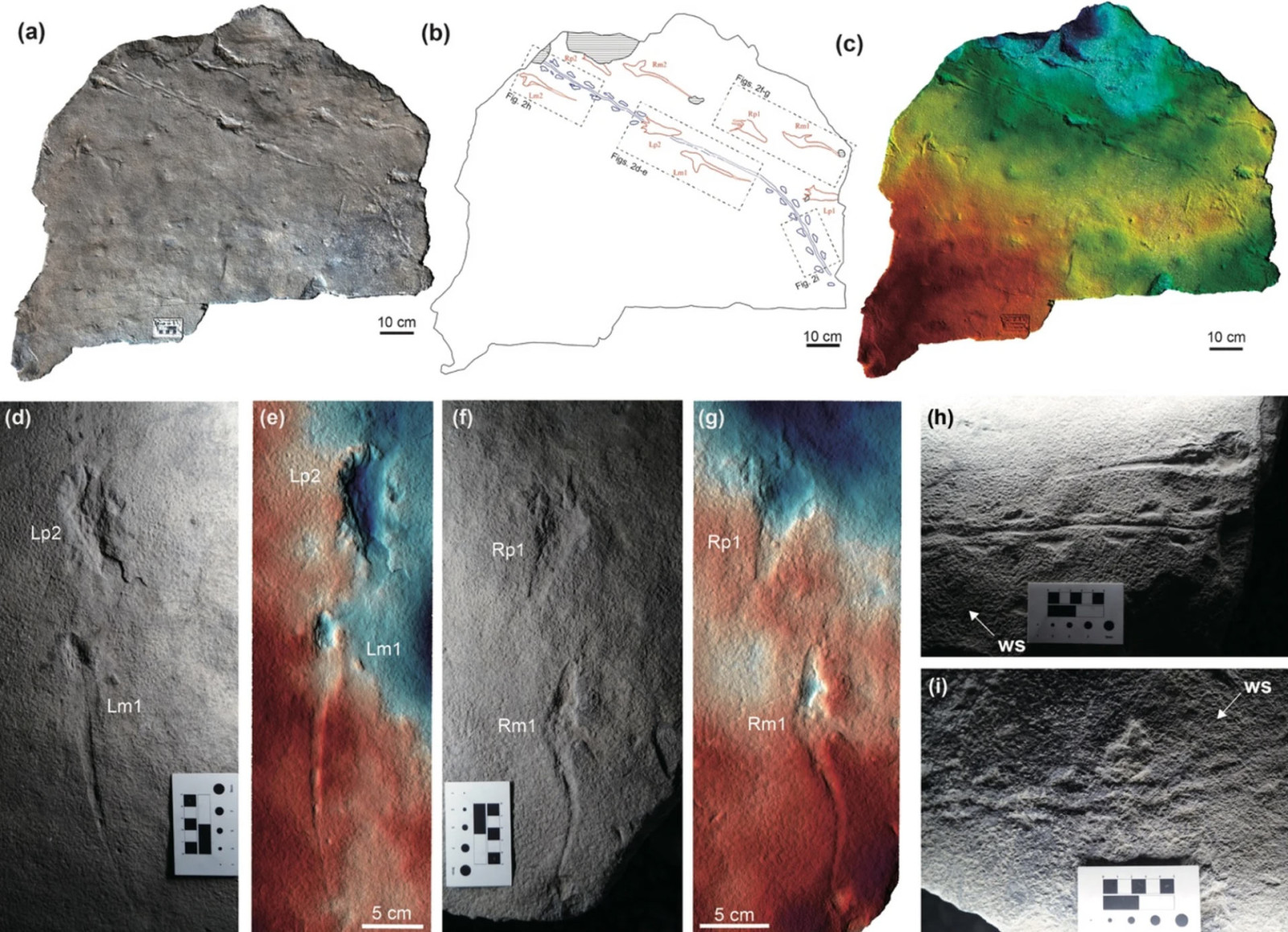
These characteristics align well with those of neoazhdarchian pterosaurs, a clade incorporating azhdarchids—winged reptiles that lived alongside dinosaurs—and close relatives. Earlier fossil discoveries also indicate this group occupied a variety of ecological roles and exhibited varied feeding habits.
Dr. Jongyun Jung highlighted that this group has often been theorized as terrestrial predators. This view stems from analyses of skeletal anatomy, functional morphology, and comparisons to extant creatures such as storks and cranes.
Potential Link Between Two Sets of Tracks
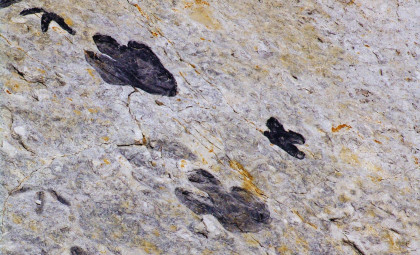
A remarkable feature of the discovery is the nearby presence of a second, smaller series of footprints alongside the pterosaur tracks. These were likely made by a ground-dwelling vertebrate, potentially a lizard or salamander.
The smaller animal’s tracks reveal a sudden shift in trajectory combined with longer strides, indicating rapid movement. Meanwhile, the pterosaur’s estimated speed of about 0.8 meters per second suggests it was moving steadily on the terrain.
The closeness of these two trackways hints at a possible interaction—perhaps even a chase—between the animals. This interpretation aligns with earlier hypotheses proposing that some pterosaurs hunted on foot.
“These interpretations have suggested that some groups may have employed hunting strategies comparable to extant terrestrial stalkers, such as storks or cranes,” the study team indicated.
Interpreting the Evidence with Care
Although the footprint arrangement is intriguing, scientists remain cautious about drawing definite conclusions. The two sets of prints might not represent any behavioral connection, and their proximity could simply be coincidental.
“Nonetheless, an alternative interpretation of the two trackways remains possible, making it difficult to confirm any direct interaction between the trackmakers.”
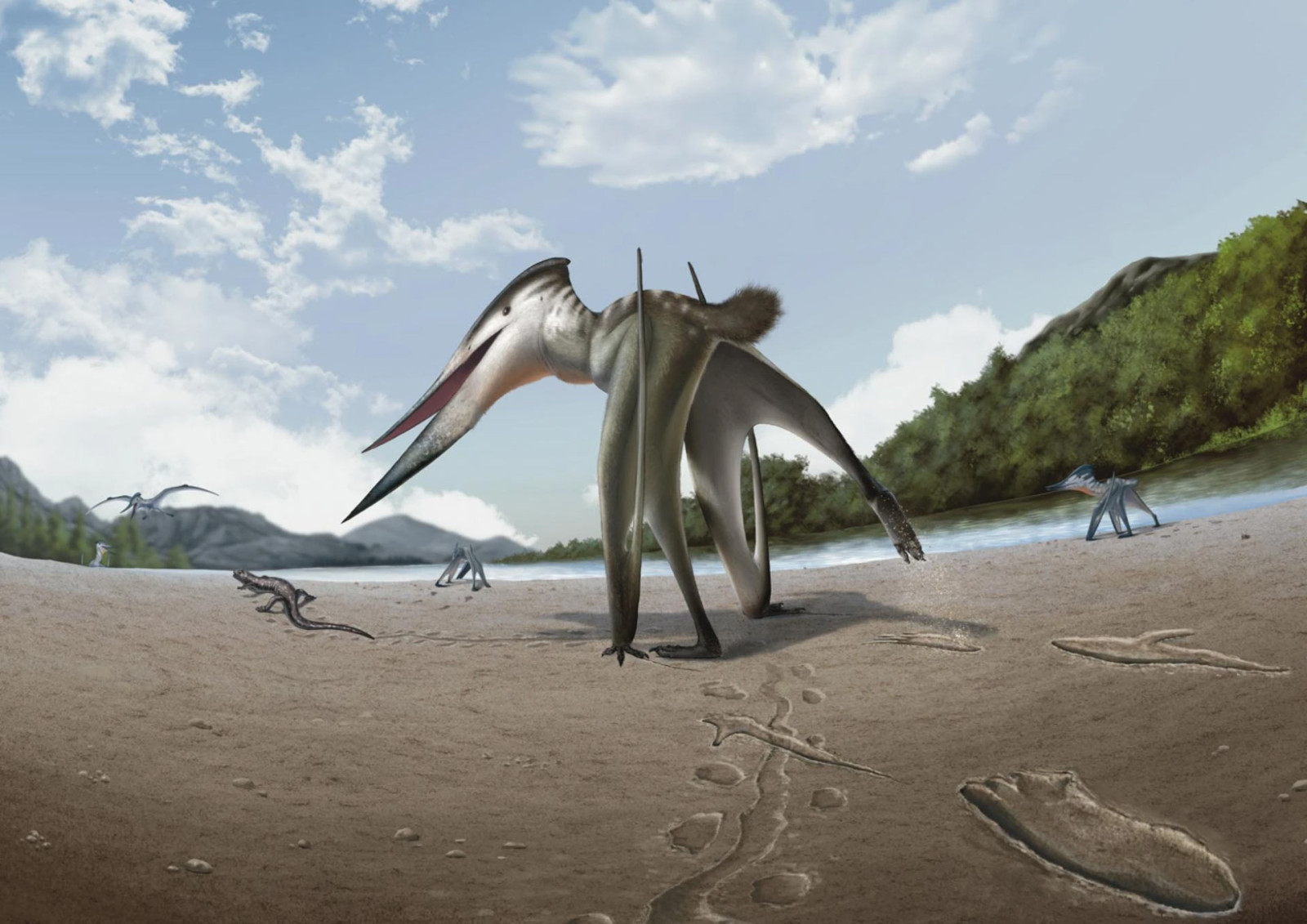
The researchers describe this as potential ichnological proof of terrestrial vertebrate interaction involving a pterosaur. However, they stress the challenge of verifying such scenarios based solely on footprints. Tracks reveal movement direction, velocity, and body posture, but not the full context or intentions behind that motion, leaving multiple possibilities open.
- Categories:
- Science



0 comments
Sign in to Comment